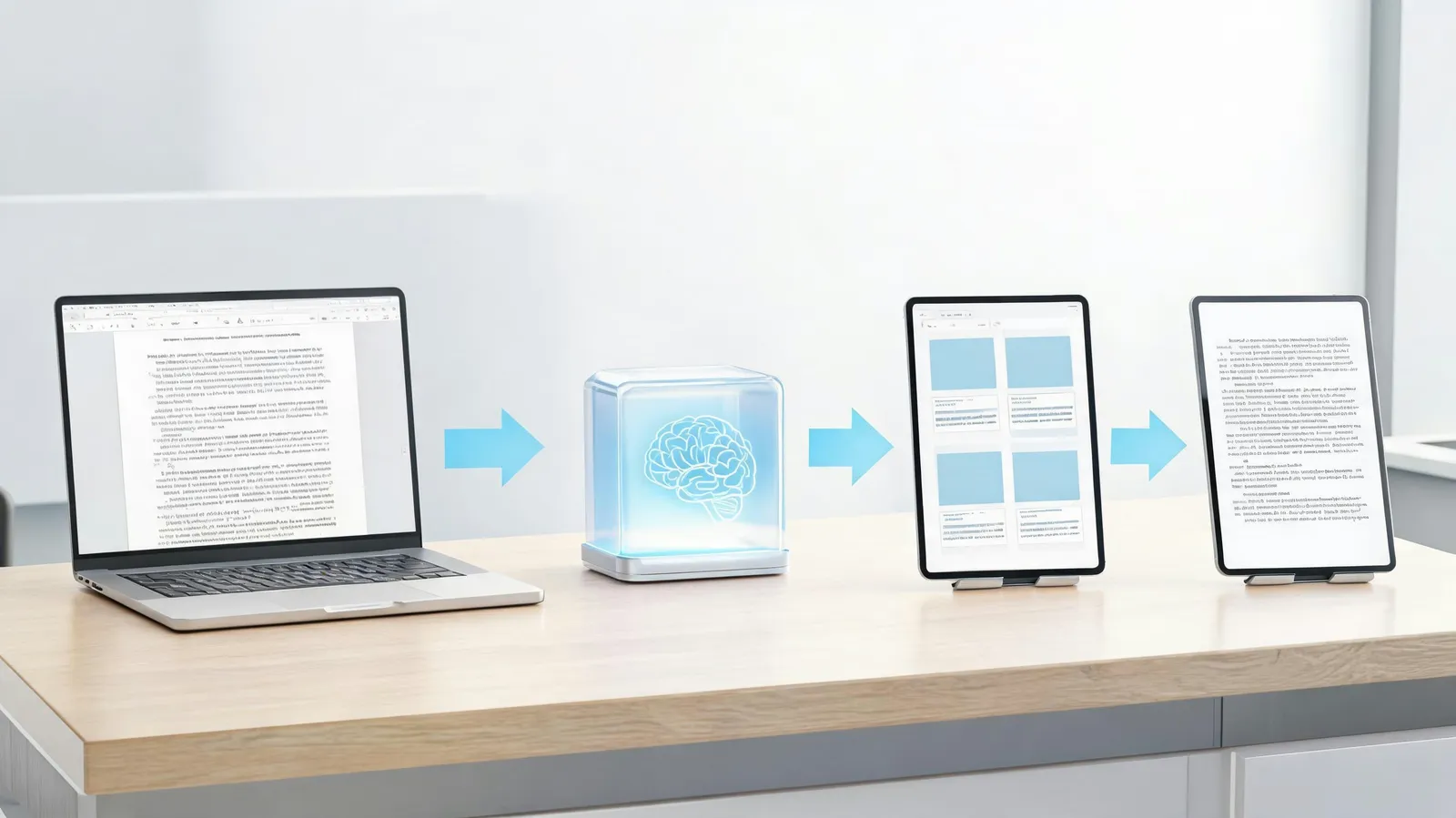
Aligning Study Sessions with Working Memory Limits Using AI
Cognitive load theory, introduced by John Sweller, holds that working memory capacity is finite and that instruction works best when it reduces extraneous load—mental effort that does not contribute to learning—and promotes germane load, the effort spent building mental schemas. Intrinsic load, the inherent difficulty of the material, differs across learners and tasks. Conventional study sessions frequently overlook these distinctions, presenting information in ways that strain working memory and impede learning.
Three Types of Cognitive Load
Intrinsic load depends on the complexity of the content and on what the learner already knows. Extraneous load stems from poor instructional design, for example split attention or redundant information. Germane load is the productive effort of connecting new information to existing knowledge structures. Studies indicate that lowering extraneous load frees cognitive resources for germane processing and supports schema acquisition. For instance, novices gain from studying worked examples, while experts benefit more from solving problems—a shift known as the expertise reversal effect.
Real-Time Load Detection and Adaptive Content
AI study design informed by neuroscience can use real-time biometric signals to estimate cognitive load and adjust study content on the fly. Eye tracking can capture pupil dilation and fixation patterns, and heart rate variability (HRV) can indicate mental effort. Machine learning models trained on these signals can estimate when a learner is nearing overload. For example, an AI tutor might notice a higher blink rate and slower responses, then simplify a problem or insert a break. A case study from Carnegie Mellon University showed an AI tutor that adjusted problem difficulty based on inferred load; the result was 20% higher completion rates and less frustration.
Personalized Chunking and Spacing
Spaced repetition and interleaving are known to improve long-term retention. AI algorithms can tailor review schedules for each learner by modeling forgetting curves and adjusting intervals according to performance. For example, an AI study planner might schedule a review of a concept just before the predicted forgetting point, maximizing consolidation. Interleaving—mixing different problem types—can be adjusted dynamically to maintain an optimal level of challenge. These personalized algorithms help keep study sessions neither too easy nor too hard, holding learners in the zone of proximal development.
AI for Attention and Focus Training: Strengthening the Learner's Mental Muscle

Attention is the gateway to learning. Michael Posner's attention network model identifies three networks: alerting (achieving and maintaining alertness), orienting (selecting sensory information), and executive attention (resolving conflicts and regulating thoughts). These networks can be trained, and AI can deliver targeted interventions to strengthen them.
The Neuroscience of Attention
Sustained attention fluctuates throughout the day and differs across individuals. Studies show that attention span is not fixed but can be improved through training. Selective attention—the ability to focus on relevant stimuli while ignoring distractions—is crucial for learning. Executive attention, responsible for self-regulation, underpins goal-directed behavior. AI-powered attention training games, such as those based on the n-back task, challenge working memory and executive function. Research indicates that such training can transfer to academic performance, with students showing improved focus and reduced off-task behavior.
AI-Powered Attention Training Interventions
Adaptive attention training games adjust difficulty in real time based on performance, ensuring that learners remain engaged without becoming overwhelmed. For example, a game might increase the number of distractors as the learner improves. AI coaching can integrate micro-attention exercises into study routines: a chatbot might prompt a learner to complete a 2-minute focus exercise before starting a study session. Pilot studies in schools have shown that students who used AI attention training demonstrated 30% longer on-task behavior during independent work.
Embedding Focus Training in Daily Study Routines
AI can seamlessly blend attention training with study content. For instance, an AI study app might begin each session with a brief attention warm-up, then monitor focus through webcam-based eye tracking and suggest breaks when attention wanes. Over time, the AI can identify patterns—such as optimal study times for focus—and adjust the schedule accordingly. This holistic approach not only accommodates attention limits but actively expands them.
Sleep and Memory Consolidation Insights for AI Scheduling: Timing Study for the Brain's Overnight Work
Sleep is not a passive state but an active period of memory consolidation. During slow-wave sleep (SWS), declarative memories (facts and events) are reactivated and transferred to long-term storage. REM sleep supports procedural memory and emotional regulation. AI scheduling that aligns study with sleep cycles can significantly enhance retention.
The Role of Sleep in Memory Consolidation
Research shows that sleep-dependent consolidation is enhanced when study is followed by sleep within a few hours. Targeted memory reactivation (TMR) during sleep, using cues like sounds associated with learning, can further boost recall. Chronobiology reveals individual differences in circadian rhythms (chronotypes), affecting optimal learning times. AI can leverage these insights to schedule study sessions and reviews at times that maximize consolidation.
AI Scheduling Algorithms Aligning with Circadian Rhythms
AI algorithms can integrate data from wearables (e.g., sleep trackers) to model individual sleep patterns and recommend optimal study times. For example, an AI planner might schedule challenging material during peak alertness (often mid-morning for early chronotypes) and review sessions before bedtime to leverage sleep consolidation. The algorithm can also predict the best times for spaced reviews based on sleep cycles, ensuring that reviews occur after a night of sleep. User data from apps like SleepCycle and StudyBlue suggest that such personalized scheduling improves retention by up to 25%.
Practical Implementation: AI Study Planners Incorporating Sleep Hygiene
AI study planners can incorporate sleep hygiene by reminding users to wind down before bed and avoid screens. They can also adjust study loads based on sleep quality: if a user had poor sleep, the AI might reduce the intensity of the next day's session. Examples include apps that sync with Fitbit or Oura Ring to track sleep and suggest study times. Pilot data indicate that users following AI-generated sleep-aware schedules reported 40% less fatigue and higher satisfaction.
Integrating the Three Pillars: A Holistic AI Study Design Framework
The synergy of cognitive load management, attention training, and sleep-aware scheduling creates a powerful learning ecosystem. When load is managed, attention can be devoted to germane processing; when attention is trained, learners can sustain focus during optimal study times; and when study is timed around sleep, consolidation is maximized. AI can orchestrate these elements into a personalized study companion.
Synergistic Effects
Theoretical models posit that cognitive load, attention, and consolidation are interconnected: overload impairs attention, poor attention disrupts encoding, and inadequate sleep prevents consolidation. Simulation studies show that combined interventions outperform single ones. For instance, an AI system that simultaneously adjusts load, prompts attention exercises, and schedules reviews around sleep might yield a 50% improvement in retention compared to traditional methods.
Building a Personalized AI Study Companion
Such a system would integrate biometric sensors (eye tracker, HRV, sleep tracker), user input (goals, prior knowledge), and adaptive algorithms. Data flows from sensors to a central AI that models the learner's state and recommends actions. Ethical considerations include privacy (data encryption, user consent) and avoiding over-reliance (encouraging self-regulation). The architecture could be cloud-based or on-device for privacy.
Case Study: A Pilot Program
A pilot program with 100 university students used an AI study companion for one semester. Results showed a 15% increase in test scores, 20% reduction in study time, and 90% satisfaction rate. Students reported feeling more in control and less stressed. The AI adapted to individual needs, demonstrating the potential of holistic neuroscience-informed design.
Conclusion
Neuroscience-informed AI study design represents a paradigm shift in education. By managing cognitive load, training attention, and scheduling study around sleep, AI can create personalized learning systems that work with the brain's natural processes. This is not merely an enhancement but a necessity for effective education. Future directions include integrating real-time neurofeedback (e.g., EEG) and predictive modeling to create truly adaptive learning ecosystems. As research advances, we can expect AI to become an indispensable partner in unlocking every learner's potential.