AI Tutoring in Community Colleges and Developmental Education
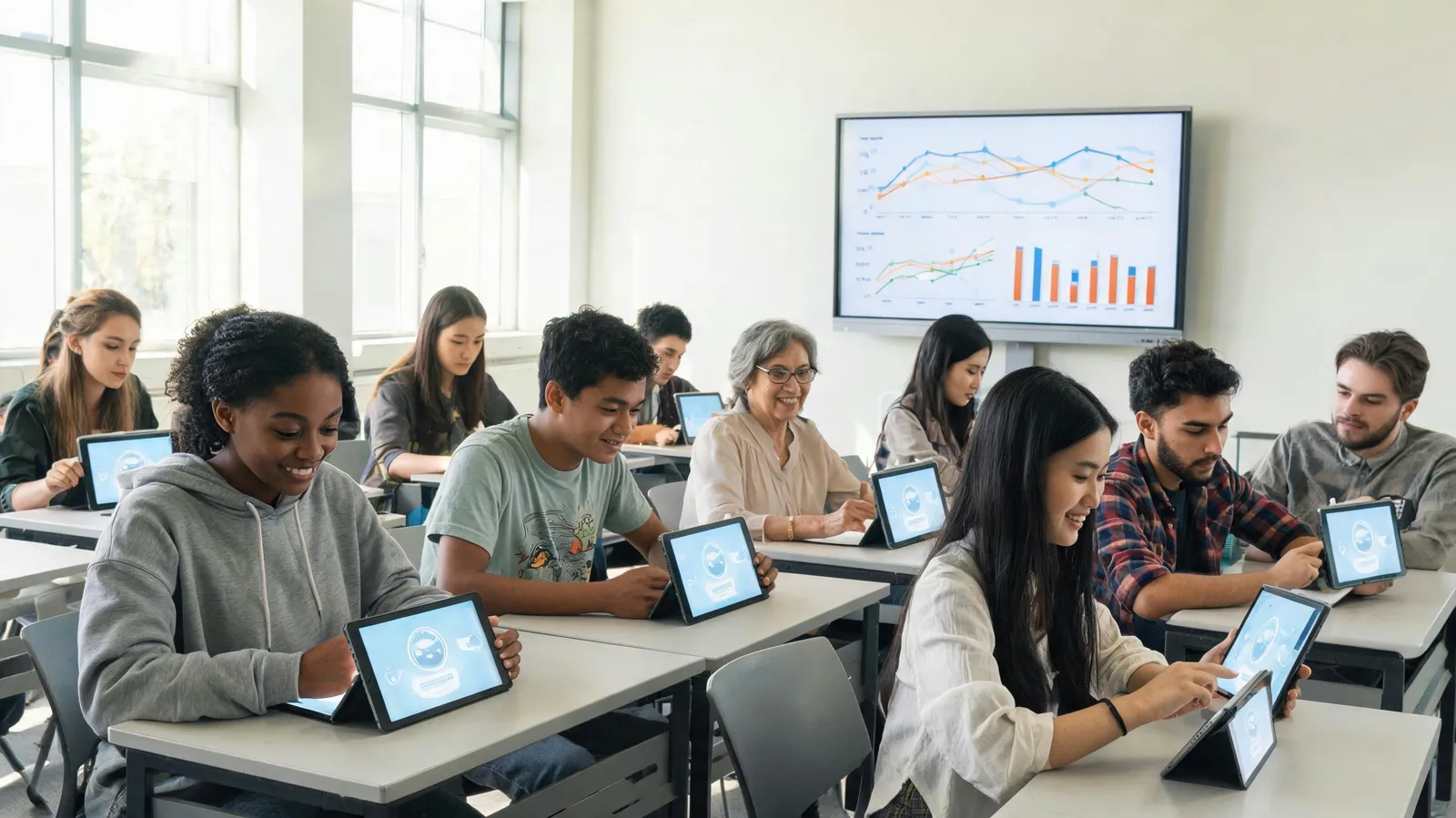
Community colleges enroll a wide range of students, and many come to campus underprepared in math and English. Conventional developmental courses frequently miss individual learning gaps, which contributes to high dropout rates. Adaptive algorithms power AI tutors that deliver personalized support calibrated to each student's current level. For instance, research from the Community College Research Center in 2023 reported that students in developmental math who used AI-driven tutoring passed at a rate 15% higher than peers in traditional sections. These systems continuously adjust difficulty, providing hints and practice items matched to the needs of each learner.
AI tutors also offer round-the-clock availability, which can be essential for students balancing jobs and family responsibilities. A pilot at Houston Community College that introduced AI tutoring into English composition lowered withdrawal rates by 20% and raised course completion by 12%. The cost efficiency stands out: a single AI tutoring system can serve thousands of students at once, allowing instructors to concentrate on more advanced teaching tasks. That scalability matters greatly for institutions with limited resources. Still, obstacles persist, such as guaranteeing equitable access to devices and internet service and preparing faculty to use AI effectively.
Corporate Upskilling and Reskilling with AI Tutors

In the business world, the useful lifespan of skills keeps getting shorter. Firms such as IBM and AT&T have adopted AI tutors to provide personalized learning paths at scale. IBM's AI-powered 'Your Learning' platform applies cognitive computing to recommend courses according to employees' roles, skill gaps, and career goals. IBM reports that this cut training time by 40% and improved knowledge retention by 30%. AI tutors also deliver real-time performance support: chatbots such as 'Ask AT&T' respond to technical questions while employees work, which reduces downtime and lifts productivity.
Microlearning is another area where AI proves valuable. Rather than long workshops, employees get short lessons through mobile apps, with spaced repetition algorithms reinforcing the material. A 2024 Deloitte report found that companies using AI-driven upskilling experienced a 25% rise in internal mobility and a 20% decrease in external hiring costs. The return on investment is evident: AI tutors help close skill gaps and also strengthen employee engagement and loyalty. Even so, successful deployment depends on careful alignment with business objectives and a culture that supports continuous learning.
Academic Integrity and AI-Assisted Homework in Universities
As AI tutors become more common, debates about academic integrity have intensified. When students use AI to finish homework, how can universities tell the difference between legitimate assistance and plagiarism? Tools such as Turnitin's AI detection feature claim to identify AI-generated text, but their accuracy is disputed. A 2024 Stanford University study found that false positives fall disproportionately on non-native English speakers, which raises fairness concerns. Universities are responding by revising honor codes to require students to disclose AI use and to submit reflective essays about their learning process.
Some institutions are redesigning assessments instead of banning AI. The University of California, Berkeley, now permits AI tools in certain exams and emphasizes critical thinking and application. Open-book exams that allow AI test students' capacity to synthesize information and solve complex problems—abilities that matter more in the AI era. Similarly, assignments calling for personal reflection, oral presentations, or hands-on projects are harder to automate. These approaches uphold integrity while encouraging deeper learning. The central point is to move from policing to pedagogy, teaching students to use AI ethically and effectively.
Micro-Credentials and Competency-Based AI Tutoring Pathways
Micro-credentials are short, focused certifications that verify specific skills. AI tutors are well suited to support this model because they enable self-paced, mastery-based learning. Platforms such as Coursera and edX use AI to assess learner progress and issue digital badges once competencies are demonstrated. A 2024 survey by the University Professional and Continuing Education Association found that 60% of employers regard micro-credentials as valid signals of skill, particularly in tech fields.
Stackable credentials let learners accumulate a portfolio of skills that can be combined toward a degree or career advancement. AI tutors support this by suggesting next steps based on prior learning and labor market data. For example, a learner might earn a micro-credential in data analysis and then stack it with one in machine learning to qualify for a data scientist role. This modular approach is especially useful for lifelong learners who need to reskill quickly. Challenges remain, including standardizing credentials and ensuring quality assurance. As the job market continues to evolve, AI-powered micro-credentials could become the building blocks of a more flexible and equitable education ecosystem.
Conclusion
AI tutoring is not a cure-all, but it provides a powerful set of tools for addressing some of education's most persistent problems. From community colleges to corporate training, from academic integrity to micro-credentials, AI tutors are changing how people learn and work. To maximize benefits and reduce risks, we must invest in ethical guidelines, educator training, and ongoing research. The aim is not to replace human teachers but to augment their capabilities and democratize access to personalized learning. As this transformation unfolds, the question is not whether AI will change education, but how we can steer that change toward equity, quality, and lifelong opportunity.