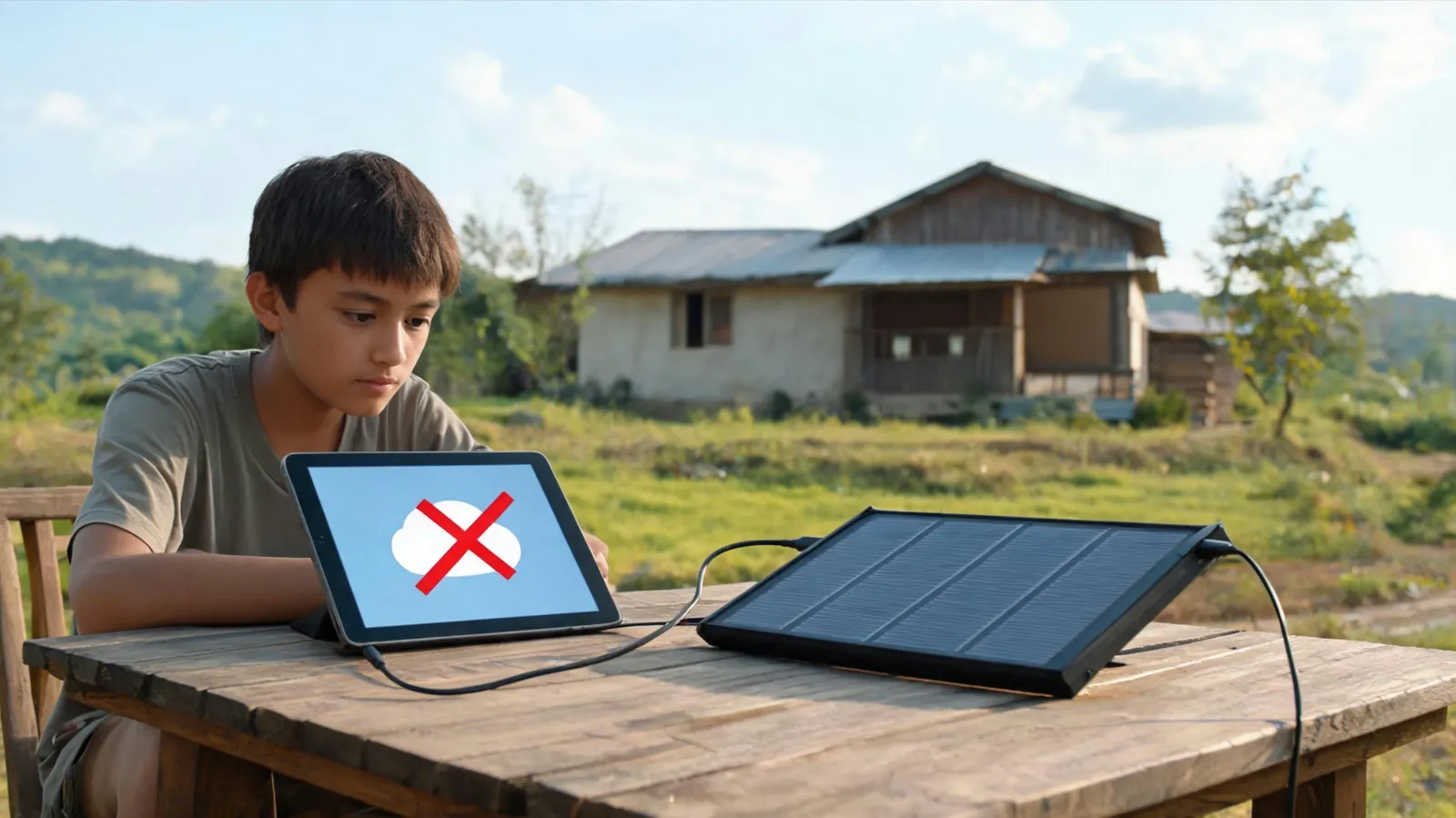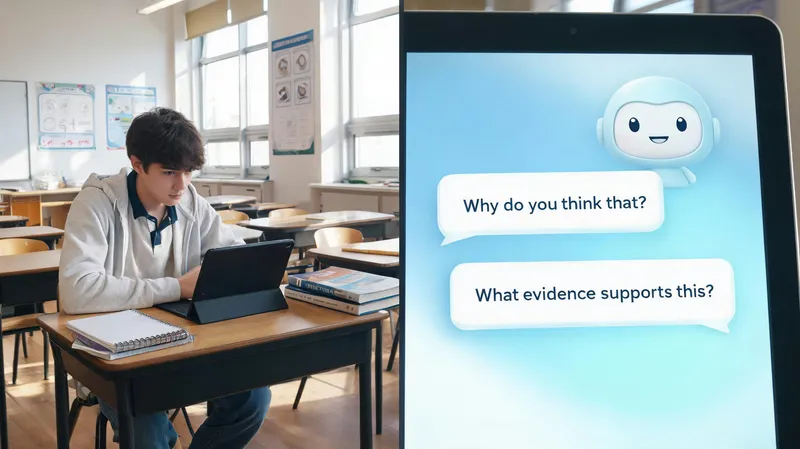
The pandemic did not invent the educational digital divide; it made an existing one impossible to ignore. While some students moved into online classrooms without friction, many others were shut out—without dependable connections, adequate devices, or materials they could actually use. This article contends that fair access to digital learning calls for more than equipment: it requires tutoring that respects students' cultures, design that works for learners with disabilities, and public funding that lasts. If these structural obstacles are left in place, digital education will keep enlarging the opportunity gap for low-income, rural, disabled, and multilingual students.
1. Removing Access Barriers for Low-Income and Rural Learners
The connectivity gap is the most obvious face of the educational digital divide. Pew Research Center data show that about 15% of U.S. households with school-age children do not have high-speed internet at home, and the share is markedly higher among low-income and rural families. The Federal Communications Commission puts the number of Americans still without broadband infrastructure meeting basic speed thresholds at more than 14 million, concentrated disproportionately in rural areas. That is not a minor annoyance; it blocks full participation in contemporary education.
Picture a student in rural Appalachia driving to a fast-food parking lot to download assignments, or a low-income urban family with three children sharing one smartphone for remote classes. Such situations are systemic rather than exceptional. The educational digital divide is a durable feature of an unequal society, not a passing emergency.
Strategies that actually widen access have to move past one-time device giveaways. Community partnerships—for instance, districts working with local libraries to extend Wi-Fi hotspot access—have produced measurable gains. Device lending efforts, including pilots in California's Riverside County, raised student engagement by more than 30%. Policy options include universal broadband subsidies, municipal Wi-Fi networks, and obligations on internet providers to offer affordable plans to low-income households. The Emergency Connectivity Fund, set up by the FCC in 2021, directed more than $7 billion to schools and libraries for connectivity—an approach worth making permanent rather than treating as a pandemic leftover.
2. Building Multilingual, Culturally Responsive Tutoring

A device and a signal are necessary but not enough. Equitable digital learning also depends on content and instruction that reflect the cultural and linguistic diversity of the student body. Culturally responsive pedagogy—connecting curriculum to students' lived experience and cultural references—has been linked to stronger engagement and academic results, especially for multilingual learners. Even so, many digital tutoring platforms stay monolingual and culturally neutral, in effect shutting out students whose home languages and cultural contexts fall outside the dominant norm.
National Center for Education Statistics research shows that more than 10% of U.S. public school students are English language learners, and that share is rising. A platform that offers English-only content, with no translation or cultural adaptation, does not serve these students. Platforms that build in multilingual interfaces, culturally relevant examples, and diverse tutor representation, by contrast, show higher completion rates and greater student satisfaction.
Ways to build inclusive tutoring include: (1) providing real-time translation or bilingual interfaces; (2) tailoring examples and scenarios to students' cultural backgrounds; and (3) recruiting tutors from diverse linguistic and cultural communities. Bilingual programs that work, such as dual-language immersion schools, point the way: they treat home languages as assets rather than deficits. Tools like TalkingPoints, which enables two-way translated communication between teachers and families, illustrate how technology can close cultural gaps instead of widening them. The aim is not simply to translate content but to design learning that affirms who students are.
3. Making Digital Learning Accessible for Students with Disabilities
In digital learning environments, students with disabilities encounter some of the harshest barriers. A 2023 review of the top 1,000 education websites found that more than 60% failed basic accessibility standards, including screen reader compatibility, video captioning, and keyboard navigation. For the roughly 7.5 million students with disabilities in U.S. public schools, digital learning can therefore be not merely ineffective but actively exclusionary.
Legal tools exist: the Americans with Disabilities Act (ADA) and the Web Content Accessibility Guidelines (WCAG) lay out explicit requirements for digital accessibility. Enforcement, however, is uneven, and many edtech developers treat accessibility as an afterthought. The results are concrete: a blind student cannot use a platform without screen reader support; a deaf student cannot follow a video that has no captions. These are civil rights matters, not niche concerns.
Universal Design for Learning (UDL) offers a proactive framework. Its principles—multiple means of representation, engagement, and expression—make learning environments flexible and accessible from the outset rather than retrofitted later. Examples include text alternatives for images, captions and transcripts, and letting students show what they know in various formats. Assistive technologies such as text-to-speech software, braille displays, and speech-to-text tools can extend students' capabilities further. Districts that have adopted UDL report better outcomes not only for students with disabilities but for all learners. Accessibility is a design opportunity, not a burden.
4. Durable Cost Models and Public-Sector Provisioning
Sustained public investment is a precondition for closing the educational digital divide. The Emergency Connectivity Fund showed that federal money can expand access quickly, but because it was temporary it left schools and families uncertain. Durable cost models need a blend of public funding, public-private partnerships, and open educational resources (OER).
Government action is central. The Infrastructure Investment and Jobs Act contains $65 billion for broadband expansion—a substantial down payment on universal connectivity. Still, the money must be aimed at underserved communities and paired with digital literacy programs. Comparative evidence indicates that well-designed public funding models reach low-income and rural populations more effectively than purely market-driven approaches. The private sector can contribute through public-private partnerships (PPPs), but those arrangements need to be structured around the public interest rather than shareholder returns alone.
Among innovative cost approaches is OER, which can cut spending on textbooks and digital content sharply. A 2022 study found that OER adoption saved students more than $1 billion in textbook costs while learning outcomes held steady or improved. Scalable edtech solutions—such as cloud-based platforms serving several districts—can reduce per-student costs. Effective PPPs, like the Verizon Innovative Learning program, supply devices and connectivity to under-resourced schools, but they need to sit within a broader strategy rather than replace public provisioning. The aim is a mixed model that draws on public funding, private innovation, and open resources to secure equitable technology access.
Conclusion
The educational digital divide is not a technical problem that more devices or faster internet will solve on its own. It is a structural inequity requiring a multi-pronged response: expanding access for low-income and rural students, designing culturally responsive and multilingual tutoring, ensuring accessibility for students with disabilities, and putting sustainable public funding models in place. These barriers are interlinked—a student without broadband is also likely to lack culturally relevant content and accessible design.
Equity in digital education is a social justice question. A fair society cannot leave millions of students behind because of their zip code, their language, or a disability. Emerging technologies—from AI-powered translation to adaptive learning platforms—open new possibilities, but they must be deployed with equity as a design principle rather than an afterthought. The call to action is plain: policymakers, educators, and edtech developers must commit to sustained investment and inclusive design. Bridging the divide is not optional; it is essential to the future of education and to the health of our democracy.