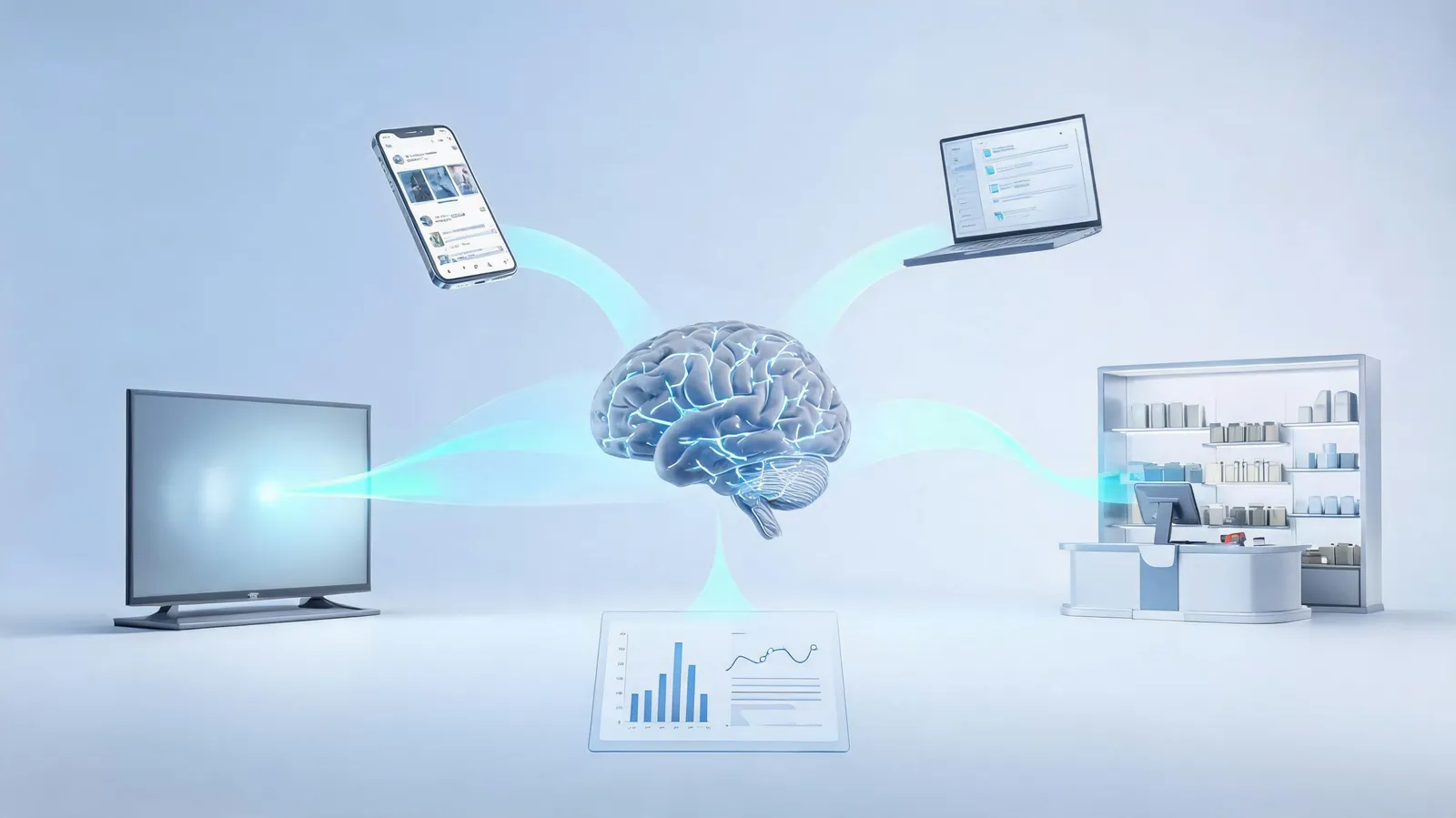
In a media environment that is increasingly fragmented, marketers frequently spend large sums on campaigns they cannot measure precisely, and as much as 30% of ad spend is often misattributed. Conventional measurement approaches have difficulty handling multi-touch attribution, offline conversions, and long-term brand effects. AI campaign analytics addresses these problems by providing precise, causal measurement of campaign impact across every touchpoint, which supports data-driven decisions and helps maximize ROI.
Attribution Modeling That Covers Digital and Offline Touchpoints
AI-powered multi-touch attribution (MTA) combines digital and offline data so that credit is assigned accurately to each touchpoint. In one case, a retailer linked TV ads to online conversions with AI and raised ROI by 25%. By matching CRM data with ad platform data, AI surmounts data silos and identity resolution challenges, cutting wasted ad spend by as much as 20%.
Unifying online and offline data gives AI a holistic view of the customer journey. Marketers can then optimize how spend is allocated and improve campaign effectiveness.
Experimentation and Causal Inference for Campaign Interventions
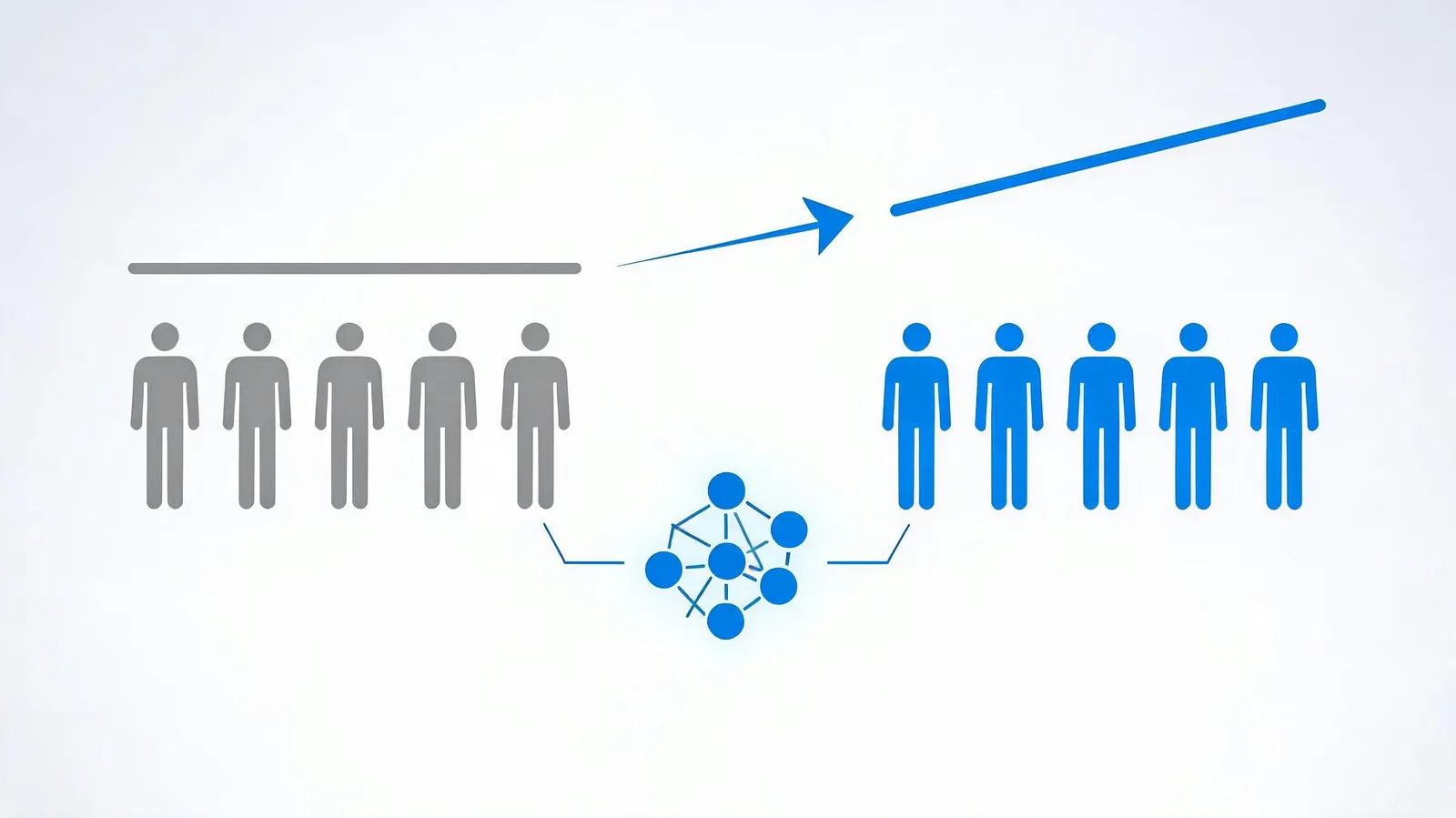
With AI-powered A/B testing and multivariate experiments, campaign variations can be tested rapidly and with statistical rigor. A political campaign used AI to test messaging variations and increased voter turnout by 5%. Causal inference techniques, including synthetic control and propensity score matching, isolate campaign effects; an example is measuring brand lift from TV campaigns with AI-generated control groups. AI causal methods outperform traditional holdout tests in both speed and accuracy.
These techniques let marketers understand true campaign lift and make informed decisions about interventions.
Real-Time Dashboards and Decision Support for Campaign Managers
AI-driven dashboards refresh in real time and flag anomalies, so campaign managers can adjust ad spend while a campaign is running. For instance, a manager saved 15 hours per week and improved response rates by 10% with AI alerts. Prescriptive analytics and automated recommendations propose optimal budget allocation across channels, producing a 15% increase in conversions. Integration with marketing automation platforms streamlines execution.
Real-time decision support lets marketers act quickly and maximize campaign performance.
Metrics for Persuasion, Turnout, and Long-Term Brand or Trust Effects
AI models measure persuasion and attitude shift through sentiment analysis, as in political campaigns where the goal is to gauge voter persuasion. The correlation between persuasion metrics and actual voting behavior is strong. Long-term brand equity and trust are tracked with AI that analyzes social media and review data, and these measures have predictive power for future sales. For example, a brand saw a 20% increase in trust score that correlated with a 10% sales lift.
These advanced metrics go beyond clicks to capture how campaigns genuinely affect brand perception and behavior.
Conclusion
AI analytics strengthens attribution, experimentation, real-time decision-making, and advanced metrics, giving users a competitive advantage and significant ROI gains. As AI integrates with emerging technologies such as generative AI, predictive campaign optimization will become even more powerful. Adopting AI campaign analytics can help unlock the full potential of marketing efforts.