Bandit Algorithms and Reinforcement Learning for Ad Allocation
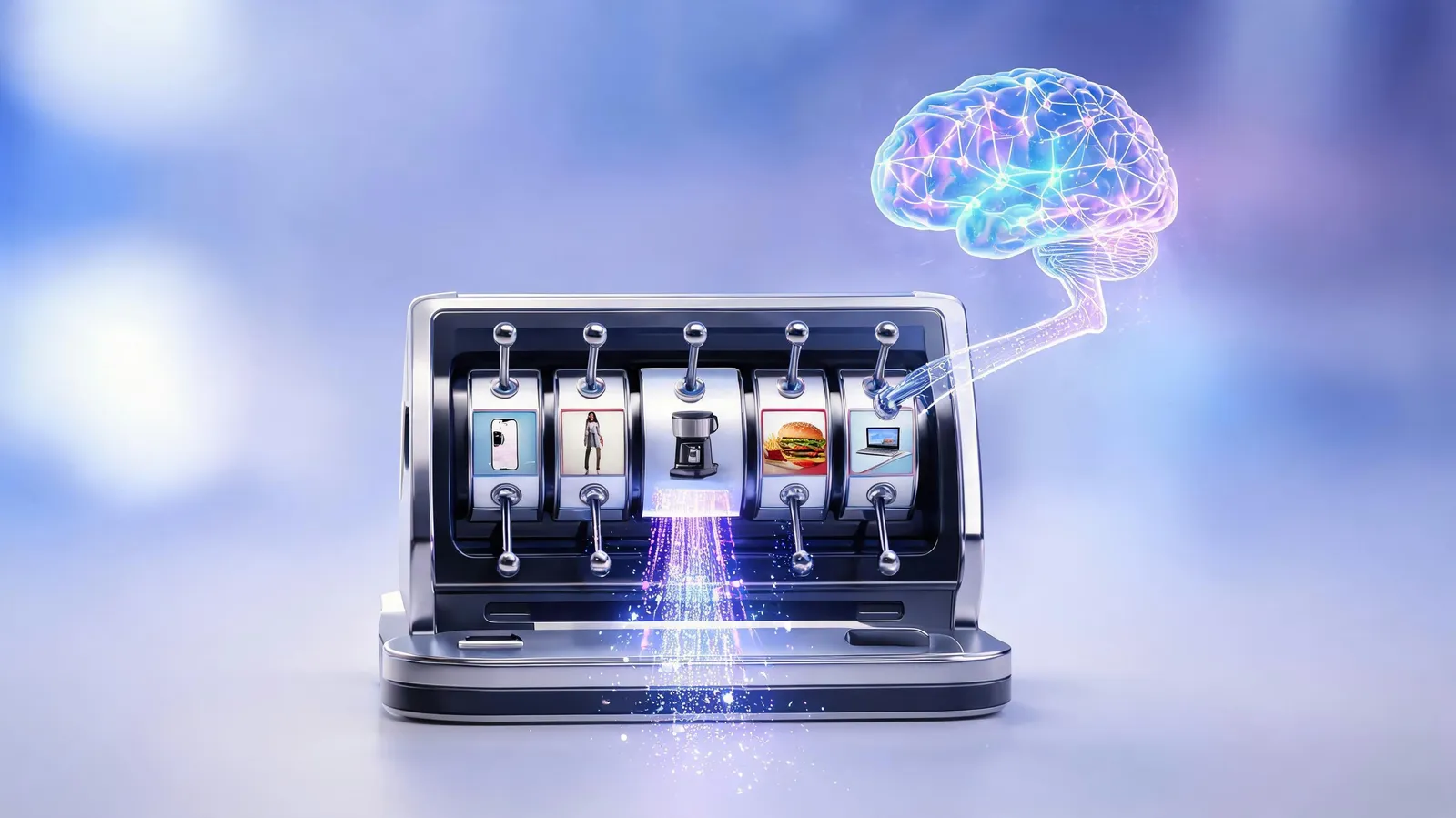
Intelligent ad distribution is the starting point for any responsive campaign. Multi-armed bandit methods and reinforcement learning (RL) let marketers divide budget among ad variants dynamically, drawing on live performance signals to improve returns.
Balancing Exploration and Exploitation
Bandit algorithms revolve around a core question: keep funding the variant that currently leads, or test others that might deliver greater rewards? Fixed traffic splits, as used in conventional A/B testing, converge slowly and carry a meaningful opportunity cost. Approaches such as Thompson Sampling and Upper Confidence Bound (UCB) move traffic toward winning variants while still giving weaker performers a chance to prove themselves.
A US e-commerce brand illustrates the point: after adopting Thompson Sampling for ad allocation, it saw click-through rate (CTR) rise 20% over two weeks—a level of confidence a static A/B test would have needed months to reach. The algorithm kept refining its estimates of each ad's performance, cutting regret and capturing more conversions.
Reinforcement Learning for Sequential Choices
Bandits address independent decisions; reinforcement learning is built for sequences. RL agents learn policies by interacting with their environment, earning rewards for actions such as serving an ad or adjusting a bid, and adapting as user behavior and context shift.
An RL agent can, for instance, move budget among social, search, email, and CTV in response to real-time rewards like conversions or revenue. In one US retail case, an RL system shifted spend from CTV to search during hours of peak intent, lifting return on ad spend (ROAS) by 30%. The agent had learned that search queries rose around lunch breaks and redirected budget accordingly.
With bandits and RL in place, campaigns can improve continuously in real time without manual tuning.
Adapting Messages to Sentiment During Live Events and Debates
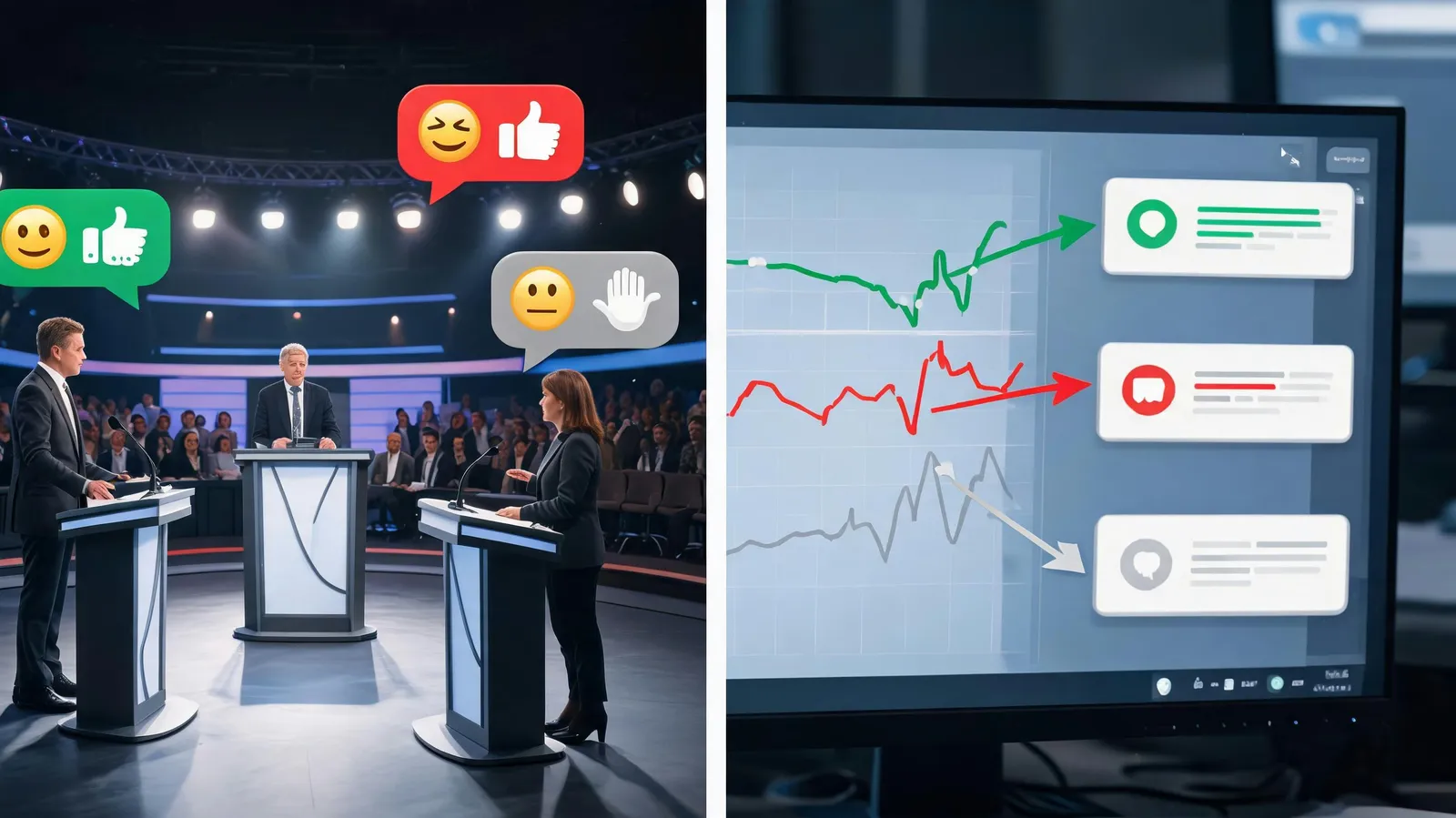
Audience mood can turn within seconds during live events—political debates, sports finals, breaking news. Real-time sentiment analysis lets brands adjust tone and content automatically to remain relevant and empathetic.
Detecting Sentiment in Social Media and Live Streams
Sentiment tools and APIs built on NLP models and streaming APIs can process social posts, live chat, and video transcripts as they happen. During a 2024 US presidential debate, one brand used a sentiment analysis API to watch reactions on Twitter and Facebook. When negative sentiment surged around a specific topic, the system paused humorous ads and switched to empathetic messaging, heading off backlash.
Such adjustments can raise engagement by as much as 25% and strengthen brand safety, according to reported metrics. Feeding sentiment scores into the ad server lets marketers trigger dynamic creative optimization (DCO) rules that pick the message variant best suited to the current emotional climate.
Emotional Triggers in Dynamic Creative Optimization
DCO goes further than simple A/B testing: it assembles copy, images, and calls-to-action in real time based on emotional triggers. A US telecom brand responded to a natural disaster this way—its system detected a spike in negative sentiment and replaced promotional messaging with a supportive, empathetic tone, offering free calls to affected areas. Ad engagement rose 40%, and brand perception improved notably.
Pairing sentiment analysis with DCO helps messaging land emotionally even when conditions are volatile.
Coordinating Social, Search, Email, and CTV
Seamless coordination across channels is essential to real-time optimization. Cross-channel orchestration keeps messaging and budget aligned with the customer journey and delivers a consistent experience.
A Unified Journey Built on Integrated Data
Siloed channels produce fragmented experiences. Someone who abandons a cart on social should see a retargeting ad, then receive a personalized email if they still don't convert. A Customer Data Platform (CDP) pulls together data from social, search, email, and CTV, enabling activation in real time.
A US fashion retailer used a CDP to unify online and offline data. When a user browsed a product on mobile without buying, the system served a retargeting ad on social and then sent a personalized email with a discount code. The orchestration lifted conversion rate by 18%.
Budget and Creative Allocation in Real Time
Algorithmic budget pacing directs spend to the strongest channels as conditions change. During a flash sale, a US electronics brand moved 30% of its CTV budget to search and social within minutes to capture peak intent, improving ROAS by 30%.
Creative choices matter too: the same asset can perform differently on social versus CTV. Orchestration engines can adapt formats and messaging per channel automatically, preserving both relevance and consistency.
Safety Guardrails for Fast Responses and Crises
Speed without safety invites trouble. Guardrails keep real-time optimization from undermining brand safety or compliance.
Automated Brand Safety and Compliance Screening
Pre-approved message templates and forbidden-word lists serve as the first line of defense. Sentiment thresholds can route work to a human reviewer when negativity passes a set level. One US financial services brand, for example, set a rule: if negative sentiment around a topic exceeded 60%, all automated messaging paused and a person reviewed the creative.
Automated checks can also verify adherence to regulations such as GDPR, CCPA, and FTC guidelines, so dynamic messaging stays within the law.
Crisis Protocols and Escalation Paths
When a PR crisis hits, pausing all automated messaging is often the prudent move. After an operational meltdown, a US airline immediately halted promotional ads and switched to a holding message pointing customers to support, which helped prevent further backlash.
Recommended practices include human-in-the-loop approval for sensitive topics, clearly defined escalation paths, and post-crisis reviews that refresh the guardrails. Building guardrails into the optimization engine lets marketers move quickly without putting the brand at risk.
Conclusion
Real-time campaign optimization has shifted from optional advantage to operational necessity. Multi-armed bandits, sentiment-driven adaptation, cross-channel orchestration, and solid guardrails together give marketers agility and ROI that were previously out of reach. Speed paired with safety is the new standard. As generative AI matures, fully autonomous real-time creative generation within ethical limits may become feasible, reshaping the field further. Building on these pillars helps teams keep pace in a fast-moving digital marketing environment.