During the last presidential election cycle, synthetic audio and video sometimes reached voters within hours, pushing conventional fact-checking to its limits. Generative AI has lowered both the cost and the skill required to produce persuasive false claims, deepfakes, and fabricated campaign material. Countering this kind of misinformation calls for a layered approach that combines detection and provenance, ready-to-use response procedures, cooperation between platforms and newsrooms, and media literacy aimed at voters.
Detection and Provenance for Fabricated Campaign Content
Detection and provenance tools serve as an initial layer of defense. They help campaigns, journalists, and platforms spot manipulated material before it gains reach.
Forensic Techniques for Deepfakes and Synthetic Audio or Video
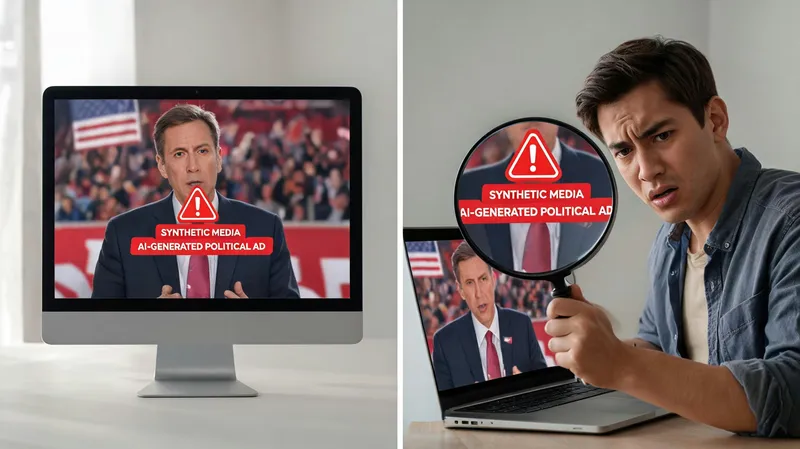
Forensic analysis looks for audio-visual artifacts and metadata inconsistencies that point to synthetic media. Spectral analysis, for instance, can expose unnatural frequency patterns in AI-generated audio. In one case during the 2024 primaries, a fabricated candidate audio clip spread on social media and was identified through spectral analysis.
Frequently observed forensic indicators include:
- Video showing unnatural blinking or lip-sync mismatches.
- Lighting or shadows that are inconsistent or physically implausible.
- Missing metadata or traces left by editing software.
- Audio spectral anomalies, such as absent room tone or a robotic cadence.
Such methods are not foolproof, yet they can deliver valuable early warnings.
Provenance Standards and Watermarking, Including C2PA
Standards such as C2PA (Coalition for Content Provenance and Authenticity) and watermarking embed verifiable metadata in media. Major platforms and camera manufacturers have adopted C2PA as a way to signal authenticity. Watermarking has limits, however: re-encoding, screenshotting, or cropping can remove watermarks, which makes provenance harder to confirm.
Campaigns should:
- Ask media creators for C2PA credentials.
- Share content using tools that retain provenance.
- Train staff on what watermarking can and cannot do.
Human Verification Workflows for Newsrooms and Campaigns
Human verification remains indispensable. Newsrooms and campaigns should adopt checklists for confirming sources, including reverse image searches, geolocation, and chronolocation. Expert networks and open-source intelligence (OSINT) communities can supply rapid analysis.
A sample verification checklist:
- Establish the original source and the upload time.
- Run reverse image and video searches.
- Inspect metadata and C2PA manifests.
- Ask OSINT experts to help with geolocation.
- Compare findings with official statements.
Forensic tools, provenance standards, and human expertise together form a strong detection layer.
Rapid Response Playbooks for Viral Deepfakes and False Claims

Once AI-generated misinformation begins to spread widely, speed and coordination matter greatly. A rapid response playbook lets campaigns and newsrooms act with purpose.
Pre-bunking and Inoculation Before False Claims Spread
Pre-bunking, also called inoculation, means warning audiences about manipulation tactics before they meet false claims. Research from Cambridge and Jigsaw indicates that pre-bunking can make people less susceptible to misinformation. In one example, a campaign released a "deepfake warning" video ahead of time explaining how to recognize synthetic audio, and sharing of a later deepfake declined.
Tactics that tend to work include:
- Posting short videos that show common deepfake signs.
- Working with local influencers to spread awareness.
- Using humor and plain language so the material is easy to share.
Incident Response Timeline: Detect, Verify, Respond, Correct
A 60-minute checklist for campaign communications teams:
- Detect (0-10 min): Watch social media and tip lines for suspicious content.
- Verify (10-30 min): Run forensic checks and consult experts.
- Respond (30-45 min): Release a holding statement if verification is still under way.
- Correct (45-60 min): Publish a correction backed by evidence and notify platforms.
Case study: in a 2024 Senate race, a fabricated audio clip of a candidate was identified and debunked within 45 minutes, which limited its spread.
Coordinated Corrections Across Owned, Earned, and Paid Media
Corrections need to be coordinated across owned media (website, email), earned media (press), and paid media (ads). A public correction statement should be written so that it does not amplify the falsehood. Lead with the truth and supply evidence instead.
Evidence on the "continued influence effect" indicates that repeating a myth can strengthen it. Corrections should therefore:
- Present the accurate information first.
- Explain why the false claim is wrong.
- Offer a clear call to action, such as "Share the truth."
Cooperation Models for Verification Between Platforms and Newsrooms
No single actor can address AI-generated misinformation alone. Platforms, newsrooms, and fact-checkers need to work together.
Shared Signals and Escalation Channels
Trusted flagger programs and election integrity partnerships let platforms and newsrooms exchange signals and escalate threats. During the 2024 election, for example, a joint platform-newsroom deepfake verification team identified and removed a synthetic video within hours.
What effective collaboration looks like:
- Dedicated communication channels (e.g., Slack, encrypted messaging).
- Clear escalation protocols for high-risk content.
- Regular joint training exercises.
Joint Fact-Checking and Open Verification Databases
The International Fact-Checking Network (IFCN) and its AI misinformation working group support joint fact-checking. Open verification databases let newsrooms share findings and shorten time-to-correction. Data shows that when newsrooms share verification data, correction times fall by up to 40%.
Examples of initiatives include:
- FactCheck.org's collaboration with platforms on deepfake detection.
- Reuters' partnership with Facebook to flag manipulated media.
Policy and Governance Challenges in Cross-Sector Work
Collaboration raises questions about liability, censorship, and transparency. Memoranda of understanding (MOUs) between platforms and newsrooms can address these issues by defining roles, data-sharing rules, and dispute resolution.
Recommendations for MOUs:
- Define clear criteria for content removal.
- Ensure transparency in decision-making.
- Protect journalistic independence.
Media Literacy for Voters Encountering AI Content
Media literacy is the long-term safeguard against AI-generated misinformation. Voters need simple, memorable habits for checking content.
Lateral Reading and Source Evaluation in the AI Era
Lateral reading, which means leaving a site to check other sources, is an effective way to evaluate AI-generated content. Findings from the Stanford History Education Group show that lateral readers judge credibility more accurately. For AI content, adaptations include checking whether an image appears elsewhere and looking for the original context.
Steps for lateral reading:
- Leave the original content.
- Open new tabs to search for the source.
- Check what trusted outlets say.
- Verify the image or audio with reverse searches.
Public Awareness Campaigns and Simple Verification Habits
Public awareness campaigns such as "Stop, Check, Verify," offered in multiple languages, encourage users to pause before sharing. Data shows that after literacy interventions, user reporting of suspicious content rises by 30%.
Simple verification habits:
- Pause before sharing.
- Check the source's credibility.
- Verify with a trusted outlet.
Bringing Media Literacy into Civic Education and Platform Design
Schools can add deepfake literacy modules to civic education. In a case study from a California high school, students who completed a module were 50% less likely to share deepfakes. Platforms can also prompt users to verify before sharing, for example by asking "Do you know where this came from?"
Recommendations for platforms:
- Add friction to sharing unverified content.
- Provide context labels for AI-generated media.
- Partner with educators to create in-app literacy tips.
Conclusion
Countering AI-generated misinformation in campaigns calls for an integrated defense: detection and provenance tools, rapid response playbooks, platform-newsroom collaboration, and media literacy for voters. No single actor can solve this alone; trust and democracy depend on coordinated action. As generative AI evolves, we must invest in AI-assisted verification tools and adaptive governance to protect the integrity of elections.