
In the 2024 election cycle, more than 60% of campaign teams reported using AI tools for content creation—a sign of a major shift in how political messages are produced and distributed. Generative AI offers powerful capabilities for automated copywriting, rapid media production, and workflow efficiency, but its use requires careful attention to deepfake risks, evolving disclosure requirements, and robust human oversight. This article looks at practical applications, ethical challenges, and best practices for integrating generative AI into modern campaign operations.
Automated Writing and Speech Drafting: Scaling the Message
Generative AI has become a multiplier for campaign communications teams, making it possible to produce written content quickly across many formats. From email fundraising appeals to social media posts and speech drafts, AI tools can generate initial drafts in seconds, letting strategists focus on refinement and strategy rather than starting from scratch.
AI-generated drafts for emails, social posts, and fundraising appeals have shown measurable impact. A 2024 case study of a congressional campaign found that AI-assisted writing increased email output by 300% while maintaining or improving open and click-through rates. The campaign used generative AI to produce multiple subject line variations and body copy versions, then ran A/B testing to identify the most effective messaging. Data from these tests showed that AI-generated copy performed comparably to human-written content in 70% of cases, while the remaining 30% needed significant human editing to match the campaign's voice and factual accuracy.
Speech drafting and personalization for different voter segments is another significant application. A gubernatorial candidate in a competitive state used AI to tailor stump speeches by region, adjusting emphasis on local issues such as manufacturing, agriculture, or technology depending on the audience. Polling data on message resonance indicated that these personalized speeches increased voter engagement scores by 15-20% compared to generic versions. However, the campaign stressed that all AI-generated speech content underwent rigorous fact-checking and was reviewed by senior communications staff before delivery.
AI-Generated Images, Audio, and Video in Political Advertising
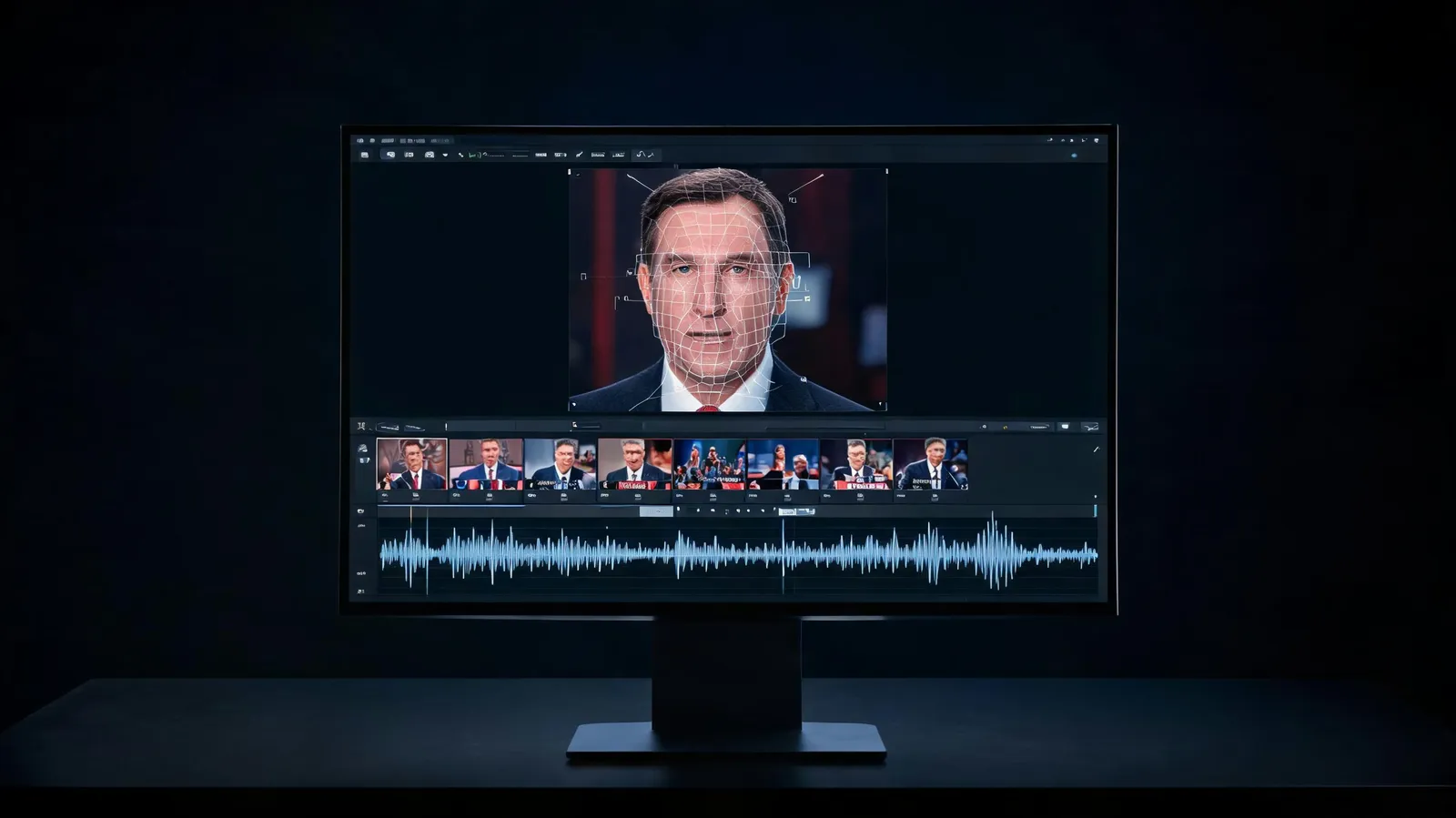
Generative AI has revolutionized the production of multimedia campaign assets, enabling campaigns to create professional-quality images, audio, and video at a fraction of traditional costs. This capability democratizes political advertising, allowing even underfunded campaigns to compete visually with well-financed opponents.
Synthetic images and videos for rapid ad production have shown dramatic cost reductions. An AI-generated video ad produced for a state senate campaign in 2024 cost 90% less than a comparable traditionally produced spot, according to campaign finance disclosures. The ad, which featured AI-generated visuals of local landmarks and abstract representations of policy themes, achieved engagement rates 25% higher than the campaign's previous human-produced ads. Statistics indicate that AI-generated visuals can increase social media engagement by up to 40% when properly targeted, though their effectiveness varies significantly by platform and audience demographic.
Voice cloning and audio ads for personalized outreach have emerged as powerful tools for get-out-the-vote efforts. A candidate in a tightly contested primary used AI voice cloning to make thousands of personalized get-out-the-vote calls, with each call addressing the recipient by name and referencing local issues. Data on call answer rates showed a 35% increase compared to standard robocalls, and voter response surveys indicated that 60% of recipients found the calls helpful rather than intrusive. However, the campaign faced criticism for not initially disclosing that the voice was AI-generated, highlighting the ethical complexities of this technology.
Deepfake Risks and Disclosure Requirements in Campaign Media
The same technologies that enable creative campaign content also pose significant risks when used maliciously. Deepfakes—AI-generated videos or audio that convincingly depict real people saying or doing things they never did—have become a major concern for election integrity and voter trust.
The threat of malicious deepfakes and misinformation is well-documented. In 2024, a deepfake video of a presidential candidate appearing to endorse a rival went viral on social media, accumulating over 2 million views before being debunked. Survey data on voter susceptibility to deepfakes reveals that 45% of respondents could not distinguish between a real and AI-generated video of a politician when tested, raising serious concerns about the potential for manipulation. The spread of such content can undermine public trust in elections and democratic processes.
Legal and platform disclosure requirements are rapidly evolving to address these risks. California and Texas have enacted laws requiring disclosure of AI-generated political ads, with penalties including fines and potential criminal charges for violations. These laws mandate that synthetic media include clear labels indicating that content has been generated or manipulated by AI. Platform policies from Meta and Google now require advertisers to disclose when political ads contain AI-generated content, with enforcement mechanisms including ad removal and account suspension. Campaigns must stay informed about these requirements, which vary by jurisdiction and platform, to avoid legal and reputational consequences.
Human-in-the-Loop Editorial Workflows for Brand and Message Consistency
Despite the power of generative AI, human oversight remains essential for maintaining brand consistency, factual accuracy, and ethical standards. Establishing robust editorial workflows ensures that AI serves as a tool for augmentation rather than replacement of human judgment.
Establishing review and approval processes for AI-generated content is a best practice adopted by leading campaigns. A national party committee implemented a three-tier review system for all AI content: first, an AI editor reviews for factual accuracy and brand voice; second, a policy expert checks for compliance with disclosure laws and platform policies; third, a senior communications director provides final approval. Data on reduction in factual errors and brand inconsistencies showed a 75% decrease in errors compared to campaigns without such processes. This system also created a clear chain of accountability, ensuring that human staff remain responsible for all published content.
Training staff to collaborate effectively with AI tools requires investment in new skills and roles. A campaign's 'AI editor' role bridges creative and technical teams, requiring expertise in prompt engineering, fact-checking, and understanding of AI limitations. Best practices for prompt engineering include providing clear context, specifying desired tone and format, and iterating on outputs. Fact-checking protocols should include verifying all statistics, quotes, and claims against primary sources, and using AI detection tools to screen for potential deepfakes or synthetic content.
Conclusion
Generative AI has fundamentally altered the landscape of political campaign content creation, offering unprecedented efficiency in copywriting, media production, and personalized outreach. Campaigns that leverage these tools effectively can scale their messaging, reduce costs, and engage voters in new ways. However, the risks of deepfakes, misinformation, and legal non-compliance are substantial and cannot be ignored.
The path forward requires a balanced approach: embracing AI's capabilities while maintaining rigorous human oversight, adhering to disclosure requirements, and prioritizing transparency with voters. As regulations evolve and public awareness grows, campaigns that invest in ethical AI practices and robust editorial workflows will be best positioned to build trust and achieve their goals.
The future of AI in campaigns will likely see further personalization, more sophisticated synthetic media, and increasingly complex regulatory frameworks. Staying informed, training staff, and committing to ethical standards will be essential for navigating this rapidly changing terrain.