Energy Consumption and Financial Feasibility of Vertical Farms
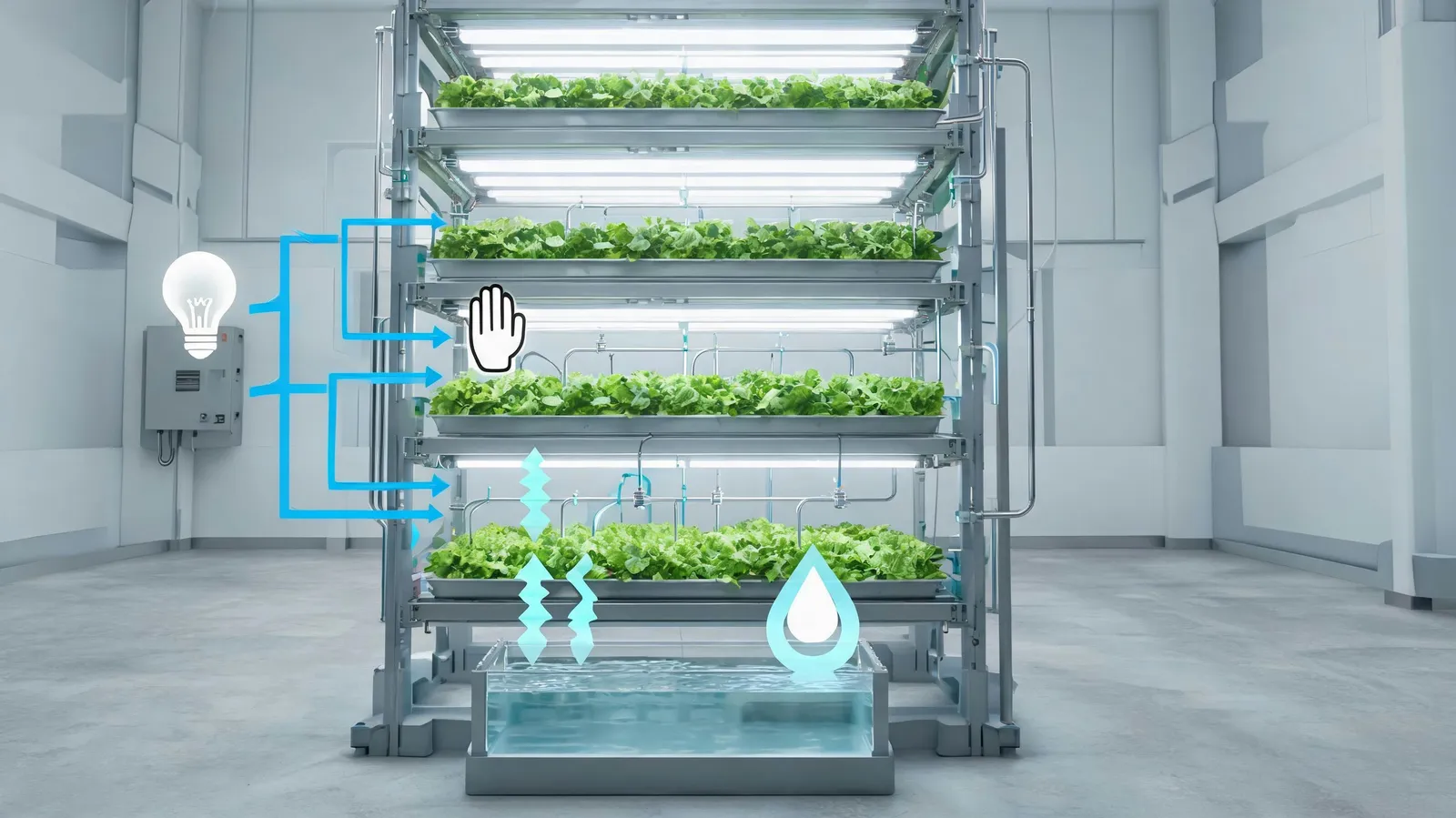
Vertical farms promise locally grown produce regardless of season, but that promise carries a significant energy burden. While conventional farms benefit from free sunlight, vertical operations rely completely on artificial lighting, climate control systems, and automation—all of which drive up electricity demand. Research from the Cornell University Controlled Environment Agriculture group in 2022 revealed that lighting alone can represent 50–70% of a vertical farm's total energy consumption, and energy costs per kilogram of produce frequently exceed those of field-grown crops by a factor of 10 or more. Nonetheless, advances in energy-efficient LEDs and the integration of renewable energy sources are starting to narrow this gap. Plenty Unlimited's farm in Compton, California, for instance, combines high-efficiency LEDs with a proprietary growth system to cut energy use per kilogram by 40% relative to earlier designs. In Denmark, Nordic Harvest powers its entire vertical farm with wind energy, showing that renewable integration can address both cost and carbon concerns.
Even with energy challenges, the economic rationale for vertical farming is becoming stronger in certain contexts. Startup costs remain steep—a mid-sized vertical farm may require $10–20 million in capital expenditure—but operational expenses are increasingly competitive for high-value crops. A 2023 analysis by AgFunder found that leading vertical farms achieve gross margins of 30–50% for leafy greens and herbs, on par with premium greenhouse operations. Yet setbacks such as Bowery Farming's bankruptcy in 2024 highlight the sector's volatility, emphasizing the need for rigorous unit economics. Location is critical: farms in areas with high land costs and strong demand for local produce, such as New York City or Singapore, demonstrate better financial viability than those in regions with inexpensive field agriculture. As technology matures and scale increases, industry experts project that energy costs per kilogram could fall by another 30% by 2030, making vertical farming economically viable for a broader range of crops.
Crop Selection and Yield Optimization in Controlled Environments
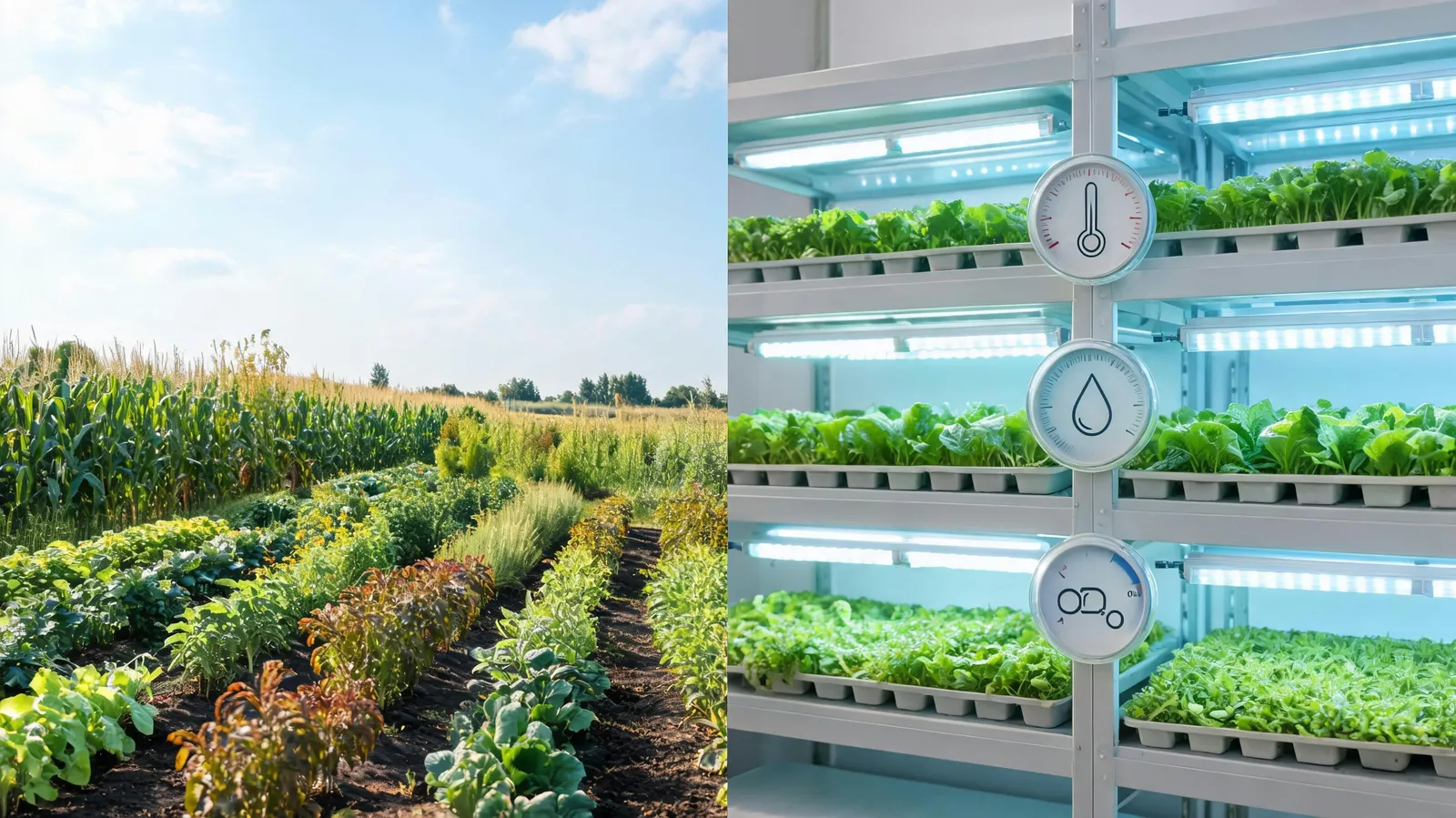
Not every crop is suited to the stacked trays of a vertical farm. The most successful commercial operations concentrate on leafy greens, herbs, microgreens, and strawberries—crops with short growth cycles, high value per pound, and compact size. A 2023 report from the USDA indicated that lettuce and herbs make up over 80% of vertical farm production in the United States. These crops perform well because they can be harvested multiple times per year, with some varieties completing a cycle in just 30 days. AeroFarms in Newark, New Jersey, for example, harvests leafy greens every 14–16 days, yielding 390 times more produce per square foot than a conventional field farm. Strawberries are also gaining ground; Oishii's vertical farm in Kearny, New Jersey, produces premium strawberries that sell for up to $6 each, illustrating the potential for high-value fruits.
Maximizing yield in controlled environments depends on precise management of light, CO2, nutrients, and temperature. Research from the University of California, Davis, has demonstrated that tailoring LED light recipes—specific combinations of red, blue, and far-red wavelengths—can increase lettuce yields by 20–30% while reducing energy use. Similarly, elevated CO2 levels (800–1200 ppm) can boost growth rates by 20–40% in leafy greens. Companies like Signify (formerly Philips Lighting) offer customizable LED systems that let growers adjust spectra for different crops and growth stages. Case studies from Japan's Spread Co. show that automated nutrient delivery and climate control can achieve yields of 50 kg per square meter per year for lettuce, compared to 3–5 kg in open fields. These advances not only improve productivity but also enhance quality, with controlled environments enabling consistent flavor, texture, and nutritional content year-round.
Urban Food Security and the Contribution of Vertical Agriculture
As cities expand, their reliance on imported food grows. The United Nations estimates that urban areas already consume 70% of the world's food supply, yet most of it travels hundreds or thousands of miles. Vertical farming offers a way to shorten supply chains and reduce vulnerability to disruptions such as extreme weather or transportation strikes. A 2023 study in the journal Nature Food found that integrating vertical farms into urban areas could reduce food miles by up to 90% for certain crops, cutting both carbon emissions and spoilage. Cities like Singapore, which imports over 90% of its food, have set ambitious goals to produce 30% of nutritional needs locally by 2030, with vertical farming playing a key role. The Singapore Food Agency has funded multiple vertical farm projects, including Sustenir Agriculture's farm, which grows kale and strawberries in a converted industrial building.
Beyond logistics, vertical farming can deliver social and economic benefits. A 2022 report by the NYC Economic Development Corporation highlighted that urban farms create 5–10 jobs per 1,000 square feet, offering employment in areas with limited opportunities. Community access is another advantage: farms like Green Bronx Machine in New York City partner with schools to provide fresh produce in food deserts, where access to affordable, nutritious food is scarce. Data from the USDA shows that food deserts affect 13.5 million Americans, and vertical farms can help fill that gap by supplying local grocery stores, restaurants, and food banks. However, challenges remain: high produce prices can limit accessibility for low-income residents, and energy costs may offset some benefits. Policy support, such as tax incentives and zoning allowances, will be critical to scaling these benefits equitably.
Conclusion
Vertical farming and controlled-environment agriculture are not replacements for traditional agriculture but powerful complements that can enhance food security, sustainability, and local resilience. The energy and economic challenges are real, but ongoing innovations in LED efficiency, renewable integration, and automation are steadily improving viability. Crop selection and yield optimization have advanced to the point where leafy greens and strawberries are commercially competitive in many markets. As cities continue to grow, integrating vertical farms into urban landscapes can reduce food miles, create jobs, and improve access to fresh produce. The future of food will likely be a hybrid: field agriculture for staple crops, and vertical farms for high-value, perishable produce in and near cities. With continued investment in research, policy support, and technological breakthroughs, vertical farming can play a meaningful role in feeding the world's urban population.