Introduction: Tools That Now Sit at the Desk
What began in research settings has become routine in studios and home offices. Novelists turn to large language models for plot brainstorming and line editing. Illustrators sketch out concept art by typing a description. Product designers churn through prototype variations in minutes instead of days. The change is not merely about tempo; it touches how creative labor is actually structured. As machine output and human judgment intermingle, familiar ideas about who authored a work, what counts as original, and which skills matter are being pulled into question.
Three threads run through this shift: AI cast as a partner in making things, the unsettled legal and ethical terrain of authorship, and the possibility that outsourcing mental effort weakens long-term creative ability. Seeing both the upside and the hazards lets creators decide deliberately how these systems fit into their practice.
1. Collaborator, Not Replacement
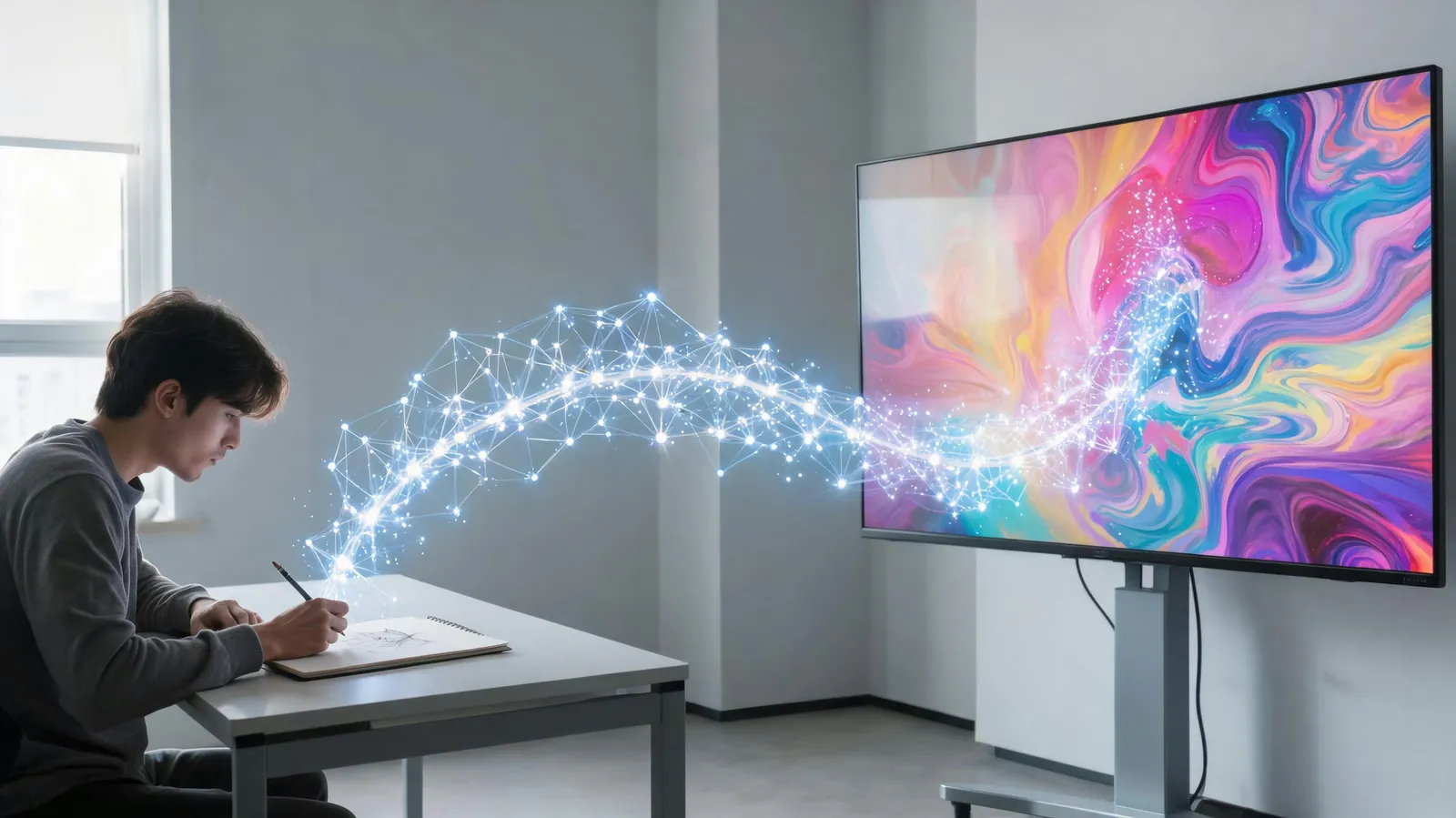
The more useful framing is that generative AI works alongside human creativity rather than standing in for it. In prose, systems such as ChatGPT and Claude can propose story openings, sketch character arcs, or break a block by producing rough drafts. For visual work, DALL-E, Midjourney, and Stable Diffusion let artists test ideas quickly, converting written descriptions into images useful as mood boards or finished pieces. On the design side, AI features in tools like Figma and Adobe's Firefly assist with layout prototypes, color palette generation, and rapid logo variations.
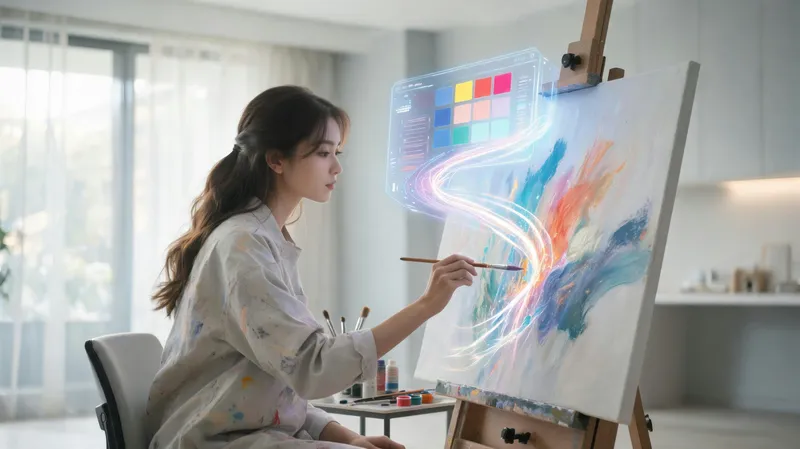
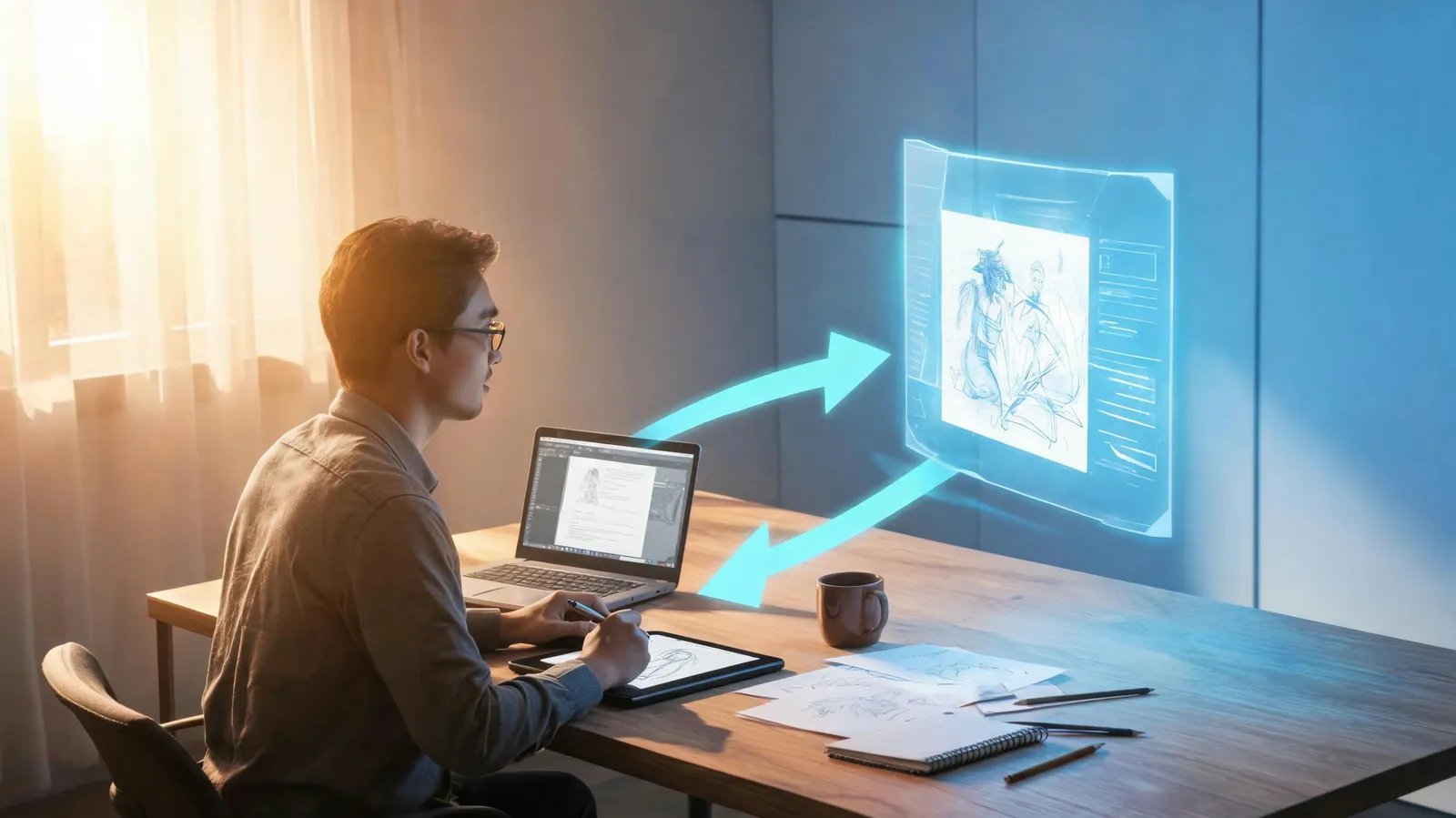
Iteration is where co-creation pays off. A person sets the direction, the model produces options, and the person curates, adjusts, and prompts again. This loop can yield results that neither party would reach independently. A novelist, for instance, might request ten alternative endings for a chapter and then weave the strongest bits into a fresh conclusion. A graphic designer might have AI spin out fifty poster variants before hand-tuning typography and composition. In music, AIVA and MuseNet generate original melodies that composers later arrange and orchestrate.
Making this work demands a mental adjustment. Creators need to craft prompts that actually communicate intent, judge output with a critical eye, and fold in AI-generated material without surrendering their own style. The collaborations that go best keep the human in the director's chair, treating the model as a fast, indefatigable assistant rather than an authority.
2. Who Owns It? Originality and Intellectual Property
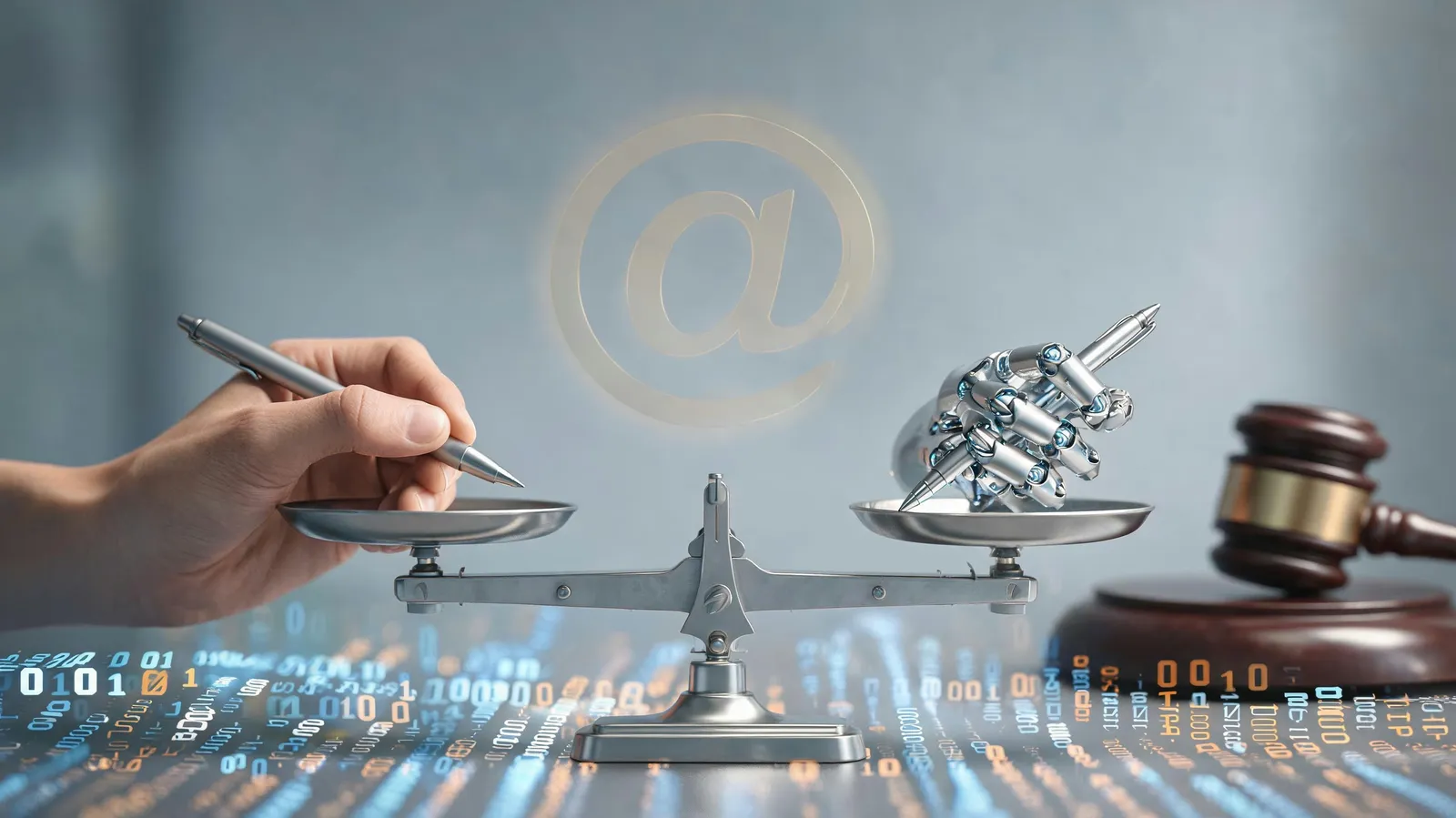
Greater model capability has pushed ownership and originality questions to the surface. When a work is made with AI, who holds the rights—the person who wrote the prompt, the company that trained the model, or nobody? Existing law gives only partial answers. In the United States, the Copyright Office has held that output produced entirely by AI, with no human authorship, cannot receive copyright protection. Where a human supplies meaningful creative input—choosing, arranging, and revising what the model produces—the resulting work may qualify. That line matters for artists, writers, and businesses alike.
The discussion goes past ownership into originality. Models learn from enormous datasets that frequently contain copyrighted material. If generated text or imagery closely tracks a protected work, liability becomes a live question. Lawsuits, among them cases against Stability AI and OpenAI, are probing where those boundaries lie. At the same time, spotting AI-generated content grows harder, which feeds concerns about plagiarism and authenticity. Practically, creators should keep records of their process, treat AI as an instrument rather than a source, and track how the rules continue to develop.
3. Cognitive Offloading and the Skills That Take Years to Build
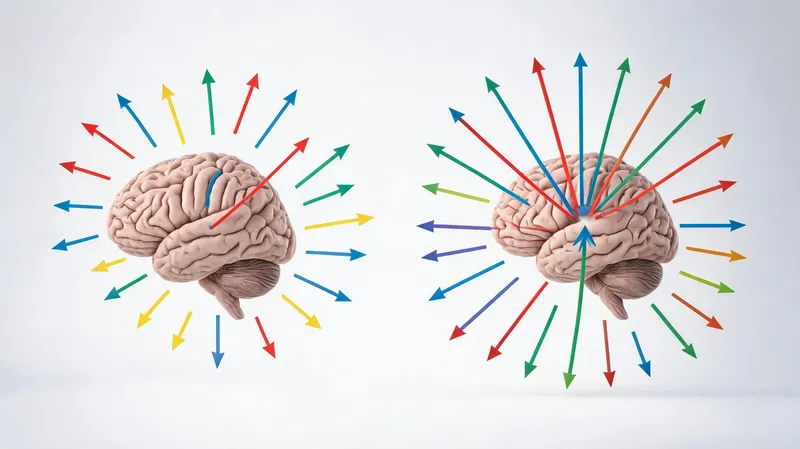
A subtler hazard is cognitive offloading: the habit of leaning on external tools instead of exercising our own mental capacities. GPS navigation has been associated with weaker spatial memory, and something similar could happen if creative tasks are routinely handed to AI—brainstorming, drafting, and critical thinking may atrophy. A writer who always asks a model for the next sentence may never sharpen a personal stylistic instinct. An artist who only generates images from prompts may lose the capacity to draw from imagination.
What research on skill acquisition indicates is that deliberate practice—effortful, repeated engagement—underpins mastery. Passive use of AI can bypass that work. Rejecting the technology is not the answer; using it with intention is. Creators can draw their own limits: employ AI for ideation while writing the final draft personally; use it for reference while rendering the final illustration by hand. Frameworks for AI literacy stress critical thinking, prompt craft, and ethical use. Those who flourish in this era will likely be the ones who treat AI as an addition to their practice rather than a stand-in for it.
Conclusion: Choosing How to Collaborate
Generative AI will not single-handedly save or sink human creativity. It is a potent new medium that calls for considered use. As a partner in making, it can stretch what we imagine and how fast we produce. As a legal and ethical puzzle, it compels us to revisit authorship and originality. As a cognitive instrument, it asks for discipline in how we hone our craft. What happens to original thought will hinge less on the technology itself than on the decisions people make around it. Curiosity, scrutiny, and intentionality can keep AI amplifying the human contribution rather than thinning it out.