
AI is making inroads into classrooms nationwide—from intelligent tutoring to automatic grading—yet the push to adopt these tools raises a pressing question: do they genuinely enhance student learning? Marketing narratives alone cannot answer that; rigorous measurement is required. AI learning analytics supplies a data-oriented framework for evaluating AI's actual effects, replacing anecdotal reports with evidence-based choices. Below, we explore three areas: quantifying learning gains linked to AI, using dashboards to inform teaching, and running longitudinal studies to monitor lasting impacts.
Quantifying Learning Gains from AI Tools
Before judging an AI tool's effectiveness, educators need to define and operationalize learning gains—the measurable improvement in a student's knowledge or skills over a set period. For AI, this means separating the tool's influence from other variables like teacher quality or curriculum shifts. Typical approaches include pre- and post-assessments, which compare performance before and after using an AI tool, and value-added models that statistically adjust for prior achievement and demographic factors.
Pinpointing AI's contribution requires experimental or quasi-experimental designs. For example, A/B testing—randomly assigning students to an AI tool or a traditional method—enables direct outcome comparisons. Quasi-experimental methods such as propensity score matching can approximate experimental conditions by pairing students with similar characteristics. Case studies from edtech firms indicate that rigorous A/B testing often yields modest but meaningful effect sizes, highlighting the need for careful analysis. Without such designs, correlation can easily be mistaken for causation.
Dashboards and Actionable Insights for Instructors
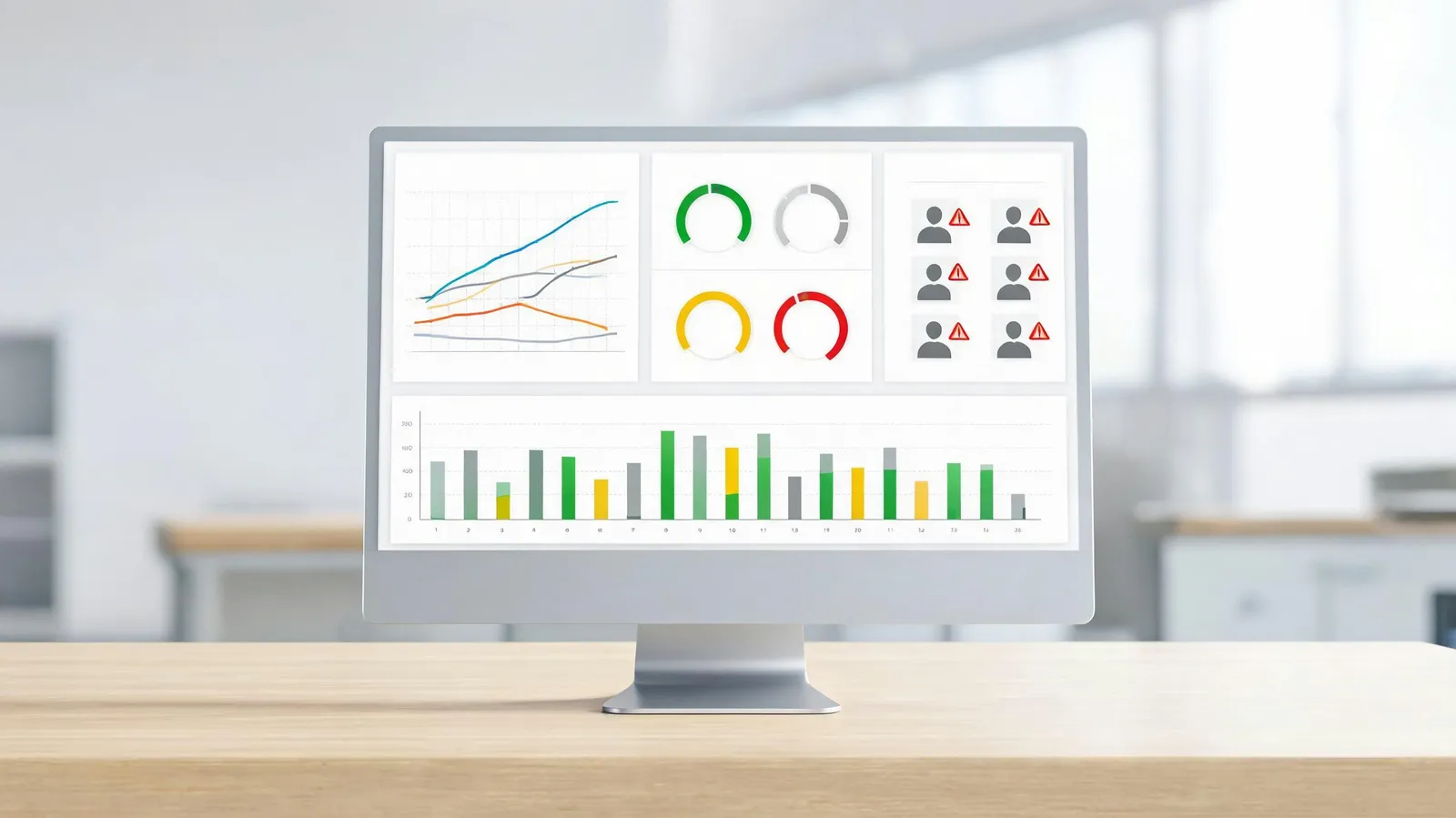
Learning analytics dashboards convert raw data into actionable insights for instructors. Effective dashboards apply cognitive load principles, presenting information clearly without overwhelming users. Visualizations that flag at-risk students—such as color-coded alerts or trend lines—allow instructors to intervene quickly. Research suggests that well-designed dashboards can cut the time instructors spend interpreting data, freeing them to focus on personalized support.
Instructors turn dashboard insights into tailored instruction. For instance, a dashboard might show that a group of students consistently struggles with a particular concept, prompting the instructor to reteach it or assign targeted practice. Case studies show that dashboard-driven interventions can improve student engagement and performance, especially when paired with professional development in data literacy. The key is ensuring insights are both accurate and actionable—connected to specific pedagogical strategies.
Longitudinal Studies on AI Usage and Academic Performance
Short-term studies are promising, but understanding AI's sustained impact demands longitudinal research. Longitudinal studies follow cohorts of students over multiple terms or years, examining how AI tool usage relates to academic performance, retention, and other outcomes. Designing such studies requires careful planning to ensure data consistency and address privacy concerns. Challenges include data retention—keeping records secure—and privacy regulations like FERPA, which govern student data protection.
Findings from longitudinal studies are starting to appear. Some research indicates that consistent use of AI tutoring systems is associated with higher course completion rates and grades, particularly among underrepresented students. However, correlations must be interpreted cautiously; causal links require robust statistical methods. Analyzing usage patterns over time—such as frequency and duration of engagement—can reveal whether benefits accumulate steadily or level off. These insights are invaluable for refining AI tools and ensuring equitable access.
Conclusion
Learning analytics serves as a guide for integrating AI into education, helping ensure that investments produce real learning gains. By measuring gains through rigorous designs, equipping instructors with actionable dashboards, and tracking long-term effects via longitudinal studies, we can hold AI accountable to its promise. As AI and learning analytics advance, their combination holds potential for adaptive learning systems and predictive modeling that personalize education at scale. Ultimately, rigorous measurement is not just about validating technology—it's about ensuring that AI enhances education equitably for all students.