
EU AI Act: Transparency and Labeling in Focus
The European Union’s AI Act sets out detailed transparency and labeling duties for providers of AI systems that produce synthetic audio, image, video, or text. Under Article 52, such outputs must be marked in a machine-readable format and be detectable as artificially generated or manipulated. This requirement covers deepfakes and other AI-generated material, with narrow exceptions for purposes like artistic expression or security.
To comply, providers can use watermarking, metadata tagging, and other technical mechanisms that allow detection. The European AI Office is expected to issue guidance on implementation, including acceptable standards for watermarking and disclosure. Organizational measures—such as internal policies and staff training—are also necessary to ensure adherence. Penalties for non-compliance can reach up to 3% of global annual turnover or €15 million, whichever is greater.
For deepfakes, the Act demands clear disclosure that the content is AI-generated, unless it forms part of a well-defined artistic or creative work. This has practical consequences for media companies, social platforms, and developers, who need to embed labeling into their content workflows. The EU framework is among the most comprehensive globally, serving as a reference point for other jurisdictions.
US Federal and State Approaches to Disclosure and Liability
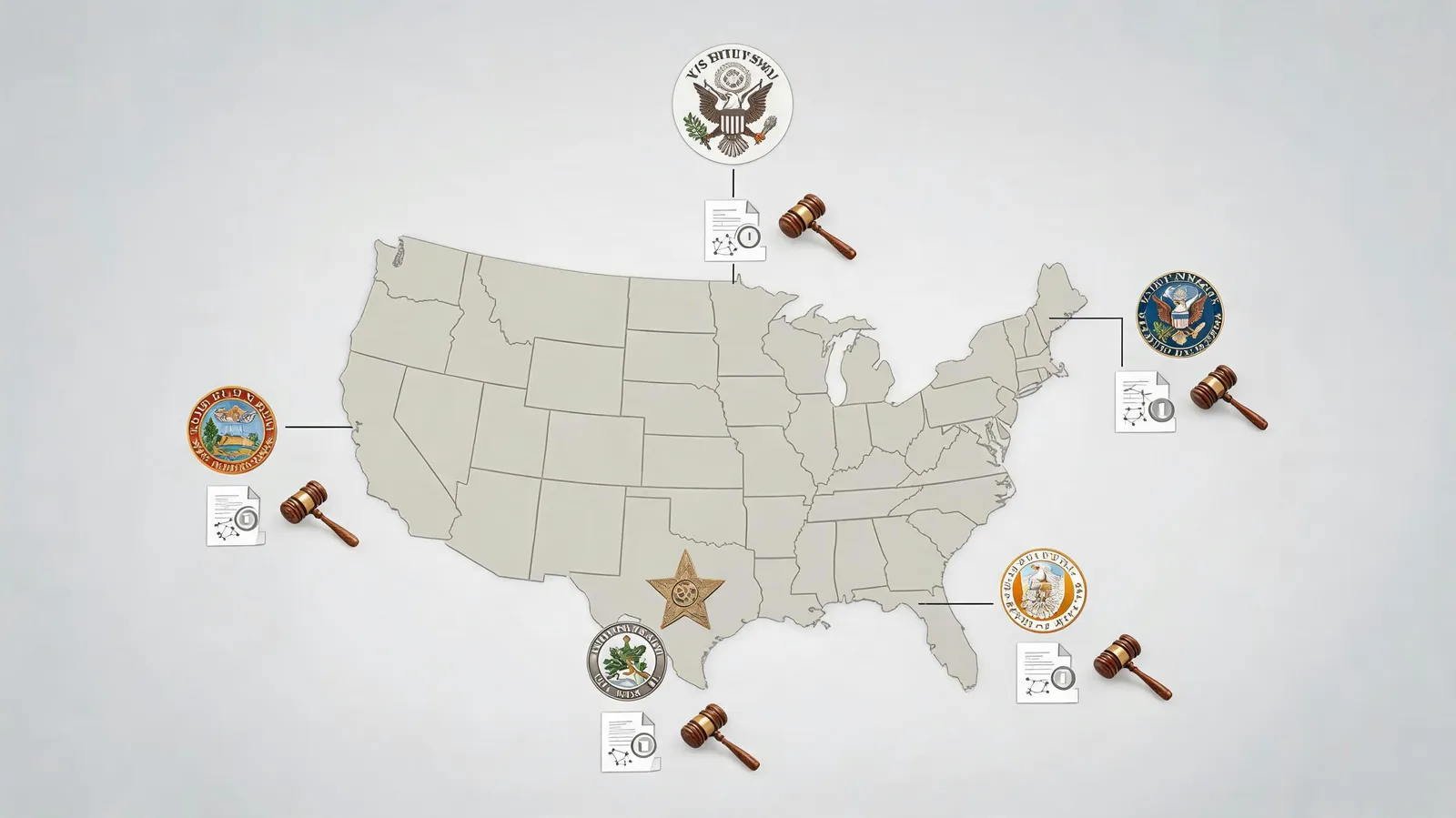
The United States has no single federal law dedicated to AI-generated content, resulting in a patchwork of federal initiatives and state legislation. At the federal level, the Biden Administration’s Executive Order on AI (October 2023) stresses content authenticity and directs agencies to develop standards for labeling AI-generated content. The FTC has issued guidance on AI disclosures, cautioning against deceptive practices, and has brought enforcement actions against companies making false AI claims.
State-level legislation is also emerging. California leads with AB 331, which addresses automated decision systems and includes disclosure requirements for AI-generated content in certain contexts. Other states, including New York and Washington, are considering similar bills. These state laws differ in scope and requirements, creating compliance challenges for national and global companies.
Liability rules for AI-generated content remain unsettled. Debates over Section 230 of the Communications Decency Act raise the question of whether platforms should be immune from liability for AI-generated content. Proposed bills on deepfake liability, such as the DEFIANCE Act, seek to hold creators accountable for harmful synthetic media. However, the absence of federal consensus leaves courts and states to navigate these issues, leading to inconsistent outcomes.
Cross-Border Enforcement and Harmonization Hurdles
Enforcing AI content regulations across borders is difficult because of jurisdictional conflicts and enforcement gaps. For instance, EU labeling requirements may clash with US free speech protections, and tracing the origin of AI-generated content is technically challenging. Malicious actors can easily evade detection by using open-source tools and anonymizing technologies.
International cooperation efforts, such as the OECD AI Principles and the Global Partnership on AI (GPAI), aim to promote harmonization. GPAI’s work on content authenticity focuses on developing interoperable standards for labeling and detection. Proposals for mutual recognition of labeling standards and the role of ISO standards in AI content transparency are gaining traction.
Practical solutions include the development of global watermarking standards and certification schemes. However, reaching consensus among diverse legal systems and cultural norms remains a significant obstacle. Moving forward will require multi-stakeholder collaboration involving governments, industry, and civil society to build a coherent global framework.
Conclusion
The regulatory landscape for AI-generated content is evolving quickly, with the EU leading through its comprehensive AI Act and the US taking a more fragmented approach. Cross-border enforcement and harmonization are critical to effective regulation, as AI-generated content knows no borders. International cooperation and the development of interoperable standards are essential to address the challenges of transparency, liability, and enforcement. As policymakers, legal professionals, and AI developers navigate this new frontier, multi-stakeholder collaboration will be key to shaping a global framework that balances innovation with accountability.