Introduction
As cities swell—projections suggest almost seven in ten people worldwide will live in urban areas by 2050—surface transport networks are being stretched to their limits. At opposite ends of a fast-maturing vertical travel chain sit the familiar elevator and the emerging air taxi. Urban air mobility, enabled by intelligent lift systems and dedicated takeoff and landing sites, holds the potential to transform how people and freight circulate inside and above cities. Realizing that potential, however, depends on careful management of safety, infrastructure, and public buy-in.
Certification and Safety Pathways for eVTOL Aircraft
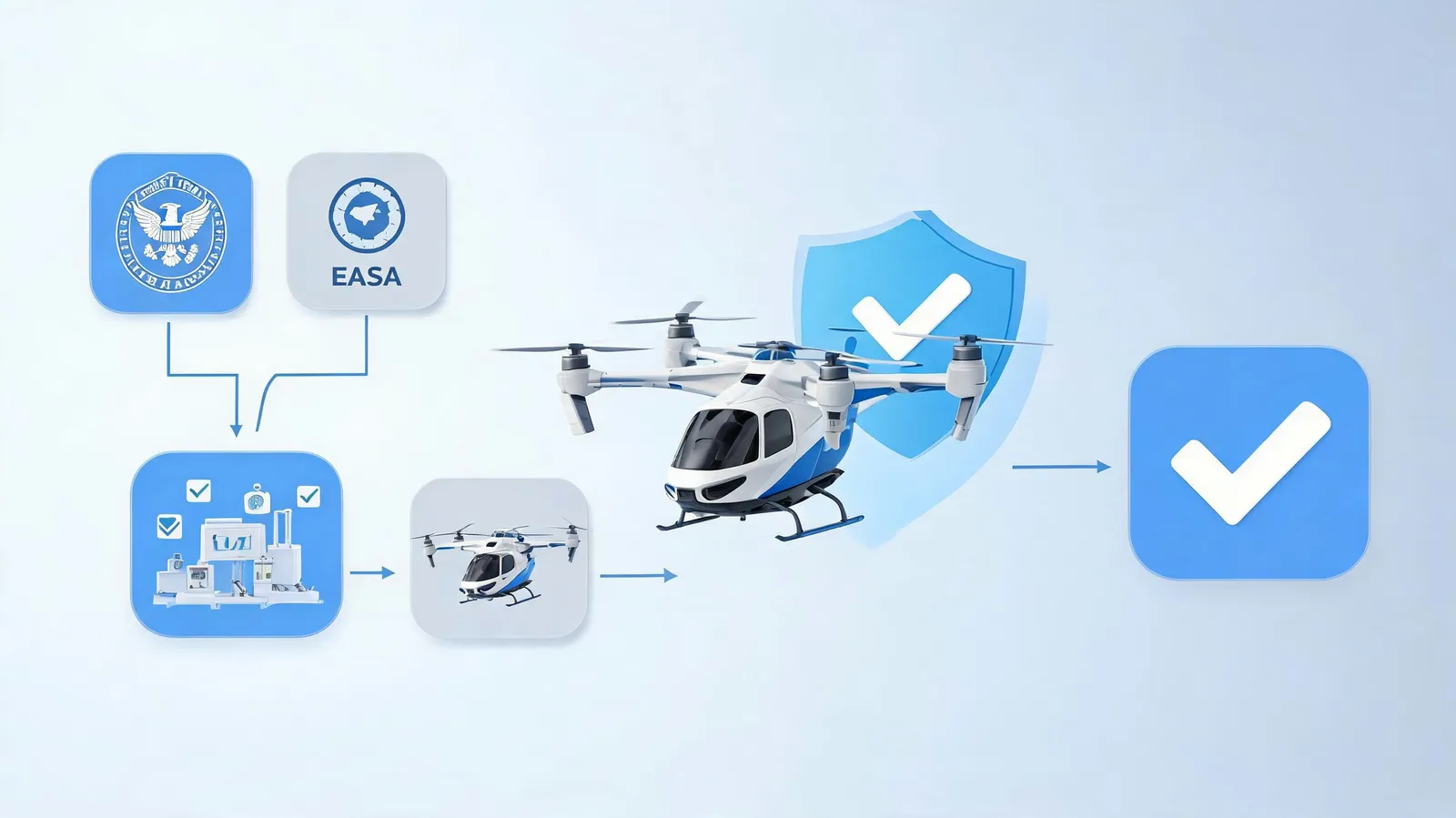
Air taxis will not become a routine sight over cities until they clear stringent safety and certification hurdles. Aviation regulators such as the FAA and EASA are reworking existing frameworks to cover eVTOL vehicles, which blend helicopter and fixed-wing characteristics. The approval process calls for thorough testing of detect-and-avoid systems, backup power sources, and emergency landing procedures. Joby Aviation, for example, has reached important milestones in FAA certification, signaling that the route to commercial service is coming into sharper focus. Obstacles persist, though, among them the need for standardized safety technologies and harmonized international rules.
Central safety technologies include sophisticated detect-and-avoid systems relying on radar, lidar, and cameras to avert collisions, plus redundant power architectures that allow a safe landing if a component fails. Emergency landing protocols are being tailored to cope with unforeseen situations in dense urban settings. Early eVTOL testing yields encouraging accident figures, yet sustained vigilance remains essential. Industry analyses stress that redundant safety systems are indispensable for earning public confidence and regulatory clearance.
Building the Ground Layer: Vertiports and High-Rise Connections
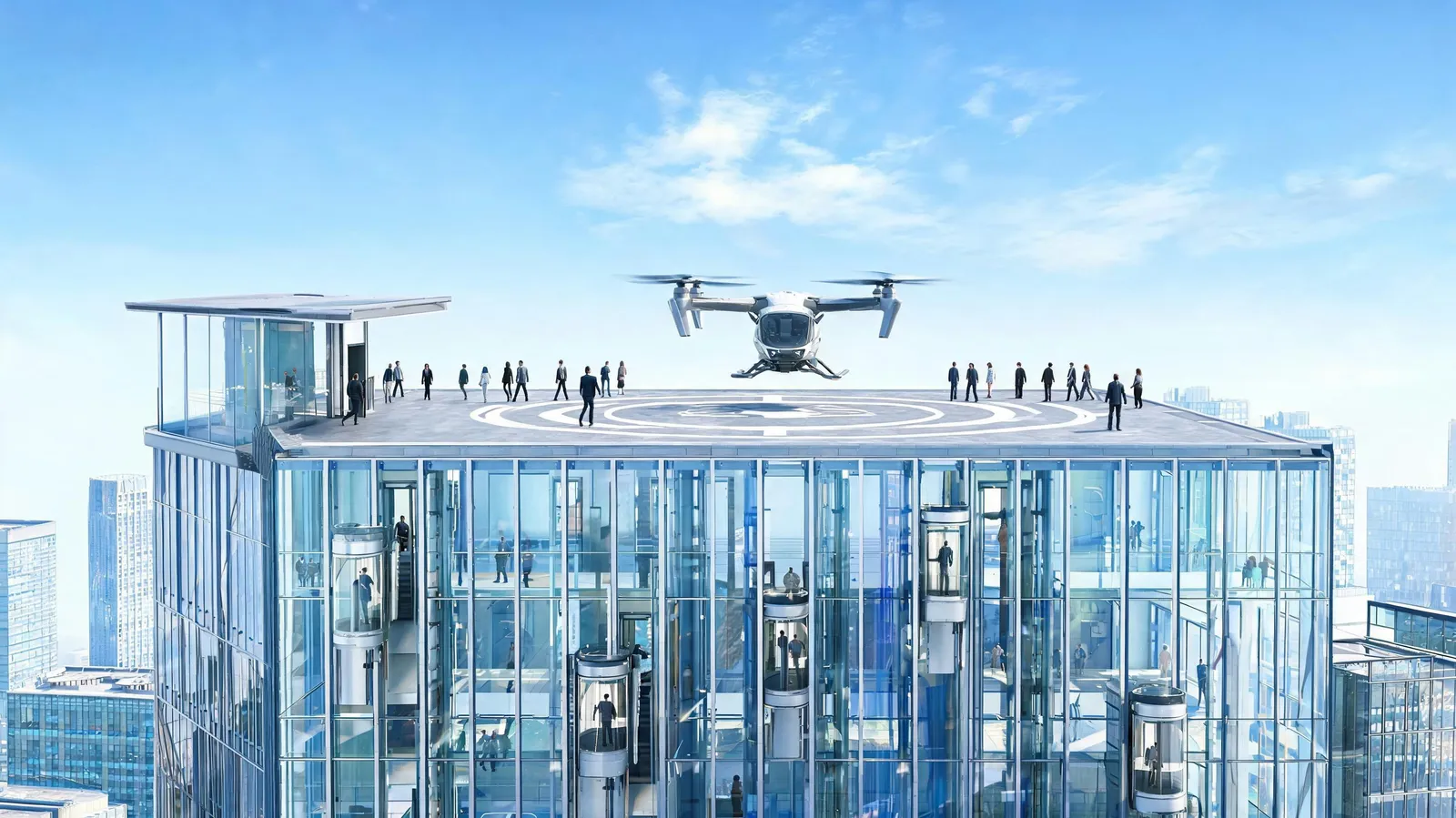
Fitting air taxis into cityscapes demands a new category of infrastructure—vertiports. These purpose-built takeoff and landing facilities need strategic locations, fast-charging equipment, and layouts that keep passenger flows efficient. Dubai, Singapore, and Los Angeles are among the cities already studying vertiport concepts that integrate with tall buildings. One proposed Los Angeles vertiport, for instance, could sit within a mixed-use project, letting travelers go from air taxi to office or apartment within minutes. Space and power estimates suggest vertiports require roughly 10,000 square feet and high-capacity charging to serve several eVTOLs at once.
Smart elevators are the quiet enablers of this vertical ecosystem. Such systems can interface with air taxi scheduling platforms so that a rider’s trip from street level to sky is fluid and efficient. Case studies indicate that integrated vertical mobility hubs can cut transfer times by as much as 40%. A smart elevator, for example, might be alerted to an incoming air taxi and automatically send a car to the vertiport floor, reducing waiting. This tight linkage between ground and air transport is vital if urban air mobility is to gain traction.
Noise and Public Acceptance Challenges
For residents near vertiports or beneath flight corridors, noise is a leading worry. Although eVTOL aircraft are engineered to be quieter than conventional helicopters, they are not silent. Comparative figures put next-generation eVTOLs at about 65 decibels during takeoff and landing, versus 85 decibels for helicopters. Remedies include optimized flight paths, sound-dampening materials, and limits on nighttime operations. Community surveys show that tolerable noise levels differ from place to place, but many residents would accept moderate noise in exchange for less traffic congestion and quicker commutes.
Public perception and trust matter just as much. Recent polling indicates that most urban residents are willing to consider air taxis, particularly for emergencies or time-critical journeys. Still, worries about safety, privacy, and cost persist. Early-adopter cities such as Dallas and Los Angeles have run acceptance campaigns featuring community meetings, demonstration flights, and educational outreach. These initiatives seek to foster trust and correct misunderstandings. Case studies suggest that transparent communication and community engagement can markedly raise acceptance rates.
Conclusion
Safety frameworks, infrastructure, and public acceptance form interlocking pillars of urban air mobility. Robust certification processes, well-placed vertiports, and smart elevators together will make seamless vertical transportation possible. The promise of vertical mobility lies in its capacity to ease congestion, cut emissions, and enhance urban quality of life. Going forward, the combination of AI, autonomous operations, and smart city systems will produce a genuinely integrated vertical transport network. As cities expand both upward and outward, vertical mobility will be central to the future of urban transportation.