Shaping Prompts So an AI Tutor Guides Instead of Answers
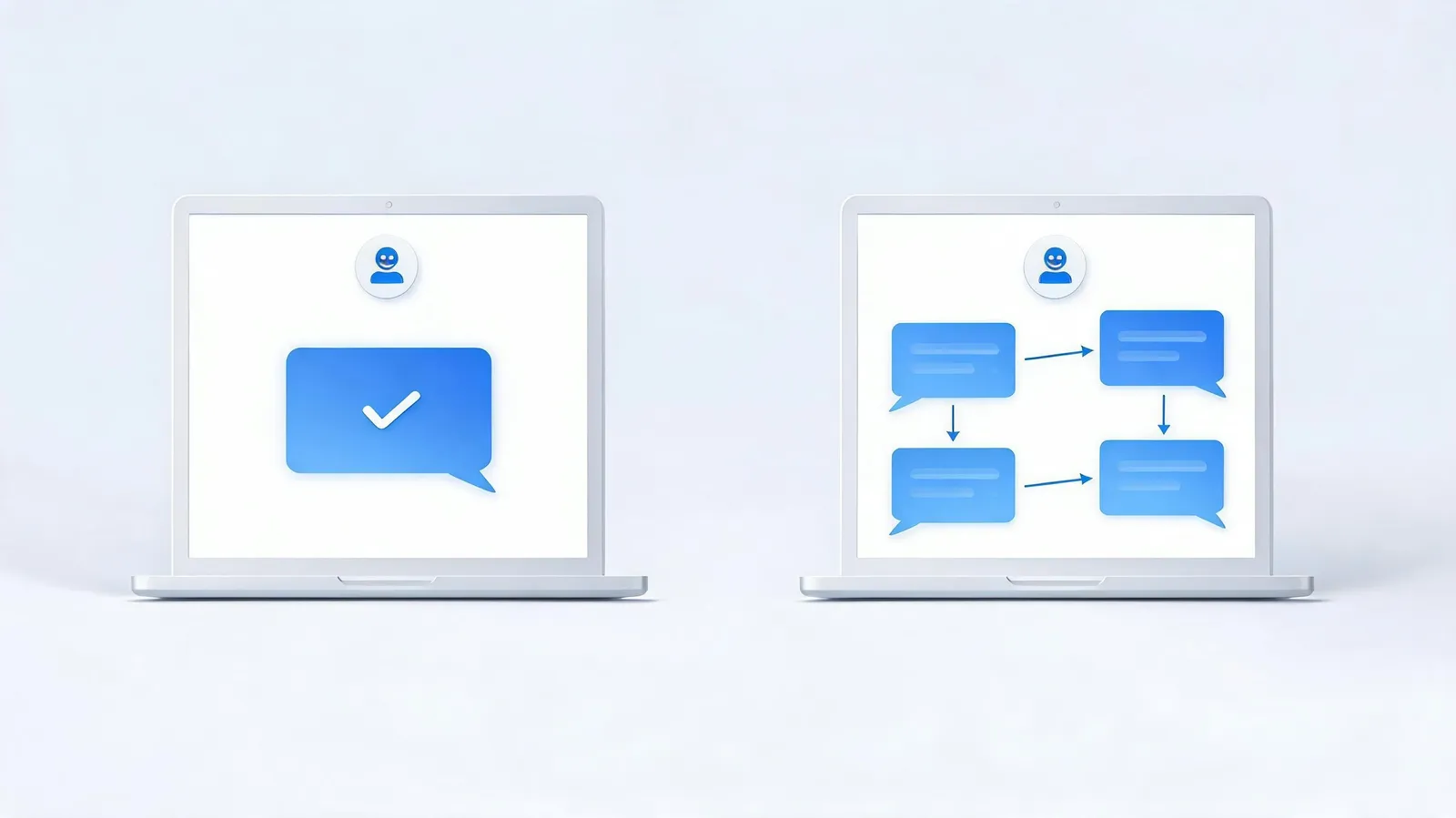
If a conversational agent is to function as a Socratic tutor, its prompts have to be built around guided discovery rather than handing over solutions. In practice, this means designing prompts that draw out the student's reasoning, pose follow-up probes, and hold back premature answers. A prompt template, for instance, could direct the AI to meet a student's question with a clarifying question of its own: 'What do you think is the first step?' or 'Can you explain why that approach might work?' Work comparing guided discovery with direct instruction indicates that learners who take part in Socratic dialogue reach a deeper grasp of concepts and retain more. Adaptive scaffolding strengthens this further, since prompt complexity can be tuned on the fly in response to what students say and where they go wrong. Case studies drawn from mathematics and science show Socratic tutors spotting the moment a learner is stuck and then offering hints fitted to that situation, while dialogue-quality and engagement metrics help refine the system over time. Embedding such pedagogical tactics in conversational agents lets educators build AI tutors that cultivate critical thinking instead of dependence.
Bringing Speech, Vision, and Text Together in Tutoring
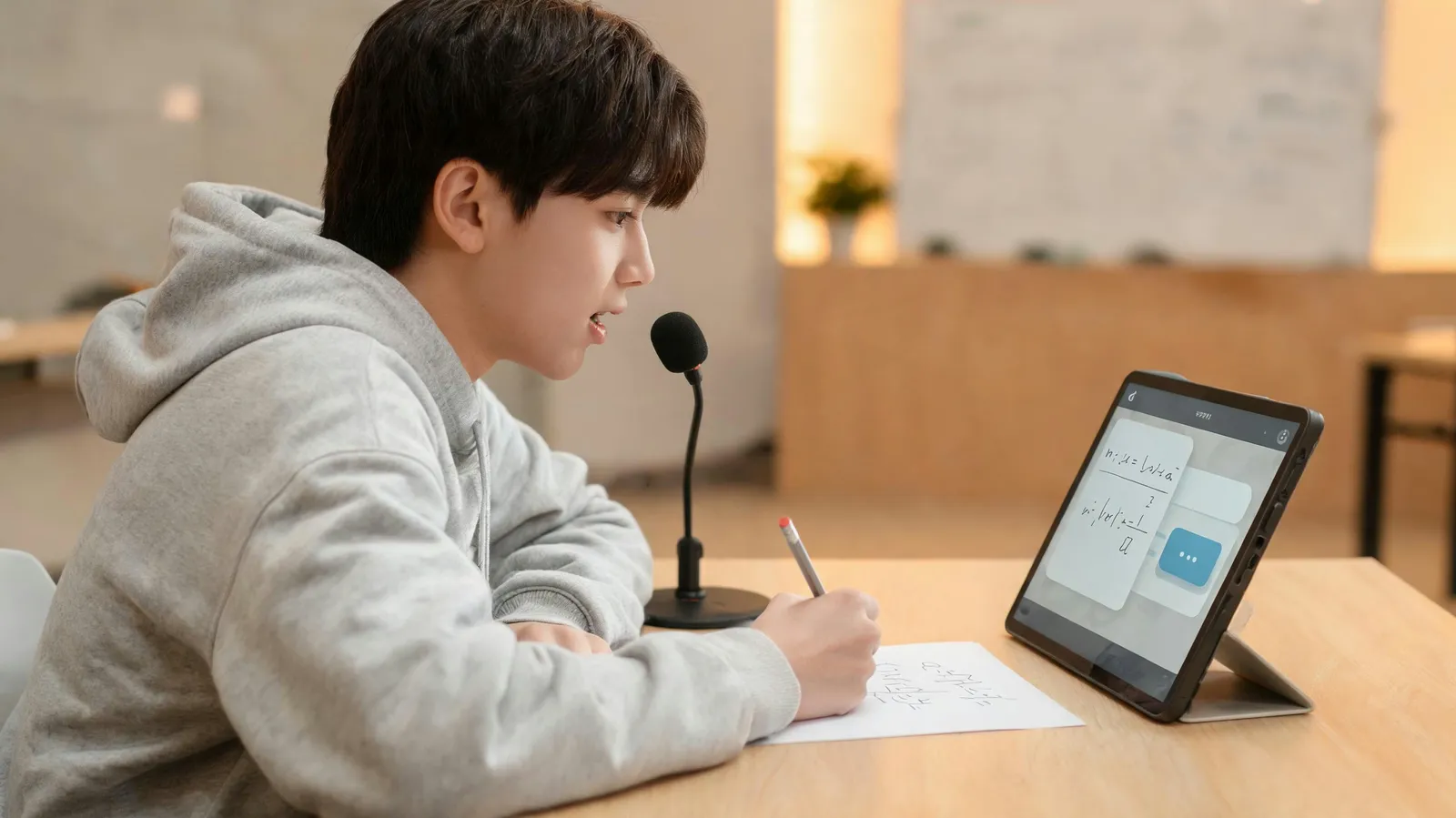
When several modalities are combined, tutoring interactions become richer and more natural. Voice input and output support natural dialogue and spoken practice, which matters for language learning and reading fluency. Research on speech-based tutoring for literacy reports meaningful gains in pronunciation and comprehension, although latency and accuracy in real-time speech interfaces still need attention. Visual inputs—recognizing handwritten work, diagrams, and gestures, for example—allow feedback that takes context into account. A mathematics tutoring system, for instance, can read handwritten equations and walk the student through the steps, and multimodal fusion architectures combine these signals into a fuller picture of what the student has produced. This multimodal setup resembles human tutoring, in which tone, facial expression, and written work all shape instruction. As AI tutoring conversational agents develop, bringing speech, vision, and text together will be essential for personalized, engaging learning experiences.
Curbing Fabricated Content in Educational Dialogue
Hallucination—an AI producing false or misleading information—does particular damage in education: it wears down trust, cements misconceptions, and puts student safety at risk. Plausible but wrong explanations in STEM subjects are one illustration, capable of confusing students and undercutting their learning. Surveys of educator concerns place reliability among the leading barriers to AI adoption. Countermeasures include retrieval-augmented generation (RAG) anchored in vetted curricula, confidence scoring, and human-in-the-loop review. Benchmark results indicate that RAG substantially lowers hallucination rates by tying responses to trusted sources. Design patterns that flag uncertain responses to students—signaling low confidence, say, or suggesting the student check with a teacher—help keep the system transparent. With these strategies in place, developers can produce AI tutors that are engaging while remaining epistemically reliable, so that conversational agents add to learning rather than erode it.
Conclusion
Pedagogical prompting, multimodal interaction, and hallucination mitigation are interlocking pillars that decide whether AI tutoring strengthens learning or weakens it. None of these capabilities is an optional extra; each is a precondition for adoption at scale. Going forward, combining real-time student modeling, affective computing, and continuous evaluation will yield AI tutors that are engaging and epistemically reliable at once. As AI tutoring conversational agents keep reshaping education, putting these pillars first will help ensure they deliver on their promise as effective, trustworthy learning companions.