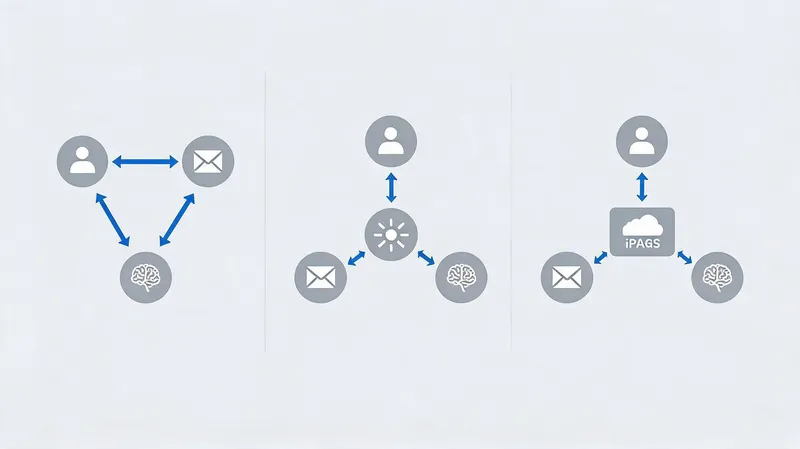
Sales organizations are under growing strain to reach prospects quickly, across multiple channels and time zones, while keeping interactions personal. Conventional approaches fall short on round-the-clock coverage, language variety, and effective lead qualification. Conversational AI and virtual sales assistants do more than automate chat: they are reshaping the whole sales funnel with continuous, intelligent, trustworthy engagement that passes smoothly to human reps when needed.
Chatbots and Voice Agents as a Round-the-Clock Sales Function
In a highly competitive market, responsiveness and availability carry real weight. Conversational AI sales assistants—chatbots and voice agents among them—keep engagement going around the clock and reply instantly on web, mobile, and voice channels. Research from Harvard Business Review found that companies reaching leads within an hour are seven times more likely to qualify them than those that wait even an hour longer. AI-driven assistants answer in seconds rather than hours, which markedly lifts conversion. One leading SaaS company, for instance, cut its lead response time from hours to seconds with a virtual sales assistant and saw qualified leads rise by 35%.
Such agents take on routine questions, book meetings, and qualify leads without human involvement, which lets sales reps concentrate on higher-value work. Figures indicate that AI chatbots can lower operational costs by as much as 30% while raising meeting bookings by 25%. A virtual assistant can qualify leads overnight, so that when human reps begin their day, a set of warm prospects is already waiting for follow-up.
Recognizing Intent and Passing Leads Smoothly to Human Reps

Reading prospect intent is central to effective selling. Natural language understanding (NLU) and intent detection models examine conversations in real time to spot buying signals and route leads to the appropriate destination. Current intent detection models reach accuracy above 90%, which allows precise routing. If a prospect asks for a demo, for example, the AI can send them straight to the sales rep with the relevant expertise.
What is more, the move from AI to human is smooth. The AI hands over the complete conversation history and context, so the human rep continues where the AI stopped without asking the same questions again. This warm handoff can lift customer satisfaction scores by as much as 40% and cuts repeated questions for human reps. A case study from a financial services firm found that its Net Promoter Score rose by 20 points after it adopted AI with warm handoff.
Conversations That Work Across Languages and Channels
Serving a global audience calls for multilingual capability. Conversational AI can deliver real-time translation and support in multiple languages without extra staff. CSA Research reports that 75% of consumers would rather buy products in their native language. With AI, companies can move into new markets with relative ease. One retail company, for example, used multilingual AI to enter 10 new countries and grew international revenue by 50% within a year.
Omnichannel integration is a further advantage. AI assistants can meet prospects on the web, social media, messaging apps, and voice, giving them a unified journey. Figures show that companies with strong omnichannel engagement strategies retain 89% of their customers, against 33% for those with weak strategies. A single AI assistant keeps messaging and context consistent across every channel, which improves the customer experience.
Earning Trust Through Transparency and Disclosure in AI Conversations
Trust underpins every sales relationship. With AI, transparency matters. Disclosing that a conversation involves AI and setting expectations is a best practice. Studies indicate that 60% of consumers are more inclined to trust a brand that is transparent about its use of AI. Leading brands state clearly when a conversation is with an AI and offer an option to speak to a human.
Data privacy and ethical handling of conversation data matter as well. Rules such as GDPR and CCPA call for explicit consent and data protection. AI systems should be built with privacy by design, so that conversation data is anonymized and stored securely. Transparent AI policies include letting users opt out of data collection and explaining plainly how data is used.
Outlook
Conversational AI and virtual sales assistants are changing prospect engagement through round-the-clock availability, intelligent intent detection, multilingual support, and smooth handoff to humans. They extend what human teams can do, which brings greater efficiency and better customer experiences. As AI connects with CRM, predictive analytics, and emotional intelligence, selling will become more personalized and more proactive. Adopting conversational AI is one way to keep pace as the sales landscape evolves.