Keeping Student Data Private While Still Gaining Insight
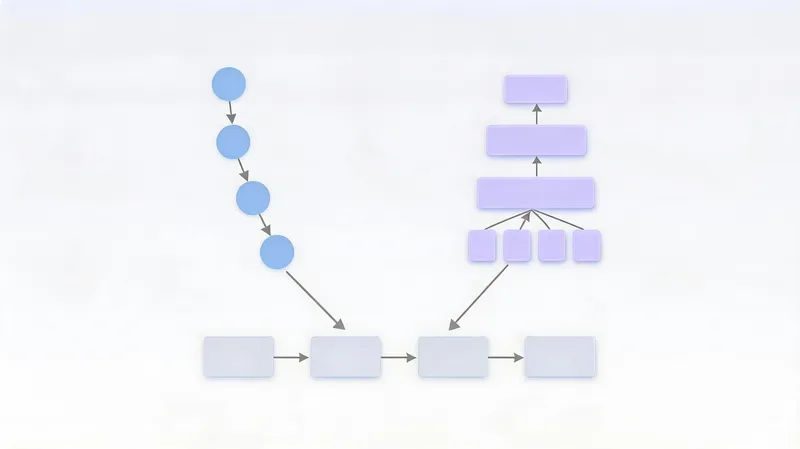
Analytics can reshape teaching by adapting instruction to what each learner needs. That tailoring, though, tends to depend on large volumes of sensitive information about students, which creates real privacy worries. Approaches built around privacy protection tackle this tension by using methods that safeguard student records while still yielding useful findings. One example is federated learning, in which models are trained on local devices and raw data is never gathered in one central place. This lowers exposure to breaches and fits requirements such as FERPA and GDPR. A California school district, for instance, used federated learning to study performance across devices so that sensitive information stayed on the students' own devices. Differential privacy and anonymization add further protection by injecting statistical noise or stripping personally identifying details, although both involve balancing privacy against model accuracy.

Checking Adaptive Study Recommendations for Bias
Systems that recommend study paths can carry bias forward unintentionally when their design and oversight are inadequate. Bias can enter through historical data that mirrors existing inequalities, through choices made in algorithm design, and through feedback loops that widen disparities. A reading recommendation engine trained on data from schools that are predominantly white, for example, may give less representation to diverse authors and thereby disadvantage students of color. To reduce this risk, educators and developers should run routine bias audits that draw on fairness metrics, adversarial testing, and ongoing monitoring. Suites such as AI Fairness 360 offer a broad set of tools for finding and addressing bias in machine learning models. Cases reported by edtech companies indicate that auditing for bias early and consistently produces fairer recommendations and better results for students.
Openness and Explainability for Families
Trust in analytics depends on openness. Students and parents should be able to learn how their information is used and how algorithms reach decisions. Legal frameworks including GDPR and FERPA require certain disclosures, and ethical considerations go beyond those minimums. Plain-language dashboards that spell out data practices and algorithmic choices in accessible terms can give families a clearer sense of control. A realistic image of a parent and teenager looking over a simple, colorful dashboard with icons and plain-language explanations captures this ideal. Consent should be granular and reversible so that users can manage their own data. Reporting openly not only satisfies regulations but also encourages uptake of and confidence in edtech tools.
Conclusion
Reconciling innovation with integrity in learning analytics calls for action on several fronts: privacy-protecting methods such as federated learning, thorough bias auditing, and openness supported by explainable AI and dashboards families can understand. These steps are ethical obligations as much as legal ones, needed to preserve trust and support equitable education. As the field develops, educators, developers, policymakers, and privacy advocates will need to work together on standardized ethical frameworks that put student well-being on par with technological progress.