Introduction
Education is undergoing a seismic shift as AI tools become ubiquitous, prompting a reexamination of how learning is evaluated and fairness maintained. Conventional assessment approaches often falter when confronted with AI-generated content, yet AI itself opens doors to tailored feedback and streamlined grading. By thoughtfully incorporating AI for formative feedback and rubric-aligned grading, while proactively tackling misuse and revamping assessments, educators can safeguard academic integrity and enrich student learning.
Automated Formative Feedback and Rubric-Aligned Grading
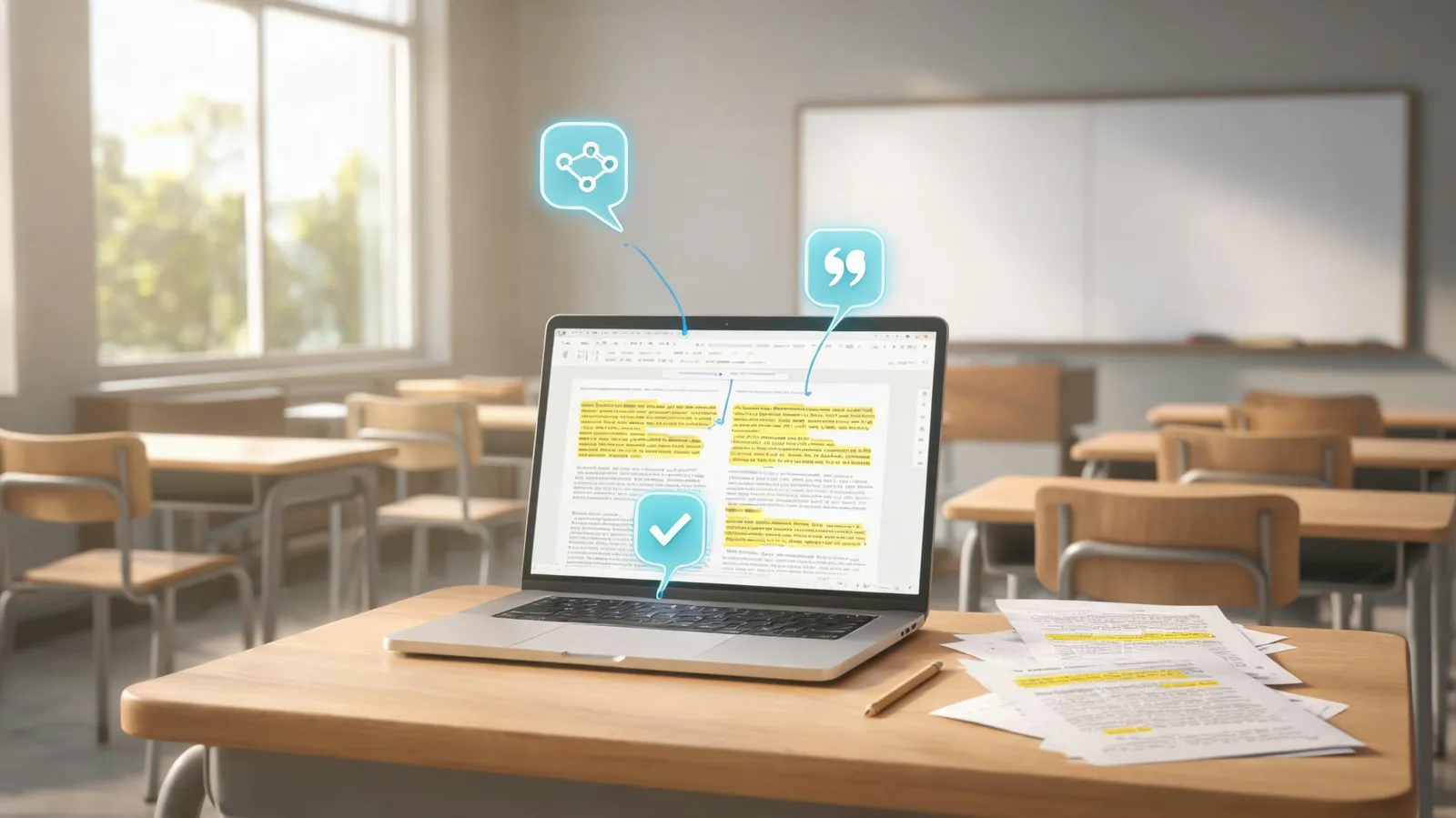
AI-driven tools are transforming formative assessment by delivering instant, personalized feedback that captivates students and boosts learning outcomes. Studies indicate that prompt feedback markedly enhances student engagement and achievement. For instance, AI writing assistants such as Grammarly and Eduaide provide real-time suggestions on grammar, style, and structure, aiding students in iterative revision. These tools can also assess student writing against predefined rubrics, ensuring consistency and saving instructors hours of grading time. A case study at a large university revealed that AI-assisted rubric grading cut grading time by 40% while maintaining high inter-rater reliability.
Rubric-aligned grading with AI entails systems that parse student submissions and evaluate them against criteria like argument clarity, evidence use, and organization. Platforms such as Gradescope and Turnitin's Feedback Studio employ AI to highlight areas for improvement and assign scores based on rubrics. Instructors report greater consistency and reduced bias in grading, as AI applies identical standards to all submissions. Nevertheless, human oversight remains essential to ensure nuanced judgment and contextual understanding.
Detecting Misuse of AI in Homework and Study Plans

Detecting AI misuse presents a growing challenge. Current AI detection tools, including GPTZero and Turnitin's AI detector, claim high accuracy but are prone to false positives, particularly for non-native English writers. Furthermore, as AI models advance, they increasingly evade detection, making purely technological solutions inadequate. Statistics show that false positive rates can reach up to 15%, resulting in unfair accusations and eroding trust.
Beyond detection, institutions are adopting proactive strategies that foster transparency and process-based assessment. Honor codes that explicitly define acceptable AI use, paired with process journals where students document their writing steps, have shown promise. For example, a pilot program at a community college observed a 30% reduction in reported misconduct after implementing process-based assessments and AI literacy workshops. These approaches shift the focus from policing to educating students about ethical AI use and cultivating a culture of integrity.
Redesigning Assessments for AI-Assisted Learning
To harness AI's potential while safeguarding integrity, educators are redesigning assessments to be authentic and process-oriented. Authentic assessments, such as project-based learning and portfolios, demand critical thinking, creativity, and real-world application—areas where AI struggles to replicate human insight. Research indicates that such assessments increase student motivation and deepen learning. For instance, a high school's interdisciplinary project on climate change required students to analyze data, propose solutions, and present to a panel; AI served as a research assistant, but the synthesis and argumentation were student-driven.
Integrating AI literacy into assessment design is equally important. Frameworks like the AI Literacy Framework guide educators in teaching students to use AI ethically and effectively. Case studies from universities show that when students are taught to critically evaluate AI outputs and use them as a tool rather than a crutch, learning outcomes improve. For instance, a composition course allowed students to use AI for brainstorming and drafting, but required reflective annotations explaining their AI interactions, which were assessed for metacognitive depth.
Conclusion
AI is reshaping assessment in education, offering powerful tools for formative feedback and rubric-aligned grading while posing challenges to academic integrity. By combining detection with proactive strategies like process-based assessment and redesigning assessments to embrace AI as a learning tool, educators can uphold integrity and enhance learning. The future holds promise for more personalized and equitable assessment systems, where AI supports rather than supplants human judgment.