Introduction
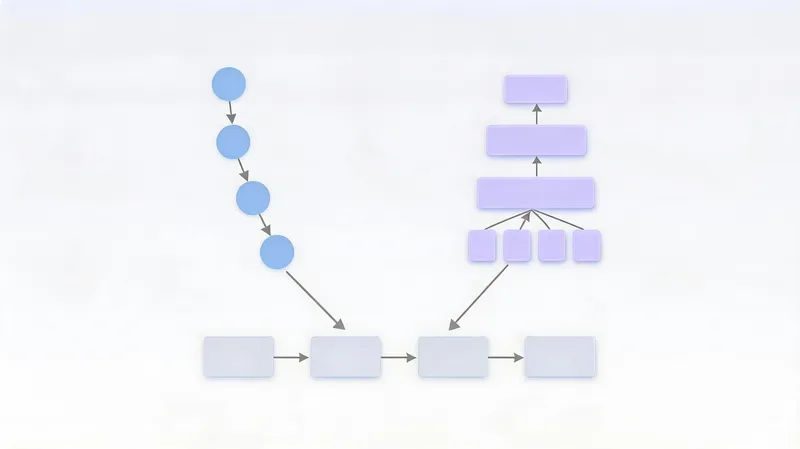
Although AI study assistants are proliferating rapidly, a significant number struggle to maintain learner engagement or to address emotional and metacognitive needs. Conventional AI tutors tend to emphasize content delivery and correctness, frequently overlooking affective states, motivation, and self-regulation. This article explores three research-driven directions—affect detection and frustration-aware planning, gamification and behavioral nudges, and self-regulated learning support with metacognitive prompting—that together can transform AI study assistants from mere answer machines into adaptive, empathetic partners fostering deeper engagement and academic success.
1. Affect Detection and Frustration-Aware Study Planning: Recognizing and Responding to Learner Emotions
Affect detection refers to the process by which AI systems infer a learner's emotional and cognitive states from multimodal data. Within AI study assistants, affect detection allows the system to recognize when a student is confused, bored, or frustrated and to respond adaptively. Research consistently shows that frustration correlates with disengagement and dropout in digital learning environments. For example, a study by D'Mello and Graesser (2012) found that frustration was a strong predictor of disengagement in intelligent tutoring systems, and that affect-aware tutoring that responded to frustration improved persistence and learning gains.
Modalities for affect detection include facial expression analysis (e.g., using computer vision to detect brow furrowing or lip pressing), physiological signals (e.g., heart rate variability, skin conductance), and interaction patterns (e.g., pause duration, error rates, hint requests). These signals are processed to infer affective states in real time. For instance, a system might detect increased heart rate and frequent errors as signs of frustration, triggering a supportive intervention.
Frustration-aware study planning extends affect detection by dynamically adjusting task difficulty, offering hints, or suggesting breaks when frustration is detected. Intelligent tutoring systems have demonstrated that adaptive hinting can reduce frustration and improve learning outcomes. For example, the Cognitive Tutor (now Carnegie Learning) uses model tracing to provide context-sensitive hints, and studies show that students who receive adaptive hints exhibit better learning gains and reduced frustration compared to those who receive fixed hints. More recent AI planners incorporate affective feedback loops, continuously monitoring student affect and adjusting the learning plan accordingly. This approach not only mitigates frustration but also fosters a sense of competence and control, which are essential for sustained motivation.
2. Gamification and Behavioral Nudges in AI Study Assistants: Boosting Motivation Through Design

Gamification—the application of game design elements in non-game contexts—has become a popular strategy for enhancing motivation and engagement in educational technology. In AI study assistants, gamification mechanics such as points, badges, leaderboards, and progress bars tap into psychological needs for competence, autonomy, and relatedness, as described by self-determination theory. Meta-analyses, such as the one by Sailer and Homner (2020), indicate that gamification can positively influence motivation and engagement, particularly when design elements align with learners' goals and contexts. Successful examples include Duolingo, which uses streaks, badges, and leaderboards to sustain daily engagement, and Khan Academy, which employs mastery badges and progress tracking to motivate learners.
Behavioral nudges are subtle interventions that encourage desired behaviors without restricting choice. In digital learning platforms, nudges such as reminders, goal setting, and social comparison have been shown to increase completion rates and persistence. For instance, a study by Damgaard and Nielsen (2018) found that sending reminders and setting implementation intentions significantly increased course completion in a MOOC context. Similarly, social comparison nudges—showing learners how their progress compares to peers—can motivate action, though they must be designed carefully to avoid demotivating low performers. AI study assistants can integrate nudges by sending timely notifications (e.g., “You're 80% through your weekly goal—finish strong!”), suggesting specific study times, or facilitating study groups. When combined with gamification, nudges create a supportive structure that helps learners maintain momentum and build healthy study habits.
3. Self-Regulated Learning Support and Metacognitive Prompting: Fostering Learner Autonomy
Self-regulated learning (SRL) refers to the cyclical process of planning, monitoring, and reflecting on one's learning. Research links SRL to improved academic outcomes, as students who effectively regulate their learning are more strategic, persistent, and adaptable. AI study assistants can scaffold SRL by providing tools and prompts that support each phase. For example, an AI planner can help students set specific goals and create study schedules (planning), track their progress and alert them to distractions (monitoring), and guide them to evaluate their strategies after a study session (reflection).
Metacognitive prompting involves asking students to explain their reasoning, self-assess their confidence, or reflect on their study strategies. Studies show that metacognitive prompts enhance learning and transfer by encouraging deeper processing and self-awareness. For instance, a meta-analysis by Bisra et al. (2018) found that prompting students to self-explain during learning significantly improved outcomes across domains. AI study assistants can incorporate metacognitive prompts by asking students to articulate their problem-solving steps, rate their confidence before and after answering a question, or journal about what study strategies worked best. Case studies, such as the Betty's Brain system, demonstrate that AI mentors can successfully scaffold metacognitive skills by prompting students to reflect on their learning processes. By fostering SRL and metacognition, AI study assistants empower learners to become more autonomous and effective.
Conclusion
Affect detection, gamification and nudges, and SRL support address the emotional, motivational, and metacognitive dimensions of learning that traditional AI study assistants often overlook. Affect detection enables frustration-aware planning that keeps learners engaged and prevents dropout. Gamification and behavioral nudges boost motivation and persistence through engaging design and timely encouragement. SRL support and metacognitive prompting foster autonomy and deep learning. Together, these approaches form a holistic student model that can transform AI study assistants into empathetic, adaptive partners. As large language models and multimodal sensing advance, the potential to deliver personalized, scalable support that integrates these dimensions will only grow. The future of AI in education lies not just in delivering content, but in understanding and nurturing the whole learner.