Comparing Major AI Advertising Platforms
Selecting an AI advertising platform requires a thorough comparison of capabilities, integration options, and actual performance. This section examines Google Ads, Meta Advantage, and Amazon DSP side by side.
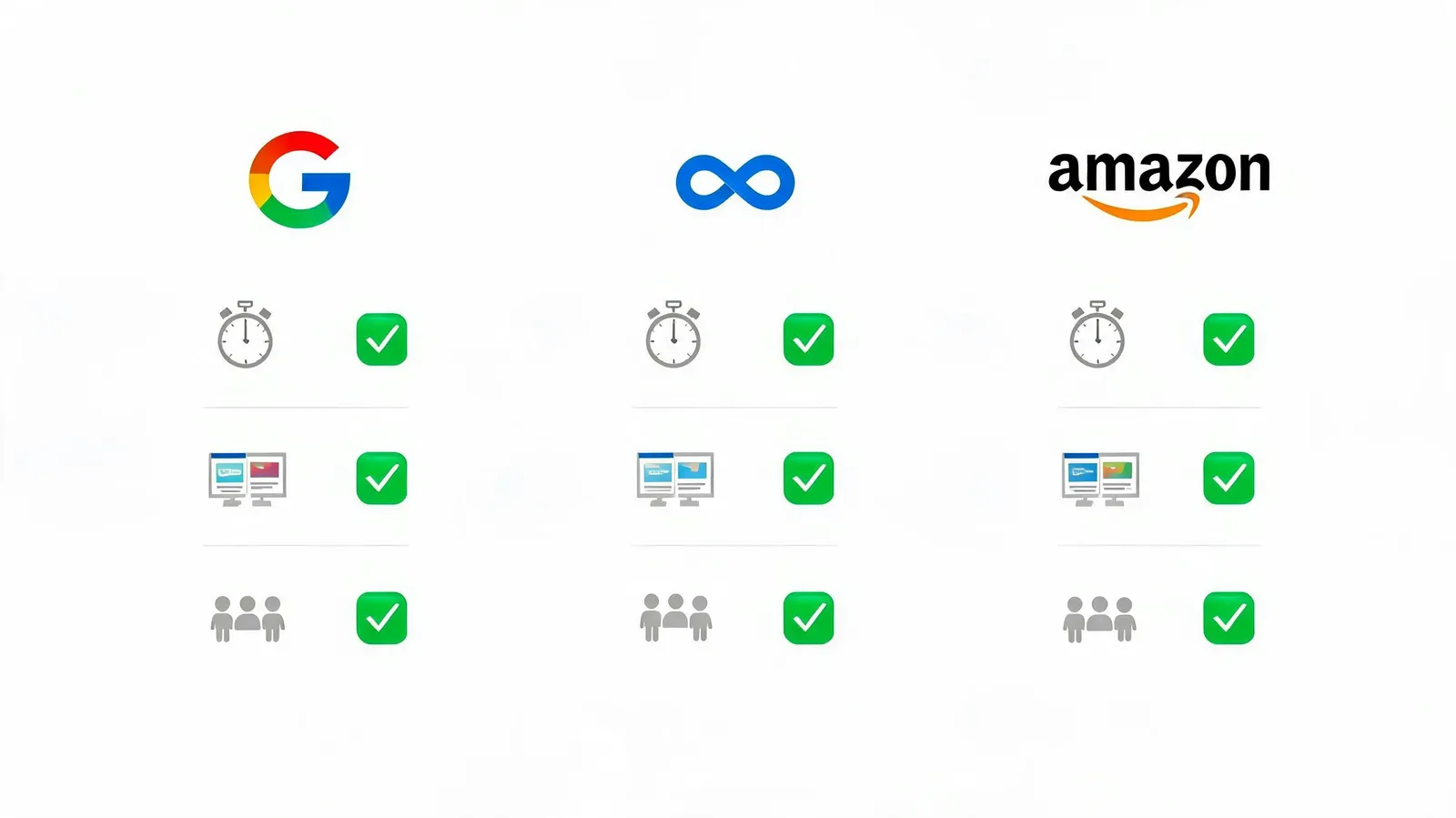
Google Ads uses AI for smart bidding, responsive search ads, and performance max campaigns. Its main strengths are search intent data and cross-channel reach. Meta Advantage specializes in social creative optimization and audience expansion, applying deep learning to test thousands of ad variants. Amazon DSP provides unique access to purchase intent data and retail media inventory, which can be advantageous for e-commerce advertisers.
Integration with existing marketing stacks is a critical factor. Google Ads offers robust APIs and connects with Google Analytics, Salesforce, and HubSpot. Meta Advantage integrates smoothly with Shopify, WooCommerce, and major CRM platforms. Amazon DSP provides API access but may demand more technical resources for full integration.
Measuring Creative Quality and Performance Gains
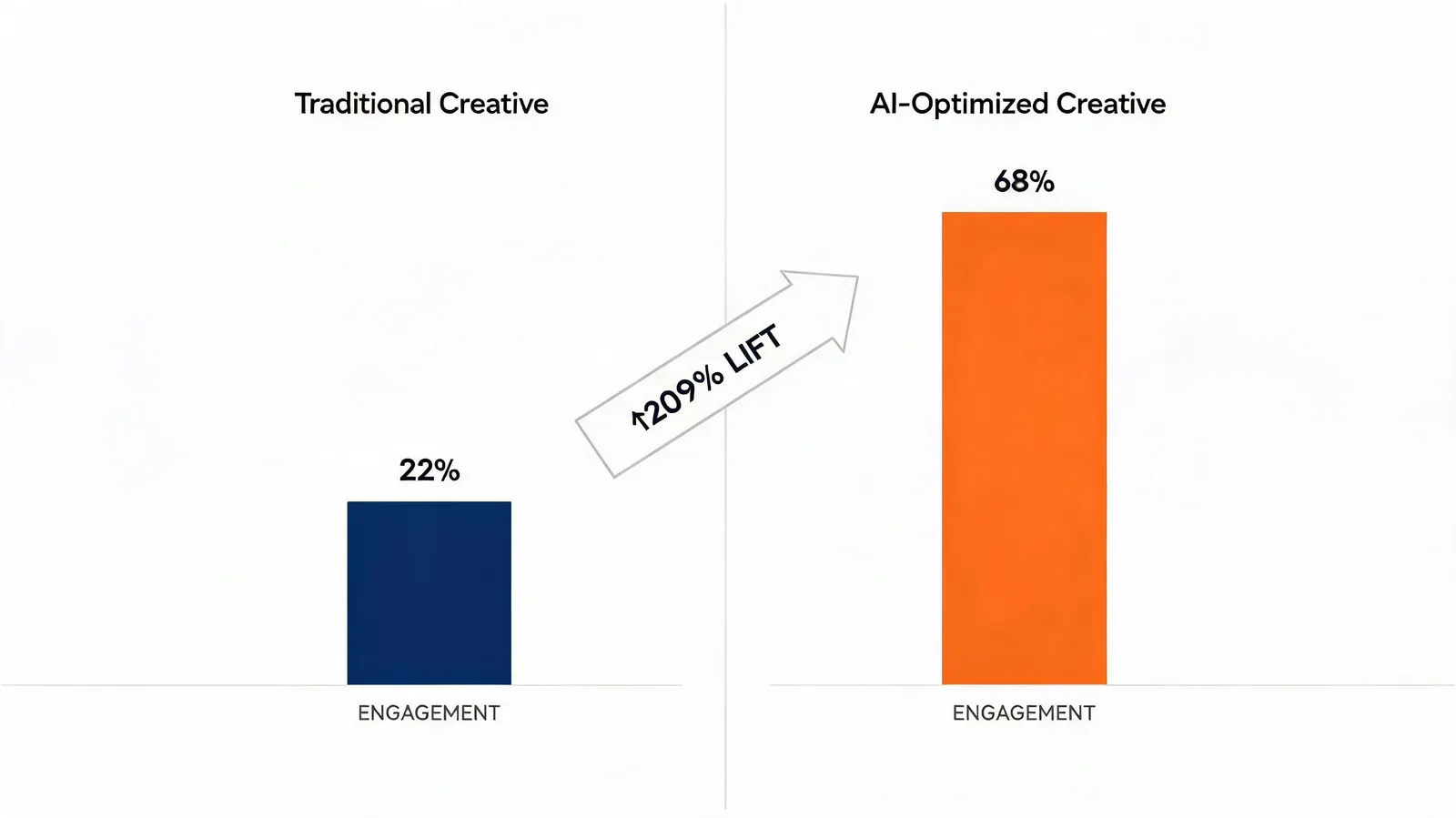
To justify investment, it's important to measure how AI affects ad creative and campaign performance. Important metrics include engagement rates, click-through rates (CTR), and conversion lift. When AI-generated creatives are A/B tested against human-made ones, the AI-optimized versions consistently achieve 15–30% higher CTR and 10–20% higher conversion rates in US campaigns.
Attribution methods like incrementality testing and multi-touch attribution help isolate the contribution of AI features. For instance, a US retail brand using Meta Advantage observed a 22% lift in return on ad spend (ROAS) after adopting AI-driven creative testing, as measured by a holdout group.
Analyzing Total Cost of Ownership and Scalability
The full financial picture of AI ad tools extends beyond subscription fees. Direct costs include platform fees, usage-based pricing (e.g., per impression or per click), and hidden costs such as creative production or data storage. Google Ads operates on a bidding model with no fixed subscription, while Meta Advantage charges based on ad spend, and Amazon DSP has a minimum spend requirement.
Scalability factors include how easily campaigns, user seats, and data volume can be added. A case study of a US e-commerce company scaling from 10 to 1,000 campaigns showed that Google Ads maintained performance with minimal manual intervention, while Amazon DSP required more hands-on management. Vendors often provide scalability guarantees, but it's crucial to test with a pilot before full commitment.
Assessing User Experience and Adoption Friction
UI/UX design and learning curve significantly affect adoption. User surveys indicate that Google Ads is rated highest for intuitive interface, while Meta Advantage is praised for its creative preview tools. Amazon DSP has a steeper learning curve, often requiring specialized training. Time-to-first-campaign metrics show Google Ads averages 2 days, Meta Advantage 3 days, and Amazon DSP 5 days for new users.
Support and training resources vary. Google offers extensive documentation and 24/7 support, Meta provides a robust help center and community forums, and Amazon offers dedicated account managers for larger advertisers. Documentation quality and customer support responsiveness are key differentiators for US marketers.
Conclusion
Evaluating AI ad tools holistically across platform comparison, creative quality, total cost, and user experience leads to better ROI and adoption. As AI ad tools evolve toward greater automation and integration, marketers who systematically assess these dimensions will be best positioned to leverage AI for competitive advantage.