Introduction
Since digital media took hold, advertising has not seen a shift as consequential as the one now underway. Generative AI tools can turn out ad images, video clips, written copy, and even full campaign packages within minutes. Conventional ad production tends to be slow, costly, and hard to personalize at scale; generative AI, by contrast, brings speed, cost savings, and a practically limitless range of variations. When text-to-image and text-to-video generation are paired with AI copywriting that stays on-brand, automated multimodal production, and human review checkpoints, advertisers can reach a creative velocity that was previously out of reach—while still protecting brand integrity.
1. Text-to-Image and Text-to-Video Ad Creation Tools: From Prompt to Polished Visuals
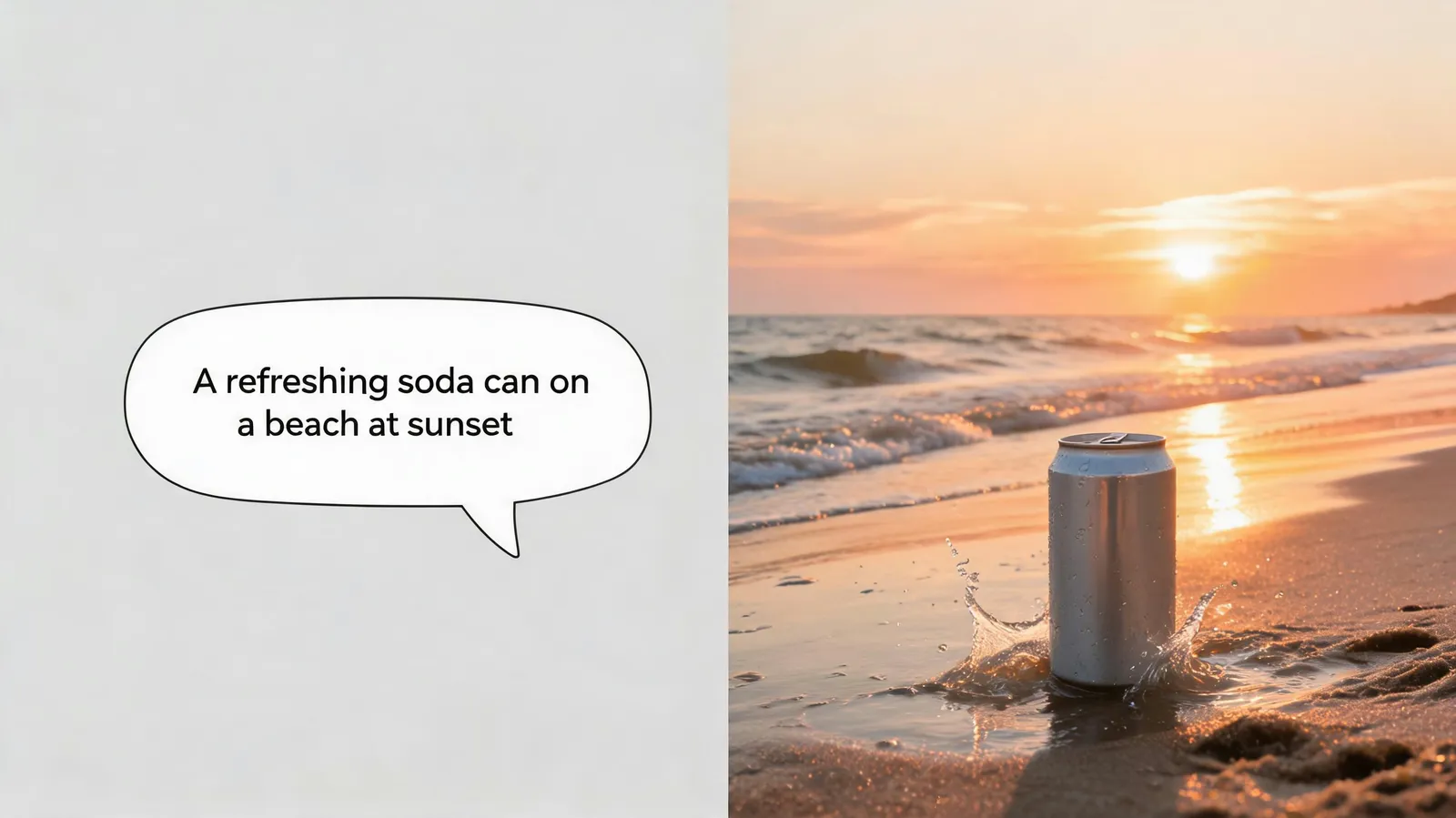
Models that generate images and video from text are reshaping how ad visuals are both imagined and made. With leading tools including DALL·E, Midjourney, Runway, and Sora, creative teams can produce photorealistic product shots, lifestyle scenes, and short video clips from straightforward written descriptions. A fashion brand, for instance, can turn out 100 product lifestyle images in minutes—cutting visual production time by as much as 80%. Such tools prove particularly useful for rapid concept testing and for A/B testing ad visuals before a brand commits to costly photo shoots.
Getting on-brand, high-quality visuals depends on sound prompt engineering practices. One beverage company used text-to-video to A/B test ad concepts, refining prompts until the generated video matched the brand’s energetic and refreshing tone. As a creative director points out, iterative prompt refinement has become a core skill, one that blends artistic direction with a technical understanding of how models behave. When prompts are treated as creative briefs, advertisers can steer AI toward consistent, campaign-ready visuals.
2. Brand-Consistent AI Copywriting and Visual Generation: Keeping the Voice and Look Unified

Scaling creative output makes it a major challenge to keep a unified brand voice and visual identity across every touchpoint. AI advertising creative generation meets this challenge by fine-tuning language models and visual generators on brand-specific datasets—tone guidelines, color palettes, and logo usage rules included. A global telecom brand, for example, used a custom GPT to write thousands of localized ad headlines while maintaining a consistent voice. Data shows a 30% increase in brand recall when AI-generated copy matches the brand’s established tone.
Tools and workflows for enforcing brand consistency include style guides used as prompts, negative prompts that exclude off-brand elements, and brand embeddings that steer generative models. An e-commerce retailer cut off-brand visuals by 95% with a brand-consistent AI pipeline. As a brand manager stresses, human oversight remains critical for catching subtle deviations and making sure every asset aligns with the brand’s values. By building brand rules directly into the generation process, advertisers can scale personalization without losing identity.
3. Automated Multimodal Ad Variant Production: Scaling Personalization Without Chaos
Automated multimodal ad production pipelines bring together large language models for copy, diffusion models for images, and video generators—all set in motion by a single campaign brief. With this architecture, a travel agency can generate 500 unique ad combinations (copy, image, and video snippet) for 10 audience segments, achieving a 5x increase in creative output with the same team size. Orchestration is the key: a central brief flows into parallel AI modules, and the outputs are assembled into platform-ready variants.
Maintaining quality and relevance across hundreds of variants is a challenge at scale. Solutions include automated QA checks, dynamic asset selection based on performance data, and rules for combining copy with visuals. A retail brand used multimodal AI to boost click-through rate by 40% through hyper-personalized ads. A marketing ops lead notes that integrating these pipelines into existing workflows takes careful planning but pays off in agility and audience engagement.
4. Human-in-the-Loop Creative Review Workflows: Balancing Automation with Brand Safety
Fully automated ad generation carries risks: bias, offensive content, legal issues, and brand misalignment. A major brand’s AI-generated ad accidentally included a competitor’s logo due to training data leakage, underscoring the need for human review. A survey found that 78% of marketers say human review is essential for AI-generated creatives. Human-in-the-loop workflows ensure ethical, legal, and brand-aligned output while still leveraging AI’s speed.
Effective human-in-the-loop workflows include review stages, approval gates, and feedback loops for continuous AI improvement. An agency implemented a human review dashboard that cut approval time by 50% while catching 99% of errors. A creative director describes the synergy between AI speed and human judgment as the new creative partnership. By designing clear review processes, advertisers can balance automation with brand safety and accountability.
Conclusion
Text-to-image and text-to-video tools, brand-consistent AI copywriting, automated multimodal production, and human-in-the-loop review together form a complete AI-powered creative ecosystem. Advertisers who adopt these tools gain a competitive advantage through faster campaigns, deeper personalization, and stronger brand consistency. Looking ahead, AI is poised to generate entire interactive ad experiences, and the role of human creativity will evolve to guiding AI with strategic intent and ethical oversight. The AI creative revolution is not about replacing humans—it is about amplifying human creativity with machine scale and speed.