Introduction
Marketers have plenty of data yet still lack insights they can act on. The missing piece is rarely data volume; it is the infrastructure that converts raw records into intelligence. Legacy marketing stacks were never designed with AI in mind: fragmented data, batch-only processing, and hand-driven model releases make real-time, personalized audience insight difficult to achieve.
Four mutually dependent pillars underpin a modern AI audience insights platform: a Customer Data Platform (CDP) with identity resolution, a feature store fed by real-time pipelines, MLOps for marketing AI, and a considered choice between cloud and on-premise deployment. The technical deep dive below gives data engineers, marketing technologists, and AI architects a blueprint for each pillar.
1. CDPs and Identity Resolution: A Single, Unified Audience View
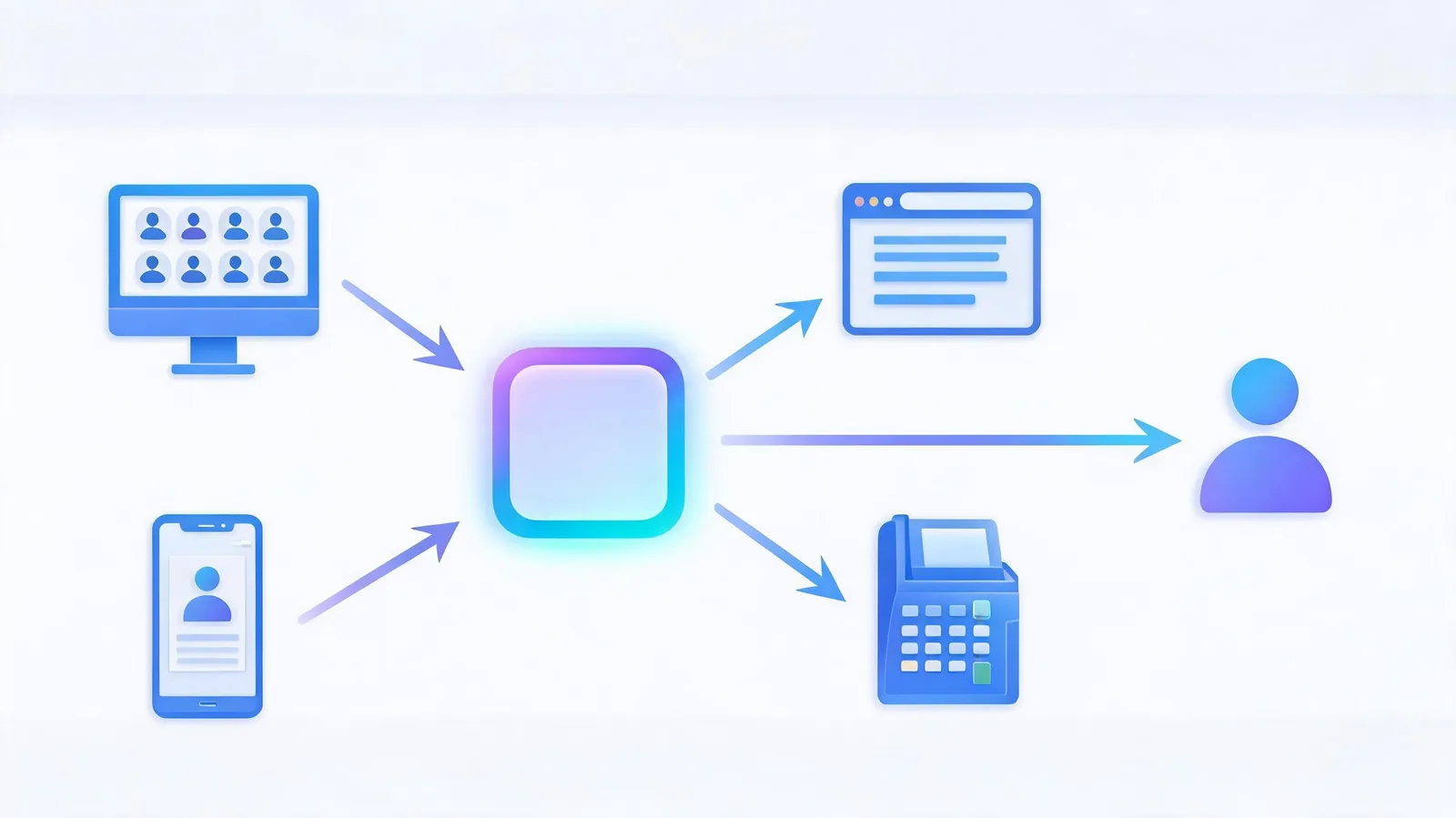
A CDP is packaged software that maintains a persistent, unified customer database other systems can query. Within AI audience insights, it acts as the base layer: it ingests, cleans, and unifies customer records from sources such as CRM, web, mobile, and offline channels. The Customer Data Platform Institute's 2024 survey found that 62% of marketers still contend with fragmented customer data, which yields incomplete audience profiles and weak personalization. A properly deployed CDP addresses this by establishing a single source of truth. One leading retail brand that implemented a CDP reported a 30% lift in campaign ROI within six months, attributed to sharper audience segmentation and personalized recommendations.
Identity resolution is what gives a CDP its real power for AI. It matches identifiers across devices, channels, and systems to assemble a unified customer profile. Two approaches dominate: deterministic matching, which relies on exact identifiers such as email addresses or loyalty IDs, and probabilistic matching, which uses algorithms to infer links from behavioral patterns, IP addresses, and device fingerprints. Graph-based techniques are being adopted more widely to model complex identifier relationships and raise match rates. Forrester research found that firms with advanced identity resolution reach 25% higher personalization accuracy. The central output is a persistent customer ID that stays stable across every touchpoint, letting AI models follow audience behavior over time and deliver consistent, relevant experiences.
2. Feature Stores and Real-Time Pipelines: Supplying Models with Fresh Signals
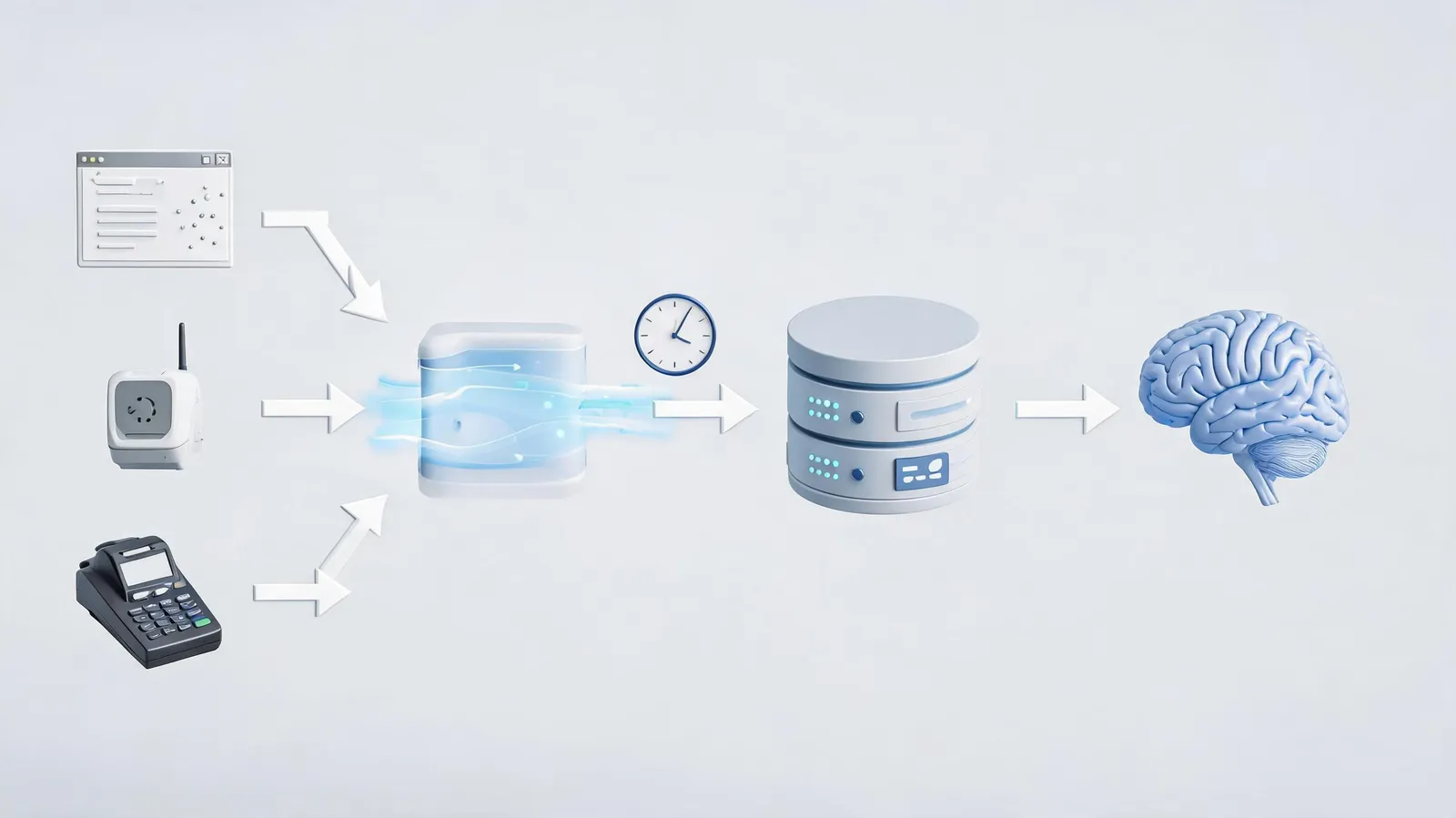
A feature store is a centralized hub for feature engineering, serving, and governance. It connects data engineering with data science by supplying one consistent feature set for both training (offline) and inference (online). For AI audience insights, it lets marketing teams define, compute, and serve features such as customer lifetime value, engagement scores, or purchase propensity. Its main advantage is removing training-serving skew—the frequent mismatch between features used in training and those used in production, which degrades model performance. One Fortune 500 case study found that a feature store cut model training time by 40% and removed training-serving skew entirely, producing more dependable audience predictions.
Real-time data pipelines form the second part of this pillar. They capture behavioral signals—clicks, views, purchases, interactions—as they occur and surface them to AI models with minimal latency. Streaming architectures built on Apache Kafka, Amazon Kinesis, or Google Cloud Pub/Sub are common choices for ingesting and processing these signals. Real-time personalization imposes strict latency demands; sub-second response times are often required to adjust content or offers within a live session. One media company used real-time pipelines to adjust audience segments dynamically during live events and saw engagement rise 18%. Together, a feature store and real-time pipelines keep AI models working on the freshest data available, which supports timely and relevant audience insight.
3. Model Deployment and MLOps for Marketing AI: Moving from Experiment to Production
MLOps applies DevOps principles to machine learning workflows. In marketing AI, it covers the processes and tooling required to deploy, monitor, and maintain models that generate audience insights at scale. The marketing AI MLOps lifecycle spans CI/CD for models, versioning, and automated retraining. Algorithmia's 2024 survey found that 55% of companies need one to three months to deploy a single ML model, and model drift—performance degradation over time—affects 91% of models within a year. MLOps tackles these problems by automating the deployment pipeline and supporting continuous monitoring. One marketing team that adopted MLOps practices cut model deployment from weeks to hours, enabling rapid iteration in response to shifting audience behavior.
Monitoring and explainability are essential to MLOps for audience targeting. Monitoring means tracking production metrics such as accuracy, precision, and recall and flagging anomalies or drift. Explainability tools such as SHAP (SHapley Additive exPlanations) and LIME (Local Interpretable Model-agnostic Explanations) show marketers why a model produced a given prediction, which matters for regulatory compliance and for building trust. A financial services company, for instance, used SHAP to detect and mitigate bias in its audience segmentation models and uphold fair lending practices. Case studies indicate that explainability supports compliance while also improving model debugging and stakeholder buy-in.
4. Cloud vs. On-Premise: Selecting the Right Foundation for AI Audience Insights
Deciding between cloud and on-premise architecture for AI audience insights means weighing scalability, cost, security, and control. Cloud platforms deliver elasticity, managed services, and a faster path to insight. Cloud-native AI offerings such as AWS SageMaker, Google Vertex AI, and Azure Machine Learning provide ready-made environments for data processing, model training, and deployment. A 2024 Flexera report found that 89% of enterprises use cloud services and 45% report meaningful cost savings from cloud adoption. For AI audience insights, the cloud supports rapid experimentation and scaling, which suits organizations handling large data volumes and needing fast model deployment.
On-premise architecture is favored where data sovereignty, latency, or customization requirements dominate. Financial institutions, healthcare providers, and government agencies frequently pick on-premise infrastructure to satisfy regulations such as GDPR, HIPAA, or CCPA. A European bank case study showed that on-premise deployment kept data within the country, meeting strict regulatory requirements. On-premise solutions, however, demand substantial capital investment and ongoing maintenance. Hybrid models are gaining ground—training in the cloud and running inference on-premise, or the reverse—letting organizations balance cost, performance, and compliance. The decision should rest on a thorough assessment of business needs, the regulatory landscape, and existing infrastructure.
Conclusion
The technical backbone of AI audience insights brings together several elements: a CDP with identity resolution, a feature store paired with real-time pipelines, MLOps for dependable model deployment, and a deliberate cloud or on-premise architecture choice. Absent that infrastructure, audience insights stay fragmented, stale, and unreliable, which translates into missed opportunities and wasted resources. Looking ahead, these technologies are converging into composable, AI-native marketing stacks, with generative AI opening the door to audience simulation and synthetic data generation. Organizations that invest in these foundational pillars now will be better placed to deliver personalized, real-time audience insights with measurable business value.