Introduction
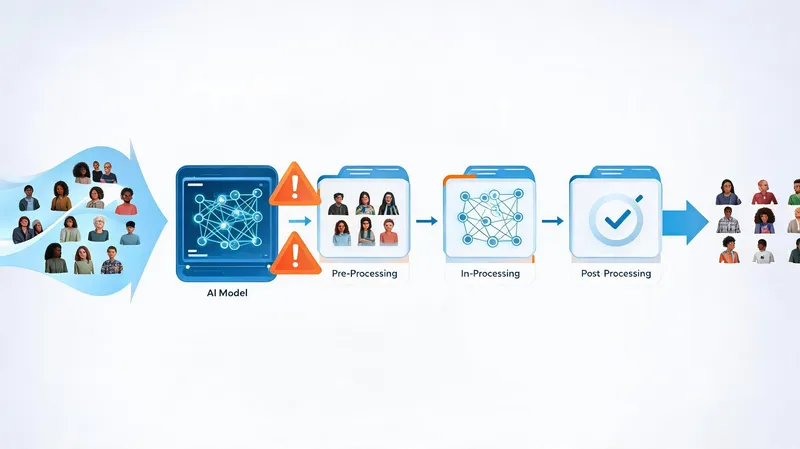
Marketers are confronting a harsh reality: third-party cookies are being phased out, and regulations like GDPR and CCPA are tightening. The traditional approach of centralized data collection for audience analysis is increasingly restricted and has a corrosive effect on consumer trust. In response, a set of privacy-preserving AI methods—federated learning, differential privacy, consent management, and reliance on zero- and first-party data—is emerging to deliver meaningful audience insights while honoring user privacy and legal requirements.
Federated Learning Enables Cross-Device Audience Insights
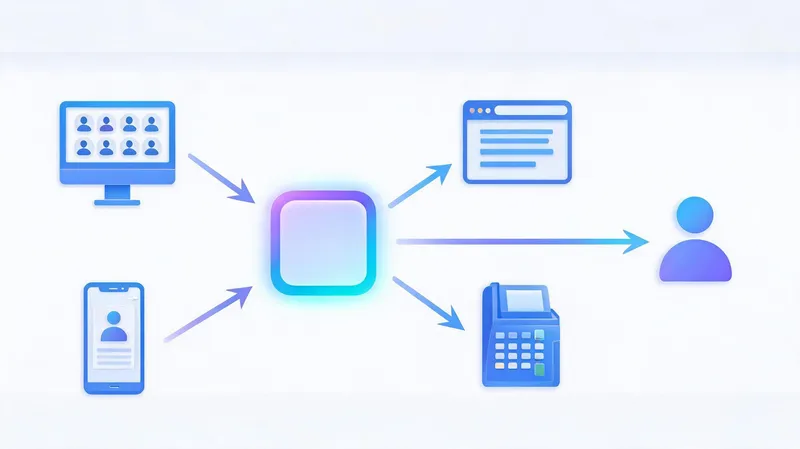
Federated learning makes it possible to train models across many devices without ever centralizing raw data, thereby enabling cross-device audience analysis. In this setup, local models learn on user devices, and only model updates—not the underlying data—are sent to a central server. This design lowers the risk of data breaches and aligns with data minimization principles. Industry examples include Google's Federated Learning of Cohorts (FLoC) and its successor, the Topics API.
Applications in cross-device audience segmentation and lookalike modeling look promising. A retail brand, for instance, was able to improve cross-device attribution without cookies, achieving better accuracy than probabilistic methods while still protecting privacy. Federated learning allows marketers to construct robust audience segments without accessing raw user data.
Differential Privacy in Customer Data Platforms

Differential privacy works by adding calibrated noise to query results or datasets, which enables audience insights while safeguarding individual records. The US Census Bureau and Apple use this technique for population analytics, and it provides a mathematical guarantee of plausible deniability for individuals.
When integrated into Customer Data Platforms (CDPs), differential privacy supports audience segmentation and reporting without exposing personally identifiable information (PII). For example, a CDP can produce audience overlap reports using differential privacy. However, there is a trade-off between the privacy budget (epsilon) and data utility; marketers must strike a balance to keep insights actionable.
Consent Management and Regulatory Compliance (GDPR, CCPA)
Robust consent management platforms (CMPs) serve as the gatekeeper for data collection and AI training. GDPR and CCPA mandate explicit opt-in and the right to be forgotten. CMPs integrate with AI pipelines to ensure that only consented data is used.
Auditing and transparency are critical in AI-driven audience insights. A financial services firm implemented consent-based AI for personalized offers, with automated compliance checks and data lineage tracking. This ensures that AI models respect user consent and regulatory requirements.
Zero-Party and First-Party Data Strategies
Zero-party data—explicit preferences, intentions, and personal context that users voluntarily share—can fuel privacy-preserving AI. Examples include interactive quizzes, preference centers, and surveys. This data offers higher accuracy and trust compared to inferred data.
First-party data—website interactions, purchase history, CRM data—can be enriched with AI while respecting privacy. A media company used first-party data and federated learning to recommend content, demonstrating how to leverage direct data without compromising user privacy.
Conclusion
Privacy-preserving AI techniques—federated learning, differential privacy, consent management, and zero/first-party data strategies—are complementary approaches that enable compliance with GDPR/CCPA while unlocking valuable audience insights and building consumer trust. The convergence of these methods with generative AI and the rise of privacy-enhancing technologies (PETs) will become a competitive advantage for forward-thinking organizations.