Real-Time Personalization: How Contextual Signals, Bandit Testing, and Unified Orchestration Are Redefining Recommendation Systems
When a digital experience feels generic, users leave within seconds. In the United States, consumers move between web, mobile apps, email, push notifications, and in-store touchpoints throughout the day. Any delayed or irrelevant recommendation directly reduces conversion and retention. Traditional batch-based recommendation pipelines refresh user profiles hourly or daily and cannot keep up with modern expectations. Real-time personalization—driven by context-aware recommendation engines, multi-armed bandit optimization, cross-channel journey orchestration, and low-latency AI infrastructure—is changing how businesses deliver relevance at scale.
1. Context-Aware Recommendation Engines: Beyond Collaborative Filtering
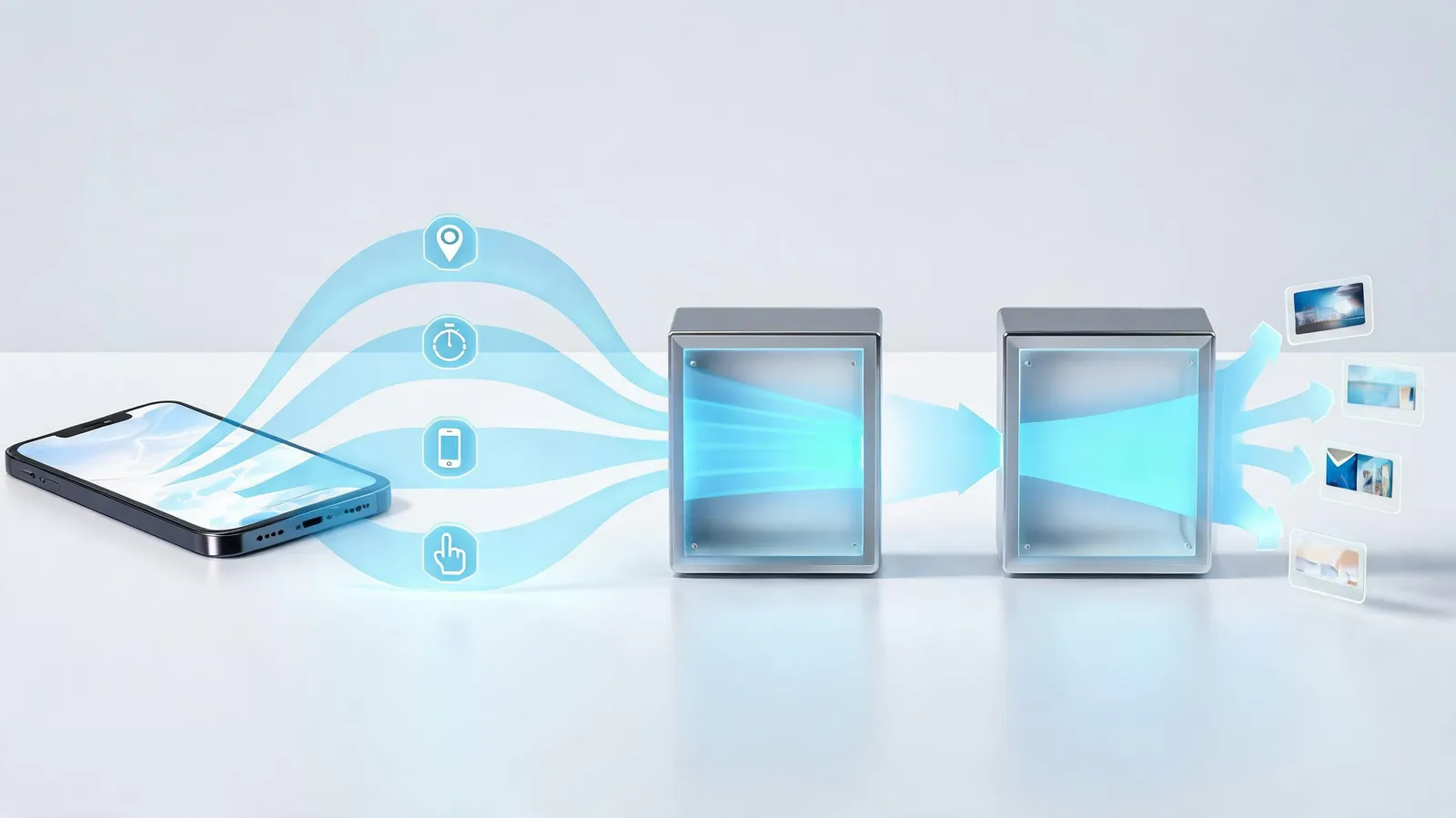
Collaborative filtering laid the groundwork for modern recommendation systems by finding similarities between users and items. But static user-item similarity matrices fail when intent shifts within a single session. A shopper browsing winter coats in Minneapolis at 8 a.m. has different needs than the same user browsing patio furniture in Miami at 6 p.m. Context-aware engines address this by ingesting real-time signals—location, device type, time of day, session behavior, and environmental data—and dynamically adjusting recommendations.
1.1 From Static User Profiles to Dynamic Contextual Signals
Batch collaborative filtering depends on historical interactions that may be hours or days old. Streaming context features, in contrast, capture what a user is doing right now. For example, a session-aware recommendation engine can detect that a user has viewed three running shoes in the last two minutes and immediately prioritize running apparel, hydration products, and related accessories. According to industry benchmarks, session-aware recommendations can improve click-through rates by 20–40% compared to batch-only models.
1.2 Architectural Patterns for Context Ingestion and Feature Serving
A context-aware engine requires a streaming feature store that can serve features at millisecond latency. Online inference pipelines retrieve precomputed embeddings, combine them with real-time contextual signals, and score candidate items before the page renders. A US-based retailer, for instance, fused geolocation data with browsing context to recommend nearby store inventory, increasing same-day pickup conversions by 18%. The architecture typically includes event ingestion via Kafka or Kinesis, a feature store such as Feast or Tecton, and a model server that supports both batch and online scoring.
2. Multi-Armed Bandit Optimization for Content Delivery

Once contextual signals are available, the next challenge is deciding which content variant to serve. Multi-armed bandit algorithms provide a principled framework for balancing exploration and exploitation in live content selection.
2.1 Exploration vs. Exploitation: The Core Trade-Off in Live Content Selection
Exploration means testing new content variants to gather data; exploitation means serving the variant known to perform best. Epsilon-greedy, Thompson sampling, and upper confidence bound (UCB) are three widely used approaches. Thompson sampling often outperforms epsilon-greedy in practice because it naturally balances uncertainty. Key metrics include regret minimization—the cost of not always choosing the optimal arm—and cumulative reward, which directly maps to engagement or revenue.
2.2 Practical Deployment: Bandits for Headlines, Layouts, and Offers
Traditional A/B/n testing requires fixed traffic splits and weeks of data collection. Bandit optimization replaces this with continuous adaptation. A US media company replaced headline A/B tests with a Thompson sampling bandit and saw a 12% lift in article click-through rates within two weeks. Similarly, e-commerce teams use bandits to optimize homepage layouts, promotional offers, and email subject lines, often achieving double-digit engagement gains without manual intervention.
3. Cross-Channel Journey Orchestration: One User, Many Touchpoints
Personalization breaks down when channels operate in silos. A user who receives a 20% discount email but sees full-price products in the mobile app experiences inconsistency that damages trust and reduces conversion.
3.1 The Fragmentation Problem: Siloed Channels Create Inconsistent Experiences
Many organizations still manage email, push, web, and in-store personalization through separate teams and systems. This fragmentation leads to conflicting recommendations, duplicate messaging, and missed cross-sell opportunities. Research shows that inconsistent messaging across channels can reduce conversion rates by up to 30% and increase unsubscribe rates.
3.2 Orchestration Layer: Unified Profiles, Event Streams, and Decisioning
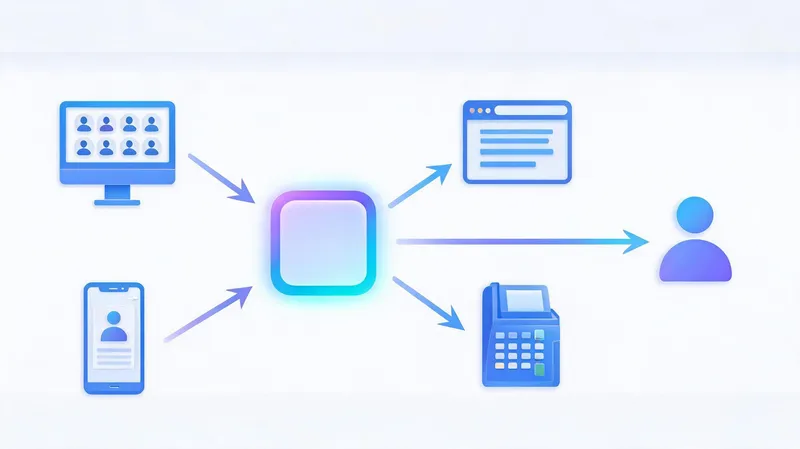
A cross-channel orchestration layer unifies user profiles, consumes real-time event streams from all touchpoints, and applies a centralized decisioning service. A US travel brand implemented this architecture to coordinate flight, hotel, and car rental offers across email, app, and web. The result was a 25% increase in cross-sell revenue and a measurable improvement in customer satisfaction scores.
4. Latency and Scalability Challenges in Real-Time AI
Real-time personalization is an engineering discipline as much as a data science one. Serving recommendations at millisecond latency and massive scale requires careful attention to latency budgets and scalability patterns.
4.1 Latency Budgets: From Request to Rendered Recommendation
A typical latency budget for a personalized page might allocate 20 ms for network, 30 ms for feature retrieval, 50 ms for model inference, and 20 ms for post-processing—totaling 120 ms. Exceeding this budget directly impacts user engagement. Studies show that a 100 ms delay can reduce conversion by 7%. Therefore, every component must be optimized for speed.
4.2 Scalability Patterns: Caching, Model Serving, and Horizontal Scaling
In-memory stores such as Redis or Aerospike provide sub-millisecond feature retrieval. Model distillation reduces large models to smaller, faster versions suitable for edge inference. Horizontal scaling with Kubernetes or serverless inference ensures that peak traffic—such as Black Friday or a major sale event—does not degrade latency. A US retailer handled a 10x traffic spike during a flash sale by pre-warming caches and autoscaling model servers, maintaining 99th percentile latency under 200 ms.
Conclusion
Real-time personalization is no longer a differentiator but a baseline expectation for digital experiences in the United States. Context-aware recommendation engines move beyond collaborative filtering by incorporating live signals. Multi-armed bandit optimization continuously improves content delivery without manual A/B tests. Cross-channel orchestration ensures a coherent journey across web, mobile, email, push, and offline touchpoints. Low-latency AI infrastructure makes it all possible at scale. As generative AI, edge computing, and privacy-preserving personalization converge, the next wave of real-time systems will be even more adaptive, efficient, and user-centric. Organizations that master these four pillars will define the future of digital engagement.