Smarter Status Tracking and Early Warning Signals
Keeping tabs on a project by hand is increasingly impractical in fast-moving delivery environments. AI-based project platforms gather and interpret project data automatically, giving managers a live view of milestones and deliverables. Dashboards refresh on their own, drawing inputs from task management systems, time-tracking applications, and communication channels. The upshot is less time spent assembling reports and more time available for strategic choices.
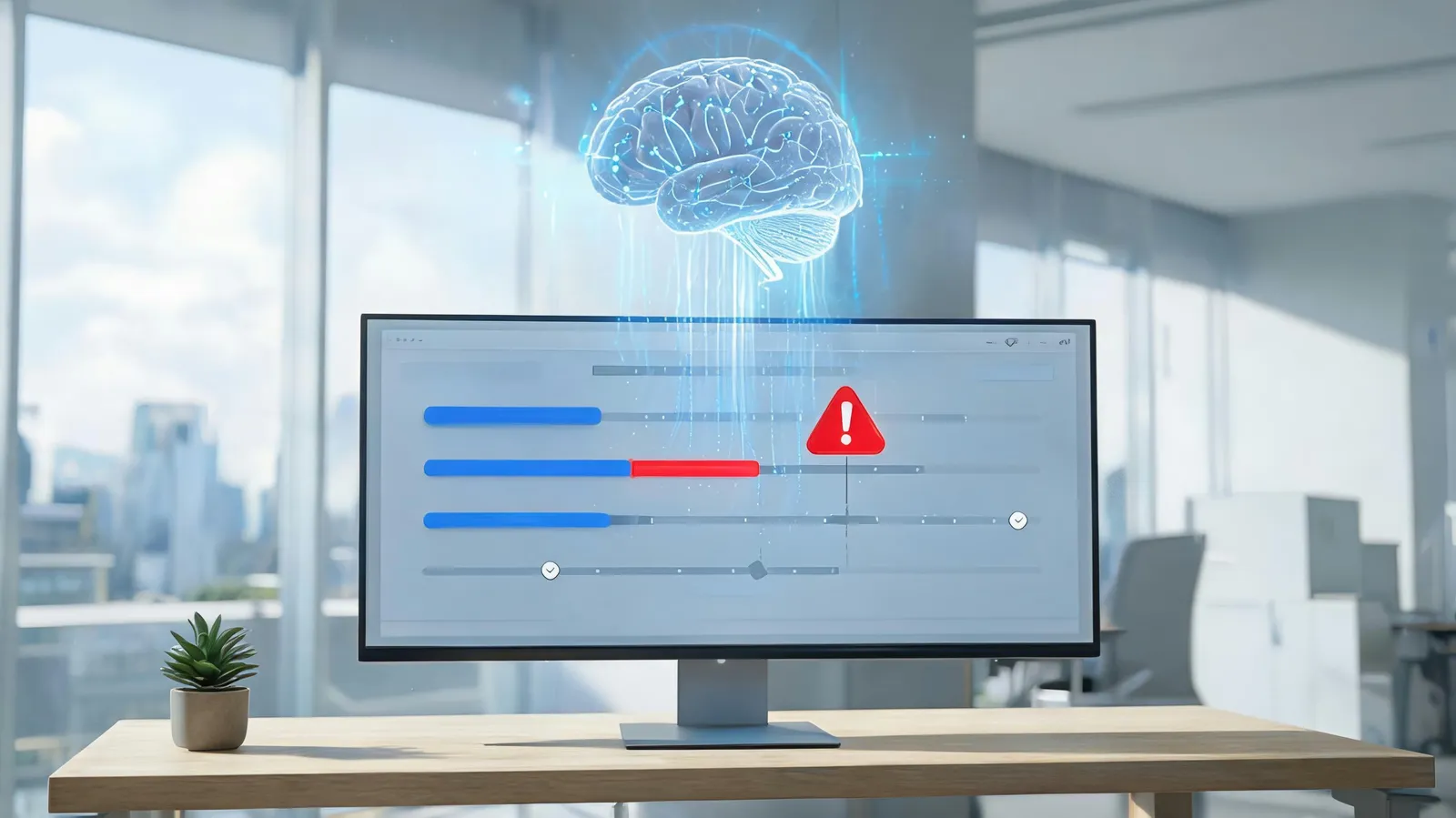
One technology company connected an AI-driven dashboard to its existing project management tooling. Status reporting time fell by 40%, and on-time delivery improved by 25%. Because the system monitors progress continuously and raises a flag whenever work drifts from plan, problems can be caught early.
Underpinning this capability are anomaly detection algorithms, which compare historical and live data to spot patterns that depart from the norm. When a task runs long or spending climbs past budget, the system can notify the project manager. Research from Gartner indicates that organizations deploying AI for anomaly detection spot problems up to 50% faster than those relying on manual review. Earlier detection can translate into meaningful savings: a construction firm reported saving $200,000 on one project after acting within days on a budget overrun flagged by AI.
Forecasting Risks Before They Land

Risk management sits at the heart of project work, and AI is changing both how risks surface and how they are addressed. Machine learning models review historical project records—prior risks, their impacts, and how well mitigation efforts worked—and use those lessons to forecast likely trouble with notable precision. In one construction project, AI examined weather patterns, supplier performance, and labor availability and predicted a delay in material delivery. Warned in advance, the project manager lined up alternative suppliers and kept the schedule intact.
AI-generated mitigation plans and scenario simulations push this further. Once a risk is predicted, the system can propose concrete responses such as shifting resources or revising the schedule, and it can model alternative scenarios to show what each response might achieve. McKinsey research found that companies using predictive risk tools see a 20% reduction in project delays and a 15% decrease in cost overruns. The return is tangible: organizations save an average of $5 in avoided losses for every dollar invested in AI risk management.
Set against reactive risk handling, the advantage of a proactive approach is plain. Reactive management waits for risks to materialize and often ends up firefighting. Proactive management, supported by AI, anticipates risks and deals with them before they grow. That shift saves both time and money and eases pressure on project teams.
Putting the Right People on the Right Work
Staffing is another area where AI shows strength. Algorithms can weigh workload and skills across teams so that the right people take on the right tasks at the right moment, which lifts utilization and cuts overtime. A marketing agency that used AI to assign tasks according to employee skills and current workload saw resource utilization rise 30% and overtime hours drop 20%, producing notable cost savings and better employee morale.
For agile teams, reallocating dynamically as project needs shift can be transformative. When work evolves, AI can move resources to clear bottlenecks or seize new opportunities—redirecting effort from lower-priority tasks when a particular activity falls behind, for instance. That flexibility matters most where priorities change often. Data indicates that companies using AI for dynamic resource allocation cut project costs by as much as 18% and shorten delivery times by 22%.
AI as a Teammate, Not a Replacement
The purpose of AI is to extend human capability, not displace it. In agile settings, it functions as a co-pilot for Scrum masters and product owners, offering insights that sharpen sprint planning. By reviewing past sprint data, for example, AI can estimate how many story points a team can realistically complete, which supports more credible commitments. A VersionOne survey found that teams using AI for sprint planning reported a 35% improvement in planning accuracy and a 25% increase in team satisfaction.
Collaboration also benefits from AI-driven insights and chatbots, which smooth communication and cut meeting time. Chatbots handle routine questions, schedule meetings, and share updates, leaving team members more room to concentrate on their work. In distributed teams, AI can examine communication patterns and recommend ways to collaborate better—noticing, say, that a team member is overloaded and suggesting tasks be redistributed. A case study of a remote software development team found that AI-assisted coordination reduced meeting time by 40% and improved project transparency.
Looking Ahead
By automating progress reporting, anticipating risks, optimizing staffing, and supporting human-AI teamwork, AI is redefining how projects are run. These capabilities help project managers base decisions on data, address risks before they escalate, and deploy resources efficiently. As the technology matures, its place in project lifecycles is likely to grow, possibly pointing toward autonomous project management in which AI handles routine work while people concentrate on strategic oversight. For organizations navigating increasingly complex project landscapes, treating AI as a strategic partner is becoming a practical necessity.