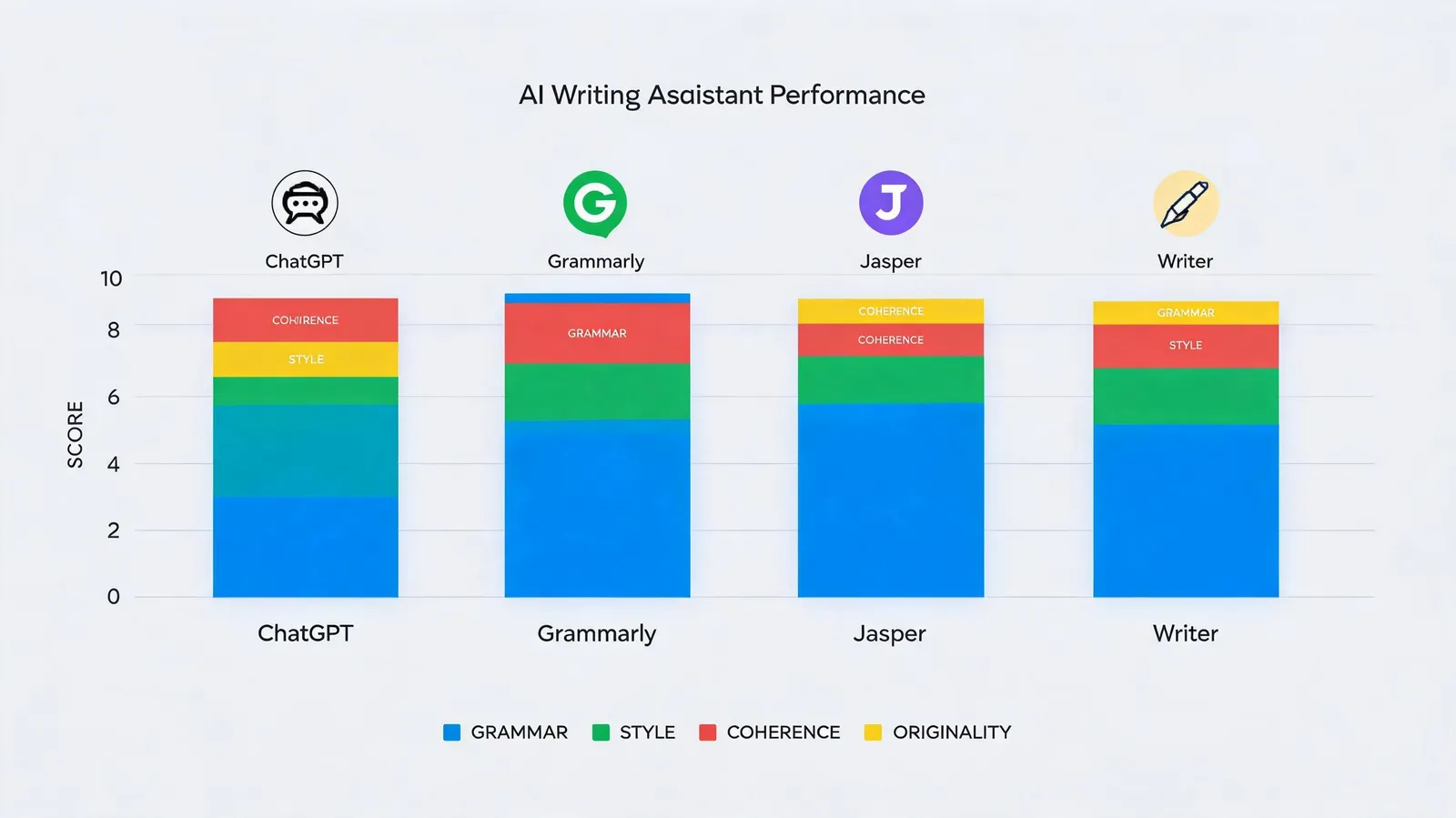
AI writing has crossed the line from pilot project to routine production tool: news copy, contract drafts, product listings, and customer replies are now churned out at volume. As large language models mature and get wired into professional workflows, the way organizations produce content has shifted. Looking at documented deployments in media, in legal/medical/technical documentation, and in e-commerce and customer support — and then comparing the major platforms — shows where the benefits are real and where the compromises sit.
Media and Publishing: Automation Alongside Editorial Judgment
Newsrooms and publishers have brought AI writing in to handle repetitive reporting, support longer investigative pieces, and ease editorial bottlenecks. The Associated Press uses AI for earnings stories, which has multiplied output roughly tenfold while cutting human error and shortening the path to publication. The Washington Post's Heliograf has covered elections, saving effort in drafting and fact-checking. Obstacles persist, though: published corrections and transparency rules point to the need for editorial guidelines, and survey findings on reader trust and disclosure suggest audiences want to know when AI has produced content.
Legal, Medical, and Technical Documentation: Precision Under Scrutiny

In fields where mistakes carry high stakes, AI writing supports legal drafting, medical records, and technical manuals. Law firms use it to produce standard contracts and check clauses, cutting review time by 60% and raising accuracy. On the healthcare side, AI scribes ease physicians' administrative load, saving time per patient encounter and affecting burnout. Software firms generate API documentation and help articles with AI, speeding up localization and update cycles. Those gains come with risks — hallucination and compliance among them — that have to be actively controlled.
E-Commerce and Customer Support: Personalization at Volume
Large retailers such as Amazon apply AI to millions of product listings, lifting conversion rates and SEO results. Chatbots and email responders take on 80% of routine inquiries, shortening response times and improving customer satisfaction. Personalization and dynamic content generation shape recommendations and follow-up emails around user behavior, producing measurable gains in engagement and repeat purchases. These deployments show AI writing driving tailored product content and efficient customer interactions.
Comparing the Leading Platforms and Their Trade-offs
Among the prominent AI writing platforms are OpenAI's GPT-4, Jasper, Copy.ai, and Writesonic. Comparing features surfaces differences in language coverage, customization, integrations, pricing structures, and scalability. The compromises are quality versus cost, creativity versus control, and speed versus accuracy. Benchmark research on output quality and hallucination rates, together with user reviews, points to limitations that depend on the specific use case. Industry selection criteria should weigh volume, compliance needs, and budget: media organizations may favor speed and creativity, whereas legal and medical work demands high accuracy and regulatory adherence.
Conclusion
Adoption of AI writing spans media, legal/medical/technical documentation, and e-commerce, with maturity and impact varying by sector. Maximizing the upside while containing the risks depends on picking the right platform and actively managing its trade-offs. Looking ahead, AI writing is likely to grow more specialized, tied to domain-specific knowledge, and subject to transparency and accuracy rules. As the technology keeps changing, organizations need to track developments and adjust their strategies to make the most of what it offers.