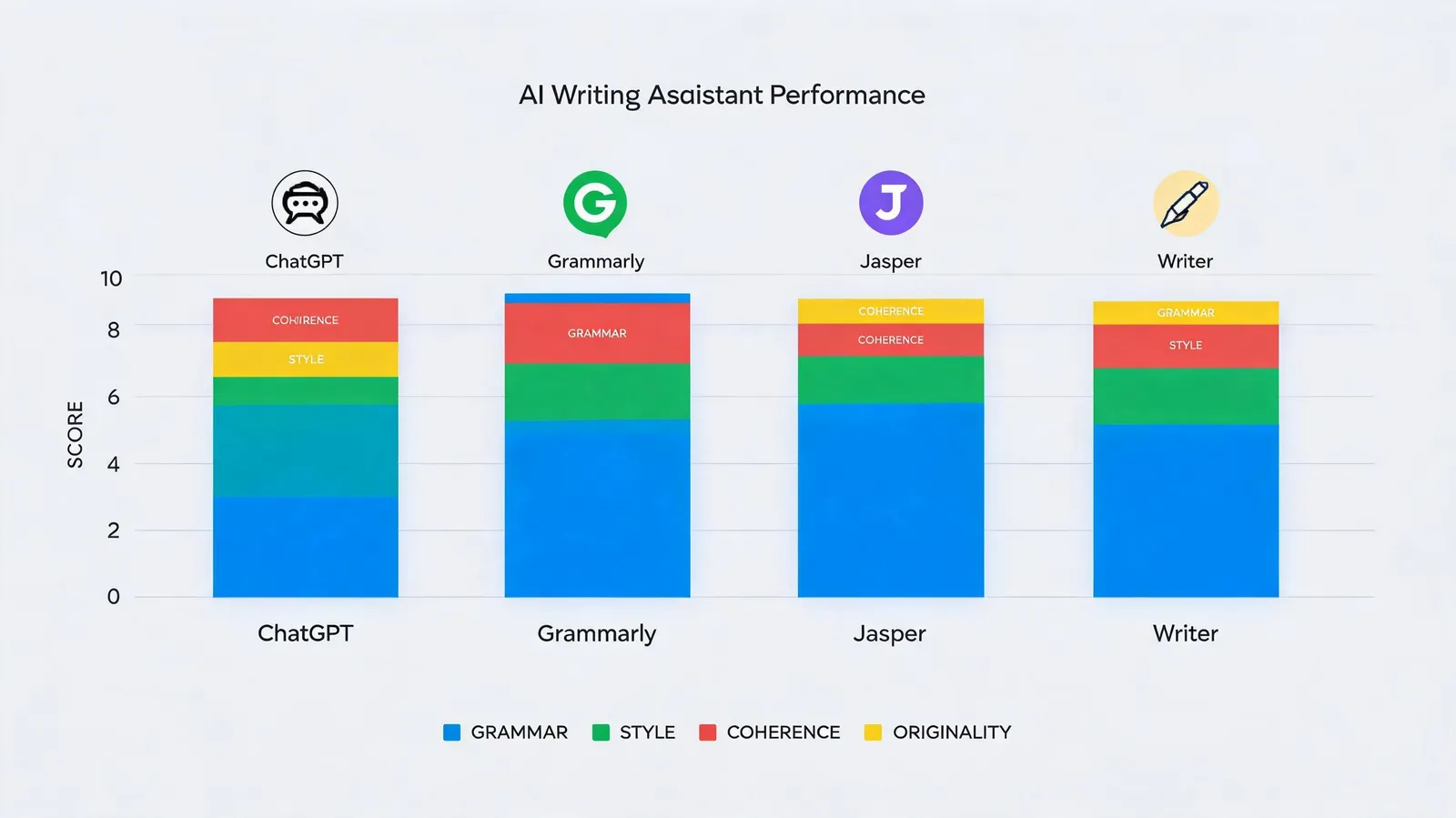
Artificial intelligence has become an everyday presence in U.S. newsrooms rather than a distant prospect. News gathering, production, and distribution are being reshaped by AI writing tools, which take on repetitive work and leave journalists more room for deeper analysis.
Generating Data-Heavy Stories Automatically
Automated content generation for stories built on structured data is among the clearest journalism applications of AI writing. The Associated Press (AP), for instance, has used AI to turn out thousands of earnings reports and sports recaps each year. Working with Automated Insights, AP produced quarterly earnings stories for U.S. companies, lifting output from a few hundred to more than 3,700 stories per quarter. The approach saves time, cuts errors, and frees reporters to pursue investigative work.
The Washington Post similarly relies on its Heliograf system for local sports and elections coverage, producing tailored updates for different audiences. Such tools draw on structured data—box scores, financial figures—and natural language generation (NLG) to compose narratives that read like human writing. The payoff is broader coverage with fewer resources.
A Research and Drafting Partner for Reporters
AI is also serving journalists as a research and drafting aid. Bloomberg's Cyborg helps reporters pull key facts quickly from earnings calls and financial reports, while Reuters' News Tracer watches social media for breaking news and checks authenticity. These systems can condense long documents, propose angles, and even draft opening paragraphs, leaving journalists to concentrate on context and analysis.
In investigative work, AI can comb through enormous datasets—leaked documents or public records—to surface patterns and anomalies. The Panama Papers investigation, for example, used AI to analyze 11.5 million documents, helping journalists spot connections that manual review would have taken years to uncover. This extends human capability rather than replacing journalists, improving efficiency and depth.
Challenges persist, however. If training data is skewed, AI-generated content can carry forward biases, and newsrooms need ethical guidelines covering transparency and accountability. As these tools develop, they are likely to become more intuitive, letting journalists collaborate with machines in real time.
What AI Writing Means for Student Learning and Assessment
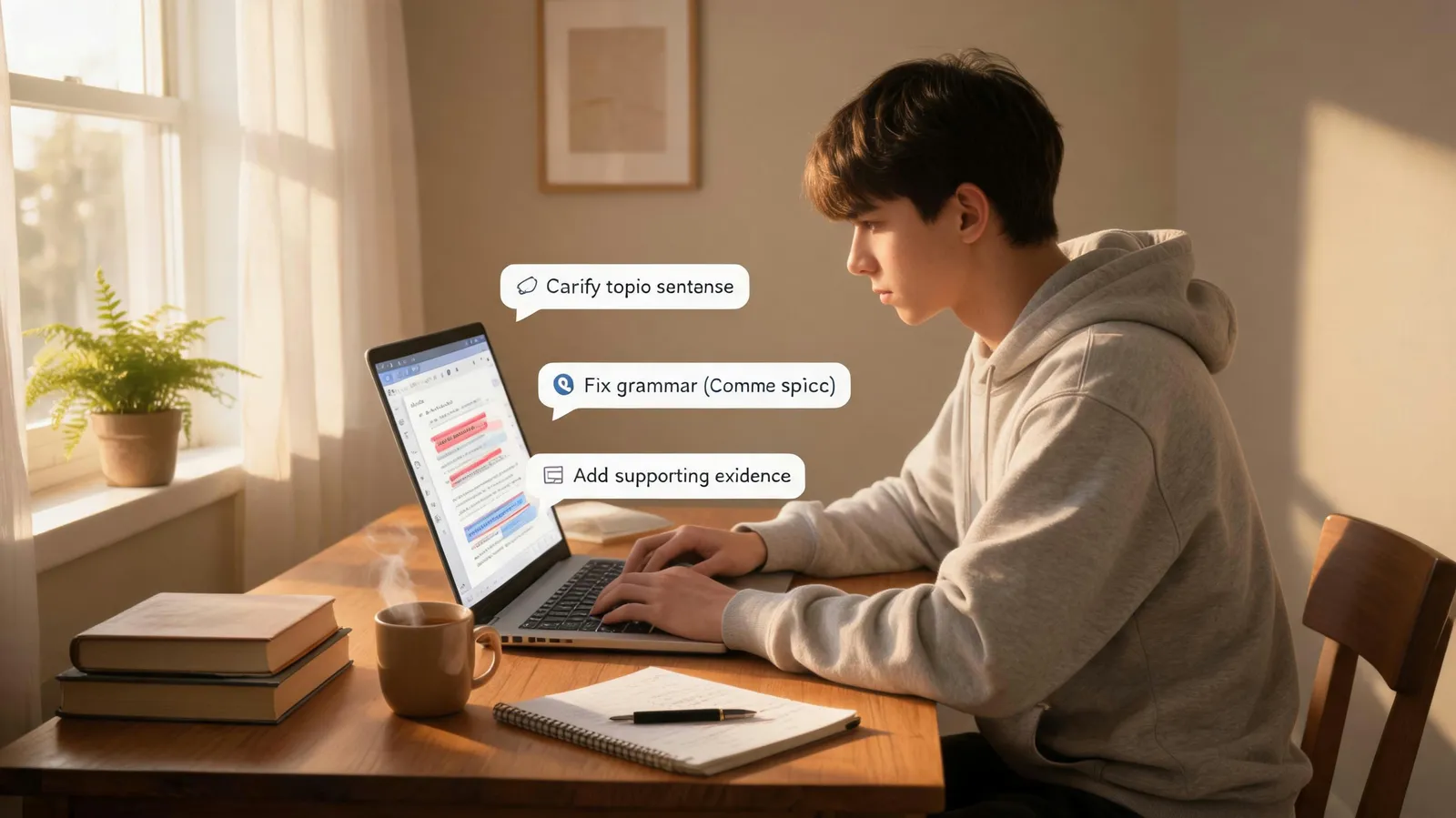
AI writing tools cut both ways in education. They open up personalized learning opportunities, but they also create serious difficulties for academic integrity and assessment.
Personalized Feedback and Step-by-Step Support
Assistants such as Grammarly, QuillBot, and Turnitin's Revision Assistant give students real-time feedback on grammar, style, and structure, along with suggestions, examples, and explanations that can improve their writing. A study by the University of California, Irvine, found that students who used AI writing assistants improved writing quality by 15% compared with a control group.
AI can also support the writing process itself by dividing tasks into manageable steps, offering prompts, and responding instantly. This helps English language learners and students with learning disabilities in particular. Tools like WriteLab examine student writing and provide actionable advice, encouraging independent learning.
Plagiarism, Authorship, and Judging Real Skill
The growth of AI writing has raised concerns about plagiarism and authorship. With tools like ChatGPT able to produce essays on demand, educators are struggling with how to assess genuine student work. A survey by Inside Higher Ed found that 58% of faculty members worry about AI-generated essays, and many institutions are revising their academic integrity policies.
Some schools are responding with new assessment methods: oral defenses, in-class writing, and process portfolios that track revisions. Others use AI detection tools such as GPTZero to flag AI-generated content, though these are not foolproof. The emphasis is shifting from the finished product to the process, with critical thinking and original thought at the center.
In the end, AI writing in education is best treated as a tool that enhances learning rather than replaces it. Teaching students to use AI ethically and effectively prepares them for a future in which human-AI collaboration is standard.
Marketing Copy Automation and Conversion Optimization
AI writing is changing how marketing copy is created, tested, and tuned for conversion. Across ads, emails, and landing pages, AI-generated copy lets marketers scale personalization and improve ROI.
Copy for Ads, Emails, and Landing Pages
Tools such as Copy.ai, Jasper, and Persado can produce marketing copy within seconds. Persado, for instance, applies cognitive computing to craft emotionally optimized messages. A case study with Kate Spade found that AI-generated email subject lines raised open rates by 15% and click-through rates by 50% compared with human-written lines.
Phrasee likewise uses AI to generate and test email subject lines, producing higher engagement for brands including Domino's and Virgin Holidays. These tools analyze large volumes of data to find language that resonates with particular audiences, then generate variants for A/B testing. The result is faster iteration and higher conversion rates.
Dynamic Content Tailored to User Segments
AI also makes dynamic personalization possible at scale. By analyzing behavior, preferences, and demographics, it can generate personalized product recommendations, email content, and landing page copy. Netflix personalizes artwork and descriptions for each user, while Amazon generates product recommendations from browsing history.
A study by Epsilon found that 80% of consumers are more likely to buy from a brand that offers personalized experiences. AI writing makes this practical by automatically producing thousands of copy variants for different segments, which can lift conversion and improve customer satisfaction.
Marketers still need to guard against over-automation. AI-generated copy can lack emotional nuance or cultural sensitivity, so human oversight remains essential to protect brand voice and ethical standards.
AI as a Co-Author in Fiction and Poetry
AI is also entering creative territory—fiction, poetry, and storytelling. Some purists reject the idea of machines writing literature, but many authors treat AI as a creative partner.
Inspiration and Idea Generation
Tools such as GPT-3 and Sudowrite can generate story prompts, character names, and plot twists. Authors use them to get past writer's block or explore new directions. Novelist Robin Sloan used AI to generate a short story, and Jennifer Lepp uses AI to brainstorm plot points for her cozy mysteries.
AI can also examine existing works to suggest stylistic improvements or identify themes. Tools like Literary Agent apply natural language processing to evaluate manuscripts and predict commercial success. They are not always accurate, but they offer data-driven insights that can complement human intuition.
Real-Time Collaboration and Co-Writing
More advanced systems can work with writers in real time. OpenAI's GPT-3 can complete sentences, propose alternative phrasings, and even write full paragraphs in a given style. Some authors, such as K.Allado, have co-written novels with AI and describe it as a creative muse.
This raises questions about authorship and originality. Who holds the copyright when a human and AI create together? The U.S. Copyright Office has ruled that AI-generated works without human authorship cannot be copyrighted, though collaborative works may be eligible. As AI grows more sophisticated, legal frameworks will need to adapt.
Debates aside, AI's place in creative writing is likely to expand. It offers another tool for expression—one that can surprise and inspire even experienced writers.
Conclusion: Steering Through the AI Writing Shift
AI writing is changing how written content is created, consumed, and judged. In journalism, it improves efficiency and supports data-driven reporting. In education, it personalizes learning while complicating traditional assessment. In marketing, it drives conversion through personalization and optimization. In creative writing, it opens new paths for collaboration and inspiration.
Looking ahead, ethical guidelines, skill adaptation, and human-AI collaboration will matter greatly. AI writing tools must be used responsibly, with transparency and fairness. The future of writing is not human versus machine but human with machine—a partnership that extends creativity and productivity.
For journalists, teachers, marketers, and novelists alike, embracing AI writing can open new possibilities. The key is to stay informed, experiment thoughtfully, and keep the human touch at the center of communication.