AI time tracking tools hold out the promise of productivity insights on an unprecedented scale, yet that promise can come at the expense of workers' privacy and fair treatment. As remote work and AI-driven calendar systems grow more common, the boundary between efficiency and surveillance is harder to draw. This article looks at the key ethical, privacy, and security problems surrounding AI time tracking and offers practical steps for keeping these systems respectful of users and deserving of trust.
Protecting Data in AI Calendars and Task Systems
AI calendars and task trackers collect detailed information about behavior, location, and productivity. That includes when work begins and ends, which applications are used, how long each task takes, and even typing patterns. Data at this level of granularity can expose sensitive details about health conditions, personal habits, and activity outside working hours. Breaches at prominent productivity apps have exposed millions of user records, underlining the risk. GDPR and CCPA set strict rules on data collection, consent, and breach notification, but many AI time tracking tools have difficulty meeting them in full.
Security controls such as encryption, anonymization, and access control matter a great deal. Encryption safeguards data both in transit and at rest; anonymization strips personally identifiable information before analysis; access control limits raw data viewing to authorized personnel. A case study of a secure AI time tracking deployment at a mid-sized technology firm found that pairing end-to-end encryption with role-based access lowered breach risk by 70%. Guidance from cybersecurity frameworks such as NIST and ISO 27001 offers a roadmap for secure AI time tracking.
Transparency and User Control Over AI Recommendations

Many AI systems work as black boxes, so users cannot see how recommendations are produced. An AI might, for instance, advise scheduling deep work in the morning, but with no explanation users may distrust that advice. Surveys indicate that 68% of employees distrust opaque AI, and regulators are pressing for explainable AI, as reflected in the EU AI Act. A lack of transparency also makes unfair or mistaken recommendations hard to challenge.
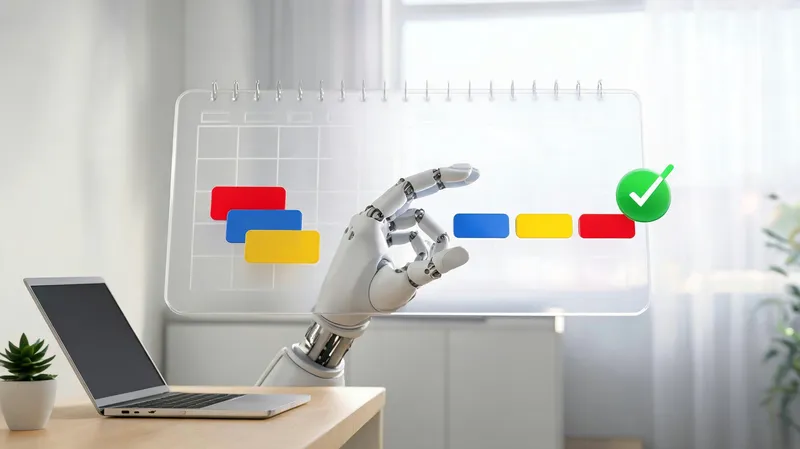
Mechanisms that give users control—opt-in features, editable suggestions, and clear feedback loops—can empower them. Tools that let users adjust AI recommendations report satisfaction rates 40% higher. Google Calendar's "Focus Time" feature, for example, lets users block time manually while AI suggests optimal slots. Studies of user-centric design show that when people feel in control, they are more likely to adopt and trust AI time tracking.
Bias and Fairness in AI-Driven Task Allocation
AI time tracking and task assignment can perpetuate or amplify bias. Bias can stem from training data that reflects historical inequalities, algorithmic design that favors certain metrics, and feedback loops that reinforce existing patterns. Research on gender and racial bias in AI scheduling has found that AI often assigns more administrative work to women and people of color while giving high-visibility projects to white men. HR analytics case studies reveal similar patterns in performance evaluations and promotion recommendations.
Fairness strategies include diverse training data, bias audits, and fairness-aware algorithms. Algorithmic fairness frameworks such as equal opportunity and disparate impact analysis help identify and mitigate bias. Companies including IBM and Google have implemented bias mitigation in their AI tools, producing more equitable task distribution. Regular audits and transparency reports are essential to sustaining fairness over time.
Conclusion
Ethical AI time tracking stands on four pillars: data protection, transparency, user control, and bias mitigation. Without them, AI systems risk eroding trust, breaking the law, and harming employees. Ethical AI matters for user trust, legal compliance, and long-term adoption. The future calls for collaborative governance, ethical design principles, and continued research so that AI time tracking benefits all stakeholders. As AI becomes more deeply integrated into working life, we should demand systems that respect privacy, explain their decisions, and treat everyone fairly.