The Collaboration Strain on Today's Teams
In the current business climate, teams handle a growing volume of meetings, messages, and tasks spread across numerous digital platforms. Industry data indicates that the typical knowledge worker devotes close to 60% of their time to "work about work"—activities like coordinating, hunting for information, and hopping between applications—instead of performing skilled tasks. This collaboration burden drains US businesses of billions each year in lost productivity.
The core issue is evident: conventional collaboration approaches were not built for the intricacies of contemporary work. When meetings produce hours of talk but no defined action items, when tasks slip away because accountability is unclear, and when essential information is trapped in separate platforms, teams struggle. AI team collaboration tools are emerging to address these specific problems, reshaping how teams interact, coordinate, and carry out work.
Converting Conversations into Actionable Steps: Meeting Summaries and Action Items
Meetings are crucial for alignment, yet they are infamous for consuming time. AI-driven meeting summarization tools are altering this dynamic by automatically transcribing, summarizing, and pulling out action items from every discussion.
Automated Transcription and Summaries
AI assistants such as Otter.ai, Fireflies.ai, and Zoom's AI Companion now attend meetings as quiet participants, recording every word and producing brief summaries shortly after the meeting concludes. These tools do more than transcribe—they grasp context, recognize key decisions, and emphasize significant discussion points. For a 60-minute meeting, what used to require 30–45 minutes of manual note-taking and follow-up email writing now occurs automatically, saving teams hundreds of hours each year.
Smart Action Item Extraction and Owner Assignment
Beyond summarization, the capacity to automatically extract action items and assign owners may be even more valuable. AI meeting assistants leverage natural language processing to spot phrases such as "Sarah will follow up with the vendor by Friday" and turn them into trackable tasks. These systems connect directly with project management tools, generating tasks in Asana, Trello, or Monday.com with the correct assignee, due date, and context.
The effect on accountability can be measured. Teams that use AI meeting summarization report a 40% decrease in missed deadlines and a 25% rise in task completion rates. When everyone clearly understands their commitments—and the timing—follow-through improves markedly.
Smarter Workload Distribution: AI-Assisted Task Assignment and Team Coordination
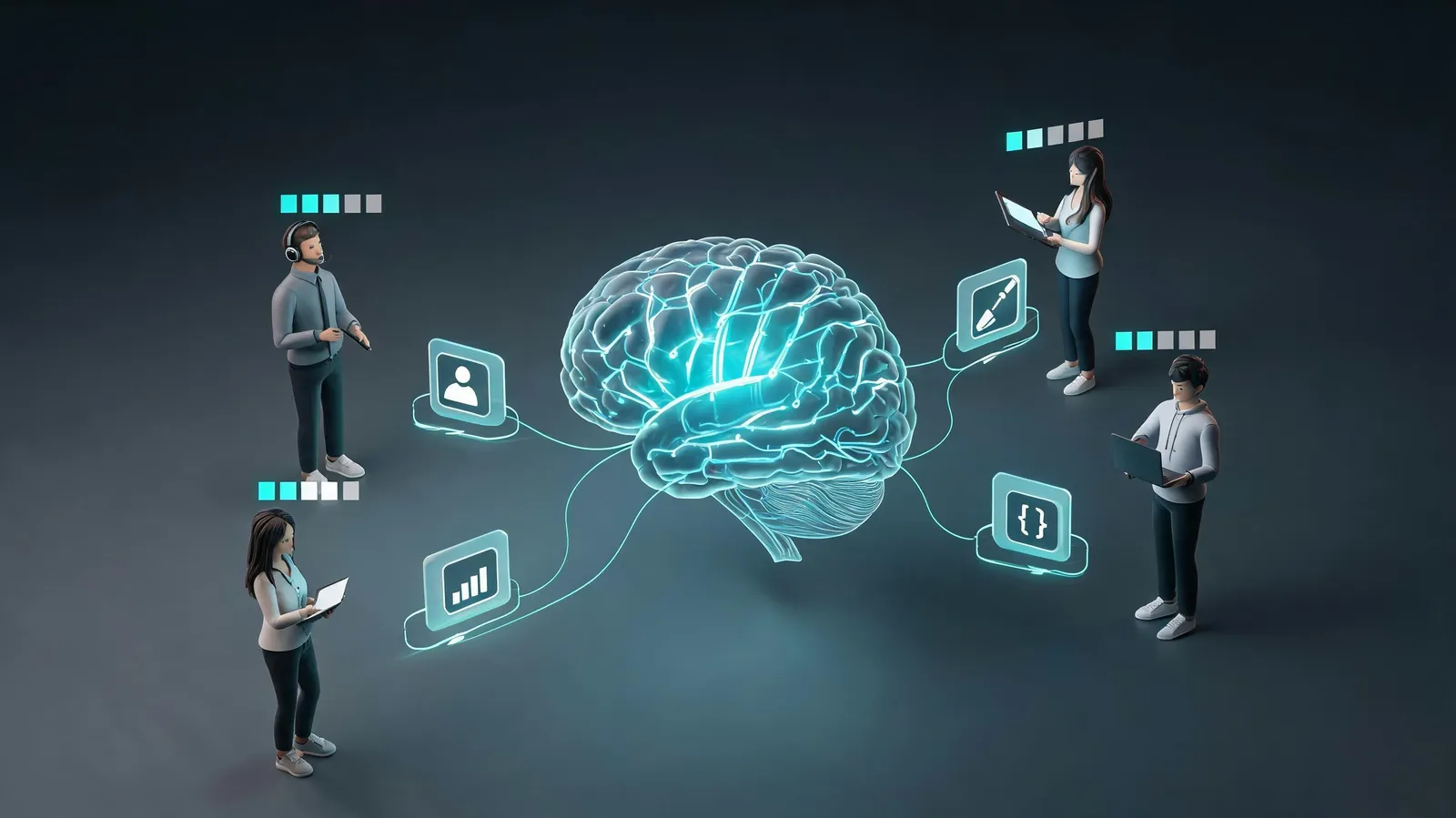
Assigning tasks is among the toughest parts of team management. Managers need to weigh individual skills, current workloads, development objectives, and deadlines—frequently with incomplete information. AI task assignment tools are making this process more intelligent and equitable.
Task Assignment Driven by Skills, Workload, and Availability
Contemporary AI assistants examine multiple data points to suggest the best individual for each task. They factor in not only who possesses the right skills but also who has available capacity, who has handled similar projects, and who might gain from the learning opportunity. Tools like ClickUp's AI and Asana's smart assignments draw on historical data to estimate task duration and spot potential bottlenecks before they arise.
For project managers, this translates to quicker, better-informed choices. For team members, it means more balanced workload distribution, which lowers burnout and boosts job satisfaction. Companies that use AI-powered task assignment report 30% faster project completion times and notably higher team morale.
Live Coordination and Progress Monitoring
AI assistants do more than assign—they coordinate actively. Smart stand-up tools automatically collect updates from team members, synthesize progress reports, and highlight blockers. Rather than spending 15 minutes in a daily stand-up listening to status updates, teams can review AI-generated summaries and use meeting time for problem-solving.
These systems also offer real-time insight into project health. When a task is at risk of missing its deadline, AI can alert the relevant stakeholders and propose remediation options. This proactive coordination cuts down on the coordination overhead that burdens many teams, helping everyone stay aligned without constant check-ins.
Unifying Workflows: Shared Workspace Automation Across Productivity Tools
The typical US team uses 9–12 different productivity tools daily. Slack for communication, Google Workspace for documents, Trello for tasks, Zoom for meetings—the list continues. The outcome is fragmented information and frequent context switching. AI workspace automation is connecting these isolated systems.
Linking Separate Tools Through AI
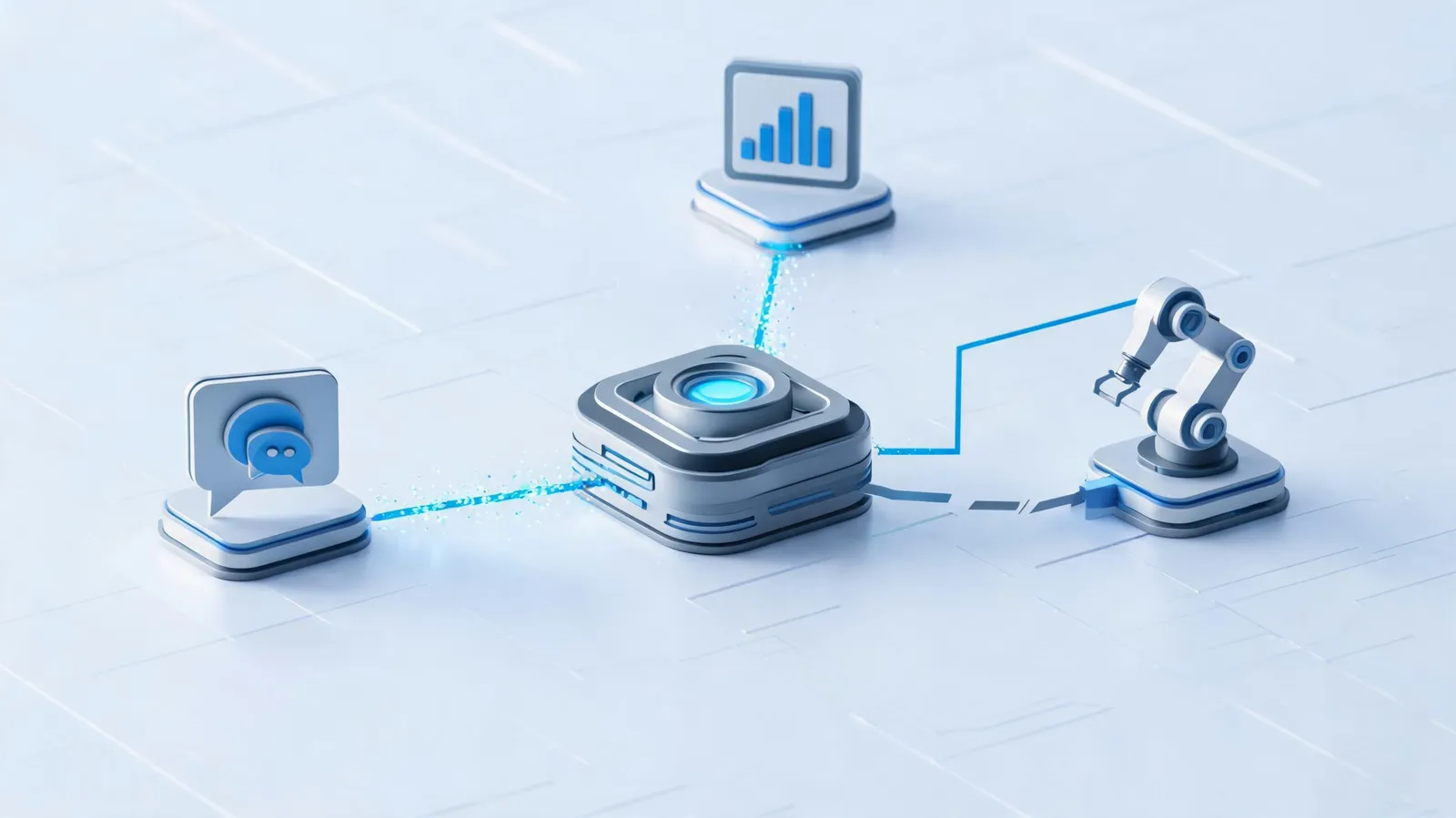
AI assistants serve as the connective tissue among disparate platforms. When a meeting ends, AI can automatically share the summary to Slack, create tasks in your project management tool, and update the project timeline in your planning software. When a document is updated in Google Drive, AI can inform relevant team members and set off downstream workflows.
Tools such as Zapier's AI, Make, and native integrations in platforms like Notion and Microsoft Teams are making these automated workflows available to non-technical users. The result is a sharp decrease in manual data entry and context switching—two of the biggest productivity drains in modern work.
AI-Powered Notifications and Updates for Team Alignment
Information overload is a real problem. AI assistants address it by intelligently filtering and prioritizing notifications. Rather than being pinged for every update, team members receive AI-curated summaries of what genuinely matters to them. A developer might be notified about changes to the codebase, while a marketing manager gets updates on campaign assets—all drawn from the same underlying activity stream.
For remote teams, this transparency is extremely valuable. AI maintains a shared source of truth that everyone can access, reducing the need for status meetings and clarifying questions. One remote-first company reported a 50% decrease in internal emails after implementing AI-powered workspace automation.
The Road Ahead for AI-Enabled Team Collaboration
AI assistants are not merely adding features to existing workflows—they are fundamentally changing how teams collaborate. By automating meeting follow-ups, optimizing task assignment, and unifying workflows across tools, AI relieves teams of administrative burdens and allows focus on strategic, creative work.
The importance of this shift is considerable. As AI grows more sophisticated, assistants are expected to anticipate team needs, proactively resolve bottlenecks, and tailor collaboration experiences for each team member. Teams that adopt AI collaboration tools now will be the ones that outpace competitors later.
The AI-powered team is not a far-off future—it is already here. And the productivity gains are too significant to ignore.