Where AI Bugs Hurt Most: Field Lessons from Clinical Care, Machines in Motion, Banking, and Content Feeds
AI is now woven into settings where a single defect carries real costs: a wrong diagnosis, a missed pedestrian, a blocked card, a suppressed voice. Because these systems behave probabilistically, lean on data, and rarely explain themselves, conventional debugging habits do not carry over cleanly. Each sector needs its own diagnostic playbook. What follows are documented failure cases and the remedies teams applied across clinical diagnostics, autonomous machines, finance, and recommender and moderation systems—practical material for engineers, data scientists, and technical leads.
1. Clinical Diagnostics: Testing AI Where Errors Reach Patients
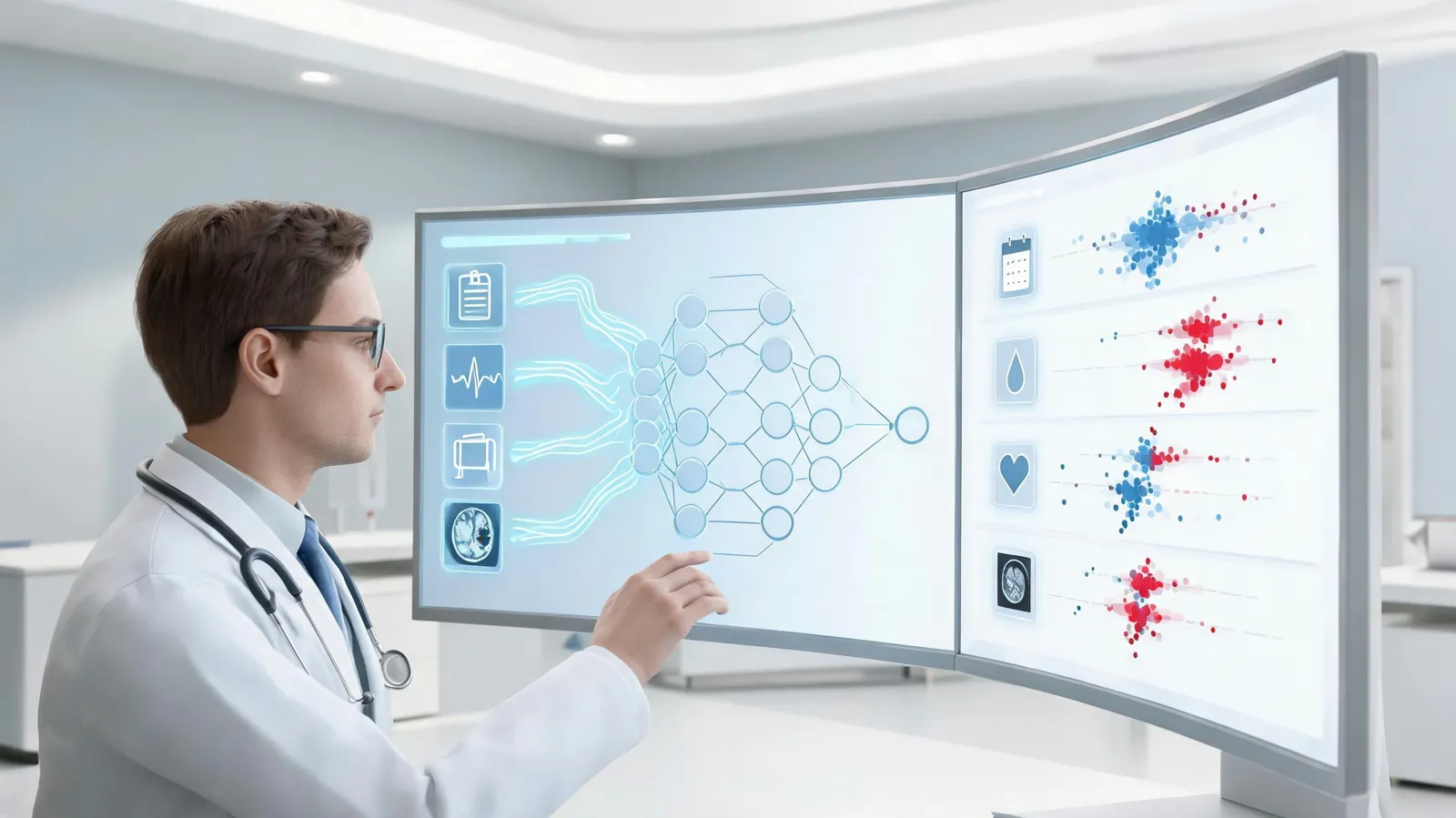
Medical AI sits inside tight boundaries: a defect can injure a patient, regulators set strict expectations, and clinicians need to see why a model said what it said. Debugging therefore reaches beyond accuracy scores into patient safety.
1.1 What Goes Wrong
Typical traps include biased data, label leakage, time-related data defects, and awkward integration with care workflows. At one large hospital, a sepsis prediction model failed because it depended on a feature that was only captured after sepsis had already begun—a label leakage problem. Validation numbers looked inflated while real-world accuracy lagged. Such troubles are widespread: research indicates that as many as 30% of healthcare AI models show degraded performance within a year as data drift sets in.
1.2 How Teams Trace and Fix Faults
Tools such as SHAP and LIME help expose spurious correlations. In one instance, SHAP showed that a diagnostic model had latched onto a hospital-specific identifier instead of clinical signals; removing that feature corrected the behavior. Auditing the data—hunting for temporal leakage, gaps, and bias—is essential. Having clinicians review outputs keeps model behavior consistent with medical knowledge. Since FDA guidance stresses transparency, debugging records must document where data came from and how decisions were reached.
2. Autonomous Systems and Robotics: AI That Acts in the Physical World

Machines that move on their own face shifting, unpredictable surroundings, and a defect can cause bodily harm. The debugging burden includes sensor fusion mistakes, rare edge cases, real-time limits, and the gap between simulation and reality.
2.1 What Goes Wrong
In one notable incident, an autonomous vehicle's perception stack missed a pedestrian because sensor calibration had drifted. LIDAR and camera readings no longer lined up, so the fusion algorithm discarded the pedestrian. Testing data underscores how often such systems hand control back to humans—Waymo reported 0.09 disengagements per 1,000 miles in 2023—which is why robust debugging matters.
2.2 How Teams Trace and Fix Faults
Simulation platforms such as CARLA let engineers recreate rare edge cases and examine them under controlled conditions. Formal verification can establish safety properties, and runtime monitoring catches anomalies while the system operates. Functional-safety frameworks like ISO 26262 set expectations for rigorous testing and validation. After the calibration incident, the team added continuous calibration checks and a radar-based fallback.
3. Finance and Fraud Detection: Precision Under Constant Change
Financial AI must spot fraud as transactions happen while keeping false positives low, all under close regulatory watch. The work is complicated by concept drift, skewed datasets, and adversarial attacks.
3.1 What Goes Wrong
At a major bank, a fraud model lost accuracy after transaction patterns shifted—a textbook case of concept drift. Precision fell by 20% in three months. False positives are expensive: they block legitimate payments and frustrate customers, while false negatives translate into losses. Industry figures show institutions lose billions yearly to fraud, yet false positives drive even steeper costs through customer attrition.
3.2 How Teams Trace and Fix Faults
Ongoing monitoring with drift detectors such as ADWIN can trigger retraining when distributions change. Adversarial testing simulates attacks to surface weaknesses. Model risk management guidance (for example, SR 11-7) calls for regular validation and documentation. In this case, the bank built a feedback loop: analysts reviewed flagged transactions, and the model was retrained each week on fresh data.
4. Recommenders and Content Moderation: Subjectivity at Massive Scale
Ranking and moderation systems shape what billions of people encounter, so debugging affects user satisfaction and ethical obligations alike. Feedback loops, filter bubbles, bias, and scale are the recurring difficulties.
4.1 What Goes Wrong
A moderation model flagged minority voices at disproportionate rates because its training data carried bias, prompting censorship accusations and user backlash. Recommenders can trap users in filter bubbles, narrowing exposure to varied content. Evidence indicates engagement metrics frequently pull against fairness objectives.
4.2 How Teams Trace and Fix Faults
Fairness audits using measures such as demographic parity help locate bias. Counterfactual analysis examines how output shifts when inputs change. Keeping humans in the moderation loop supports nuanced calls. Large platforms combine automated filters with human reviewers and run regular audits. In this case, the moderation model was retrained on a balanced dataset with fairness constraints, cutting disparate impact by 40%.
Conclusion
Tracing AI faults across sectors demands familiarity with each field's particular hazards and a matching set of techniques. Clinical work leans on explainability and clinician review; autonomous machines on simulation and formal verification; finance on drift detection and adversarial testing; recommenders on fairness audits and human oversight. Shared threads run through all four: data quality, ongoing monitoring, and collaboration across disciplines. As AI spreads further, automated and AI-assisted debugging will move from nice-to-have to necessary. The cases above offer a starting point for engineers building systems that stay robust and worthy of trust without trading away safety or ethics.