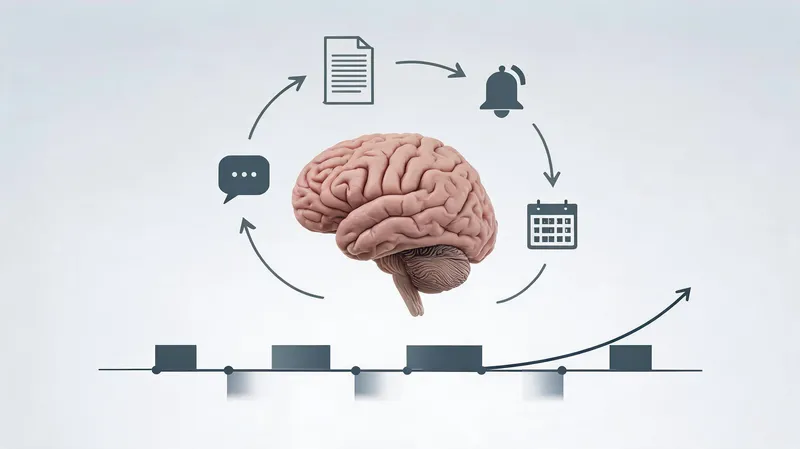
Introduction: The Quiet Skills Crisis
American workers are navigating an underreported crisis. Public attention tends to fixate on artificial intelligence displacing jobs, but the more fundamental issue is a skills mismatch that predates the rise of generative AI in corporate settings. The World Economic Forum reports that employers anticipate 44% of workers' core skills will need to change by 2027. In the US, the Bureau of Labor Statistics projects faster growth for occupations requiring postsecondary education than for those that do not—yet the share of adults completing degrees has flattened, and outstanding student loan debt now exceeds $1.7 trillion. The resulting paradox: millions of positions remain vacant while millions of workers feel trapped in roles vulnerable to automation. This article explores how AI-focused reskilling, micro-credentials, company-led training, and contemporary apprenticeships are converging to reshape work-related education in America.
1. Preparing Workers for AI-Augmented Roles
The discourse on AI and employment has evolved. Rather than debating whether machines will supplant humans, workforce planners now focus on how the two will collaborate. AI-augmented positions—roles in which workers leverage AI tools to boost productivity, decision quality, and creativity—are appearing in every industry. Examples include radiologists using AI to identify anomalies, logistics managers optimizing routes through machine learning, and customer service representatives assisted by natural language processing. These roles demand a blend of technical fluency and distinctly human capacities such as judgment, empathy, and ethical reasoning.
Spotting emerging AI-augmented job titles is the starting point. Lightcast data reveals that job postings referencing generative AI skills surged 1,848% in 2023 alone. The roles include data annotation specialists, AI prompt engineers, machine learning operations technicians, and AI ethics compliance officers. A common thread is the need for continuous learning: the half-life of a technical skill is now estimated at under five years, requiring workers to update their capabilities repeatedly over a career.
Effective reskilling programs must consider duration, delivery, and funding. Successful initiatives tend to be short—eight to sixteen weeks—intensive, and closely tied to employer demand. The Markle Foundation's Rework America Alliance has shown that public-private partnerships can reskill workers for specific regional labor markets at a fraction of the cost of traditional degree programs. Return-on-investment analyses from McKinsey indicate that each dollar spent on reskilling yields between $1.50 and $3.00 in productivity gains and reduced turnover. Funding approaches increasingly combine federal Workforce Innovation and Opportunity Act funds, state grants, and employer tuition support.
2. Micro-Credentials, Lifelong Learning, and Employer Training

Micro-credentials are brief, targeted certifications that verify specific competencies—from data visualization to cybersecurity basics. Unlike conventional degrees, they are stackable: learners can collect multiple micro-credentials to assemble a broad skill portfolio. Employer acceptance is climbing quickly. A 2023 survey by the Society for Human Resource Management found that 72% of US employers now regard micro-credentials as valid proof of skills, up from 45% in 2019. Industry-recognized certifications from Google, IBM, Microsoft, and Salesforce have become entry points to well-paying tech jobs without a four-year degree.
Quality assurance remains a hurdle. The lack of a universal standard for micro-credential assessment has produced a crowded marketplace where some badges carry little weight. Credential Engine, a nonprofit registry, now tracks more than 1.5 million credentials in the US, underscoring the need for transparency and portability. Employers and educators are working together through efforts like the Open Skills Network to develop a shared language for skills validation.
Employer-led training and tuition assistance form the second pillar of lifelong learning. Amazon's Career Choice program pre-pays tuition for employees to earn certifications and degrees in high-demand fields, with over 100,000 participants since 2012. AT&T's Future Ready initiative invested $1 billion in employee reskilling, resulting in a 47% increase in internal promotions for technical roles. Siemens' apprenticeship and dual-education programs in the US have become models for manufacturing workforce development. Data from the National Center for Education Statistics shows that employer-funded education correlates with 20% higher employee retention and measurable productivity gains.
3. Productivity Gaps by Education, Region, and Income
Access to skills development is uneven. Geographic and income-based divides in digital skills training persist across the United States. Urban centers like San Francisco, Austin, and New York offer robust broadband infrastructure, coding bootcamps, and corporate training hubs. Rural counties, by contrast, often lack reliable internet, qualified instructors, and employer investment. The OECD reports that adults in the lowest income quintile are three times less likely to participate in job-related training than those in the highest quintile. This gap perpetuates productivity disparities: metropolitan areas with high skill levels attract more capital and talent, while underserved regions fall further behind.
Policy interventions to bridge productivity gaps are gaining traction. National digital literacy programs, such as the Federal Communications Commission's Affordable Connectivity Program, have connected over 20 million low-income households to broadband. State-level initiatives like Tennessee's Reconnect program offer free community college tuition for adults without a degree. Tax incentives for employer training in underserved regions—modeled on the Work Opportunity Tax Credit—encourage companies to invest in local talent pipelines. The World Bank's analysis of skills development programs suggests that targeted subsidies for rural training infrastructure yield some of the highest social returns on investment.
4. Apprenticeships, Vocational Pathways, and Labor-Market Matching
Modern apprenticeships and vocational training models offer a proven alternative to traditional degree pathways. Germany's dual system, which combines classroom instruction with paid on-the-job training, has produced youth unemployment rates consistently below 6%. Switzerland's vocational education and training (VET) system similarly channels over 60% of students into apprenticeships that lead to stable, well-compensated careers. The United States has begun to adopt these models: registered apprenticeships grew by 64% between 2010 and 2023, reaching over 600,000 active apprentices. Sectors expanding apprenticeships include healthcare, information technology, advanced manufacturing, and clean energy.
AI-powered labor-market matching platforms are the second key to reducing skills mismatches. Tools like LinkedIn's Skills Graph, Indeed's Hiring Lab, and specialized platforms such as Eightfold AI use machine learning to match workers with jobs based on demonstrated skills rather than job titles or degrees. These systems reduce time-to-hire by up to 50% and lower turnover by identifying candidates whose skill profiles align with role requirements. For workers, skills-based matching opens doors that traditional credential screening might have closed.
The integration of apprenticeships with digital matching creates a powerful feedback loop. Apprentices earn while they learn, employers gain a pipeline of trained talent, and matching platforms ensure that skills acquired translate into employment. The US Department of Labor's Apprenticeship.gov initiative now connects job seekers to apprenticeship opportunities across industries, with a focus on expanding access for women, people of color, and rural residents.
Conclusion: Toward an Inclusive Workforce Development Ecosystem
The future of work education is not a single program or policy—it is an ecosystem. Reskilling for AI prepares workers for human-machine collaboration. Micro-credentials and employer training provide flexible, stackable pathways to new skills. Targeted policies address productivity gaps by region and income. Apprenticeships and AI-powered matching connect learning directly to employment. Together, these elements form a resilient workforce development system capable of adapting to technological change.
Equitable access to lifelong learning is critical for economic resilience and social mobility. Without deliberate effort to include rural communities, low-income workers, and underrepresented groups, the AI transition will deepen existing inequalities. The future outlook is promising: AI-driven personalized learning platforms can adapt to individual skill gaps in real time, while labor market intelligence systems can forecast demand for specific skills months in advance. Realizing this potential requires coordinated action from policymakers, educators, employers, and learners themselves. The future of work is not something that happens to us—it is something we build, one skill at a time.