Introduction
Professionals dedicate close to 20% of their workweek to note-taking, but they lose up to 80% of that information within a few days. Conventional text notes cannot capture the full richness of spoken words, visual elements, and surrounding context. Multimodal AI offers a solution by integrating voice, image, and video capture into structured, searchable knowledge. This article explores how AI-powered note capture is transforming productivity and knowledge management.
1. Converting Voice into Structured Notes with AI
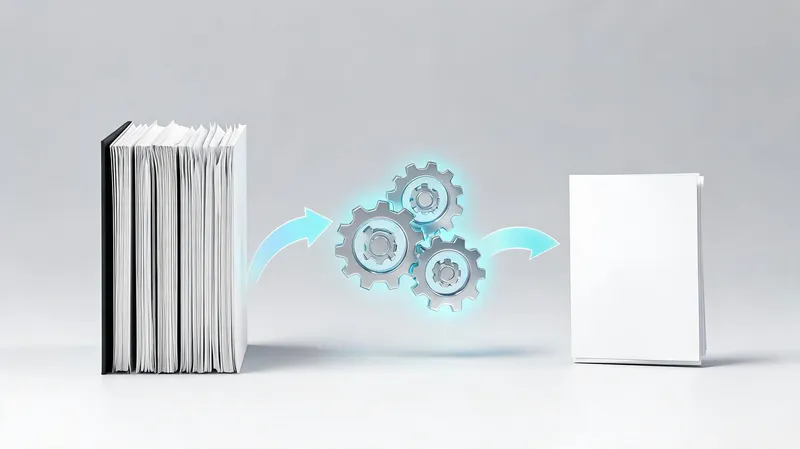
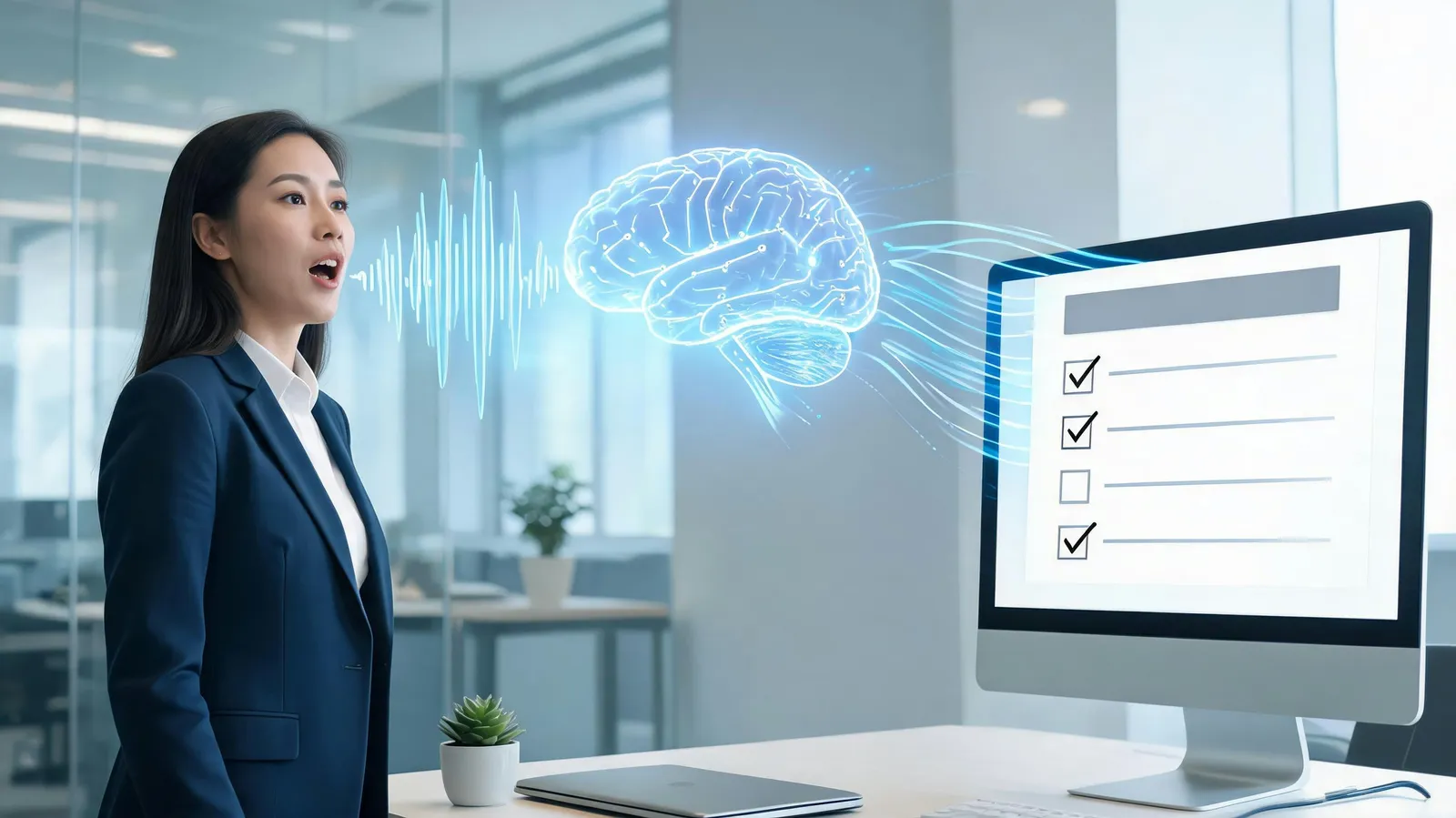
Speaking is a natural way to record ideas, but raw audio lacks structure and is difficult to search. AI-driven voice-to-structured-note conversion tackles this by transcribing speech in real time and automatically arranging it into headings, bullet points, and action items. Current automatic speech recognition (ASR) systems reach accuracy levels above 95%, even in noisy settings, and can differentiate among multiple speakers (speaker diarization). As a result, meeting notes can be produced automatically, with each participant's contributions clearly attributed.
In addition to transcription, AI algorithms examine the content to pull out key points, decisions, and action items. For instance, a case study involving a project management team found that using AI note-taking cut meeting follow-up time by 40% and enhanced accountability. Unlike manual note-taking, which is susceptible to omissions and bias, AI provides thorough and objective records. The structured output connects directly with productivity tools such as Notion, Evernote, or Slack, making notes immediately actionable.
2. Understanding Images and Diagrams for Automatic Note Annotation

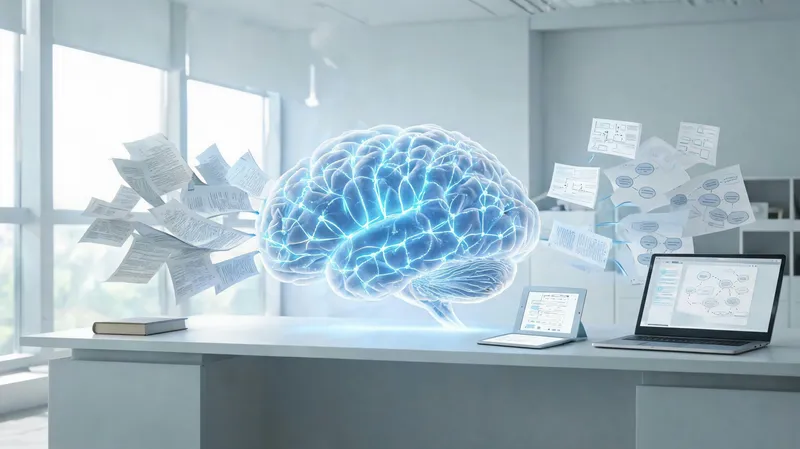
Visual materials like whiteboard sketches, diagrams, and photos often hold critical information that text alone cannot convey. Multimodal AI uses computer vision to extract text (OCR) and identify objects, diagrams, and charts. In field research, for example, a researcher can photograph a whiteboard, and AI will automatically transcribe the handwritten notes, recognize key elements, and tag them with relevant keywords. This turns static images into searchable, linked notes.
Automatic tagging and linking further improve knowledge retrieval. When an image is uploaded, AI can propose tags based on its content and connect it to related notes in the knowledge base. For instance, a photo of a marketing funnel diagram can be automatically linked to notes from a strategy meeting. Integration with knowledge bases such as Confluence or Obsidian ensures that visual insights are preserved and become part of the organizational memory. The accuracy of OCR and object detection has improved significantly, with leading models achieving over 90% accuracy on standard benchmarks.
3. Transcribing Video Meetings and Generating Action Items with AI
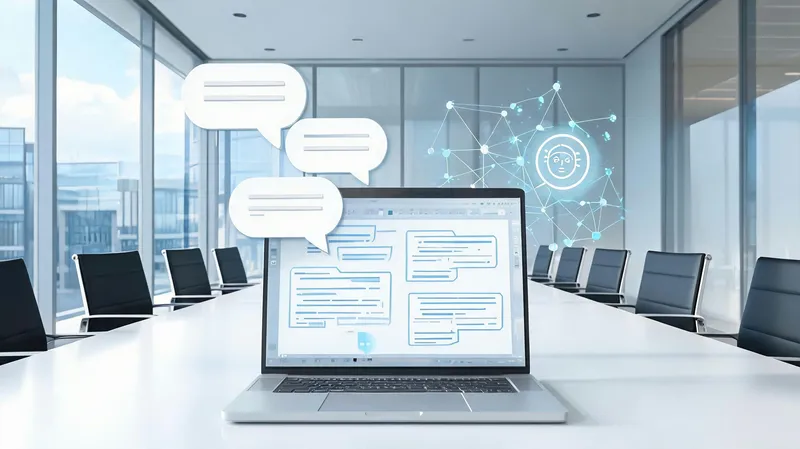
Video meetings are common in modern work, but taking notes manually during them is distracting and inefficient. AI-powered meeting transcription automatically converts speech to text, identifies speakers, and creates a searchable archive. Studies indicate that employees spend an average of 4 hours per week in meetings, and AI can save up to 30% of that time by automating note-taking and follow-ups.
Beyond transcription, AI extracts action items and assigns them to the appropriate people. Natural language processing identifies commitments, deadlines, and responsibilities from the conversation. For example, when someone says, "I'll send the report by Friday," AI flags it as an action item and assigns it to the speaker. Integration with project management tools like Asana or Trello ensures tasks are tracked automatically. A case study of a software development team revealed that AI-generated action items improved team accountability by 25% and reduced missed deadlines.
Conclusion
Multimodal AI is changing note capture from a passive, text-only activity into an active, intelligent knowledge management system. By seamlessly integrating voice, image, and video understanding, AI captures complete context and turns it into structured, searchable, and actionable information. The productivity gains are substantial: less time organizing notes, better retention, and improved team collaboration. Looking ahead, we can expect AI to proactively capture and connect information across modalities, anticipating what we need before we even ask. Embracing multimodal note capture today is a step toward a smarter, more efficient future of work.