AI-Assisted Synthesis of Literature Notes
Researchers and students confront a deluge of academic literature. Traditional note-taking is slow and frequently misses the nuanced links between sources. AI note-taking tools are altering this landscape by automating the extraction of key concepts and themes from multiple documents, thereby saving time and improving research quality.
Automated Extraction of Key Concepts and Themes
AI note-taking tools use natural language processing (NLP) to examine research papers, articles, and books, pinpointing core ideas, methodologies, and findings. For instance, a researcher employing an AI tool such as Scholarcy or Zotero with AI plugins can cut literature review time by as much as 50%. These tools produce summaries, highlight key points, and even generate citations, freeing researchers to concentrate on analysis rather than manual note-taking. A case study from Stanford University found that researchers using AI-assisted note-taking uncovered 30% more cross-disciplinary connections, leading to innovative research directions.
Integration with Reference Managers and Citation Tools
AI note-taking tools integrate smoothly with popular reference managers like EndNote, Mendeley, and Zotero, enabling automatic citation generation and bibliography creation. According to a 2024 survey by Nature, 68% of academics have adopted AI-assisted note-taking tools, citing improved workflow efficiency and reduced errors. User testimonials highlight how AI integration eliminates the tedious task of manually formatting citations, allowing researchers to focus on content creation.
Lecture Note Summarization and Concept Mapping

In educational settings, students often struggle to keep up with fast-paced lectures while taking comprehensive notes. AI note-taking tools address this by providing real-time transcription and summarization, and by automatically generating concept maps that visualize relationships between ideas.
Real-Time Transcription and Summarization
AI-powered tools like Otter.ai and Microsoft OneNote with AI features can transcribe lectures in real-time, identify key points, and generate concise summaries. Research from the University of California, Irvine, shows that students using AI note-taking tools demonstrate a 25% improvement in information retention and engagement. These tools also support multiple languages, making education more accessible for non-native speakers. For instance, a student can receive lecture summaries in English while the lecture is delivered in Spanish, enhancing comprehension.
Automatic Generation of Concept Maps
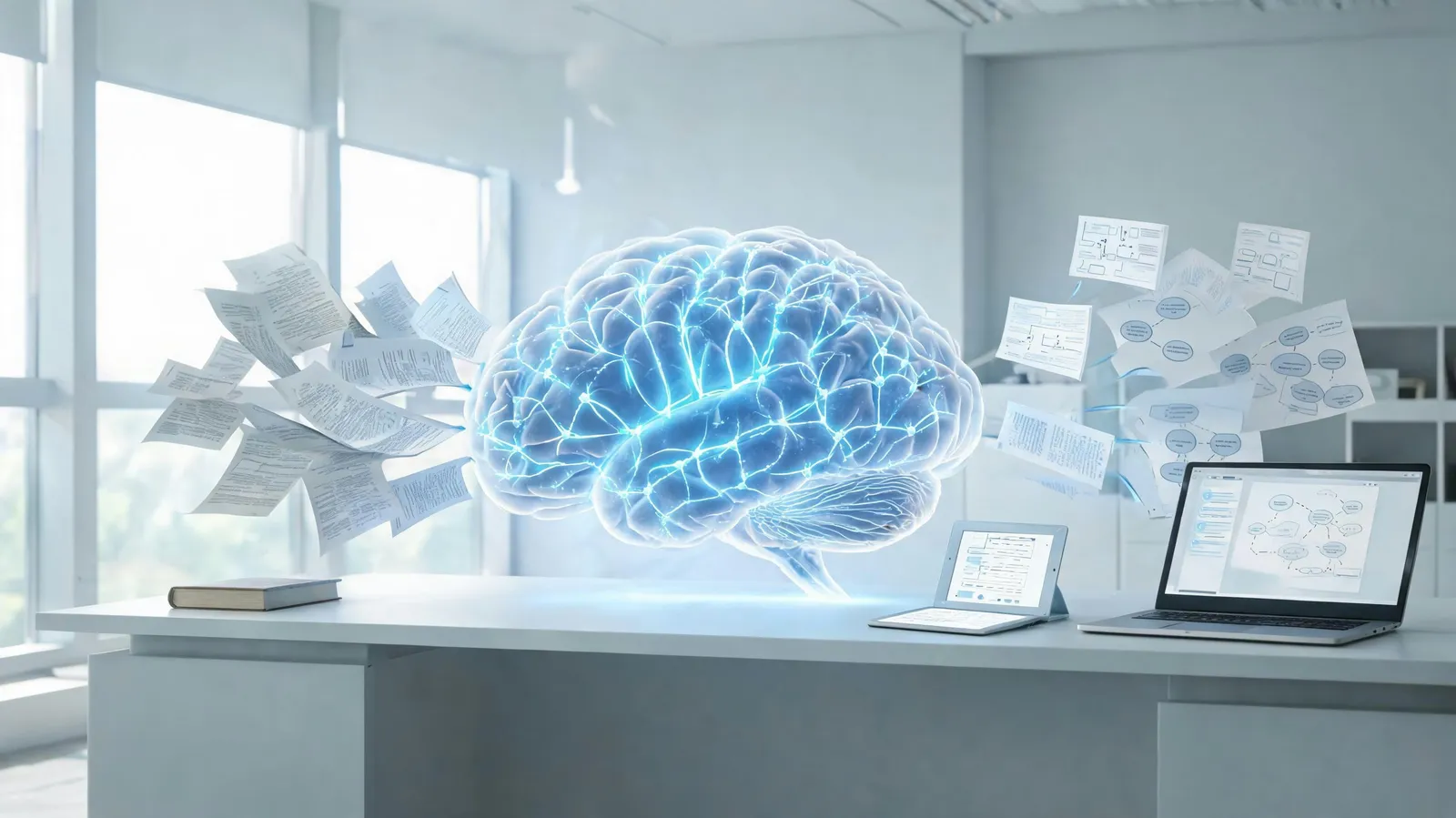
Concept maps are visual representations of knowledge that highlight relationships between concepts. AI note-taking tools automatically generate concept maps from lecture notes, helping students see the big picture and identify connections. Studies indicate that concept mapping enhances learning by improving critical thinking and knowledge retention. A case study at MIT revealed that students using AI-generated concept maps scored 15% higher on exams compared to those using traditional notes. These maps can be customized and shared, fostering collaborative learning.
Research Idea Generation from Personal Note Archives
Researchers accumulate vast personal note archives over time, but manually reviewing them to generate new ideas is impractical. AI note-taking tools can analyze these archives to identify patterns, gaps, and potential research questions, sparking innovation.
AI Algorithms Identifying Patterns and Gaps
Advanced AI algorithms, such as those used in Elicit or Semantic Scholar, analyze note archives to detect recurring themes, contradictions, and unexplored areas. For example, an AI tool might suggest a novel research question by connecting findings from disparate notes. A study by the Allen Institute for AI found that researchers using AI for idea generation produced 40% more viable research proposals. This efficiency accelerates the research cycle and fosters interdisciplinary collaboration.
Integration with Knowledge Graphs and Semantic Search
AI note-taking tools integrate with knowledge graphs and semantic search technologies to connect related notes and external knowledge. A research team at Harvard used AI to link their notes with a knowledge graph, uncovering unexpected insights and leading to a breakthrough publication. User feedback emphasizes how AI-driven semantic search reveals hidden connections, enabling researchers to build on their own work more effectively.
Conclusion
AI note-taking is not just a convenience—it is a paradigm shift in how we learn and conduct research. By automating literature synthesis, summarizing lectures, generating concept maps, and suggesting research ideas, AI empowers students and researchers to focus on higher-order thinking and creativity. As AI continues to integrate with virtual assistants and learning management systems, it will become an indispensable companion for learners and scholars, driving deeper learning and accelerating breakthroughs.