Interoperability and API Hurdles in AI Platforms
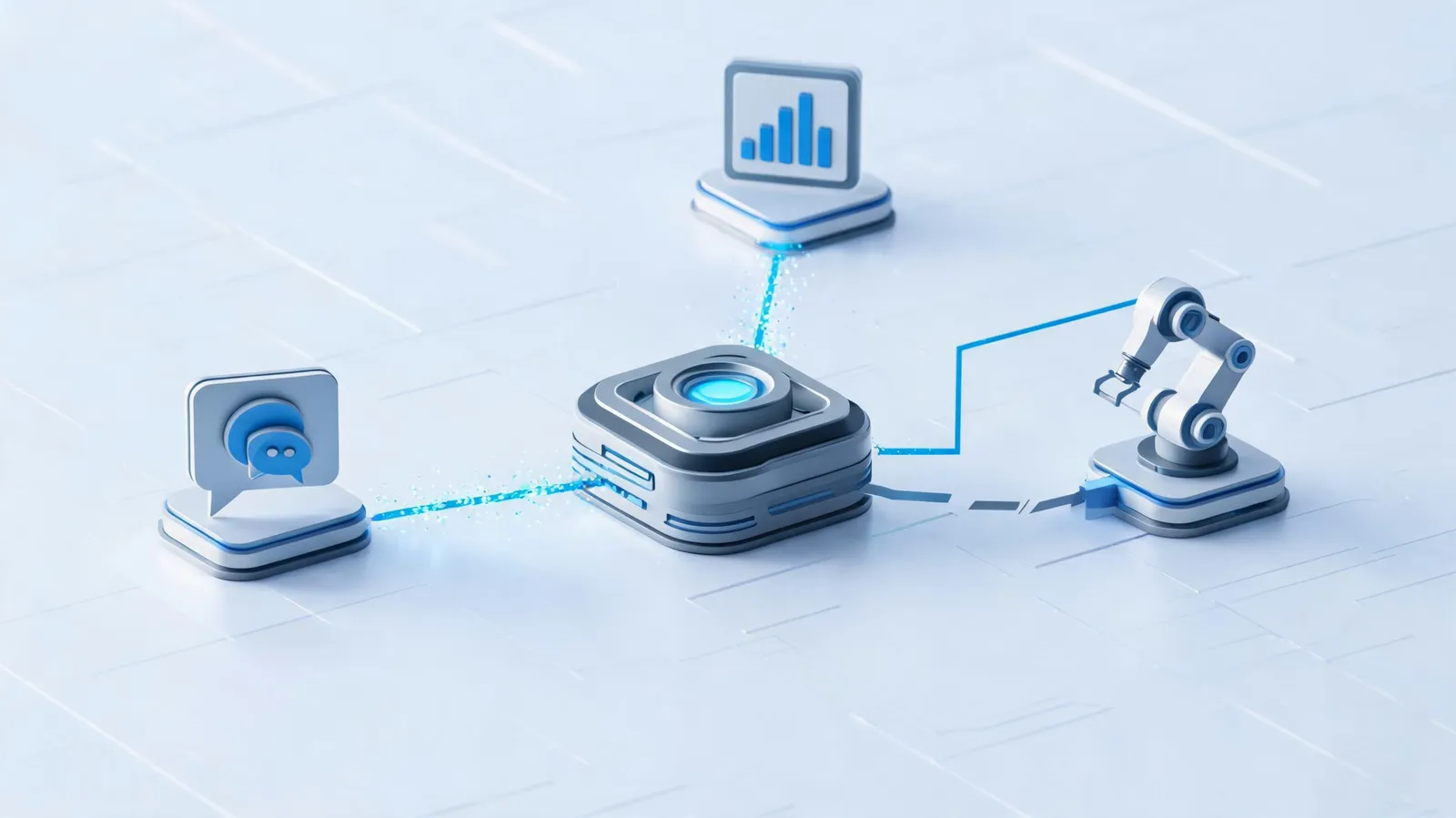
Standardized APIs are frequently missing when enterprises try to embed AI tools into their workflows. A 2024 Gartner report found that 70% of enterprises view integration complexity as the primary obstacle to AI adoption, and integration costs can eat up as much as 40% of AI project budgets. Vendors such as OpenAI, Google, and Microsoft offer proprietary APIs, which can lock enterprises into specific ecosystems and require custom connectors for each tool. For instance, a Fortune 500 retailer spent more than $2 million and 18 months integrating a chatbot, analytics engine, and automation platform because their APIs were incompatible.
Data silos and mismatched data formats make matters worse. Legacy systems like SAP and Oracle often rely on data schemas that differ from those used by modern AI tools, causing integration failures. A 2023 Deloitte survey reported that 65% of AI projects fail due to data integration issues. Recommended practices include deploying middleware and API gateways such as MuleSoft and Apigee to standardize data flows. Open standards like OpenAPI and GraphQL are gaining ground; 45% of enterprises plan to adopt them by 2025 to cut integration time by 30%.

Guiding Teams Through AI Copilot Adoption
Fear of job loss and general resistance to change can derail AI copilot rollouts. A 2024 Pew Research survey found that 52% of US employees worry about AI replacing their jobs, and 40% resist using AI tools. Such resistance often results in low adoption rates; for example, a major US bank saw only 20% of employees using its AI copilot after six months because change management was inadequate.
Effective change management requires clear leadership, upskilling, and building a culture of collaboration with AI. A case study of a US insurance firm that introduced an AI copilot for claims processing achieved 85% adoption within three months by holding weekly training sessions, appointing AI champions, and communicating that AI would augment rather than replace jobs. Adoption metrics include daily active users, time saved per task, and employee satisfaction scores. The firm reported a 30% increase in productivity and a 25% reduction in processing time.
Automating Repetitive Work with AI Workflow Tools
AI-powered workflow automation can manage data entry, report generation, and routine approvals. Combining robotic process automation (RPA) with AI—known as intelligent automation—enables bots to learn and adapt. For example, a US healthcare provider automated patient intake using UiPath and an AI model, cutting data entry time by 70% and saving $1.2 million annually. Similarly, a financial services firm used Automation Anywhere to automate report generation, reducing the process from 4 hours to 15 minutes.
Choosing the right tools and designing workflows for scalability and maintainability is essential. Popular AI workflow platforms include Microsoft Power Automate, Zapier, and Workato. A comparison shows that Power Automate excels in Microsoft-centric environments, while Workato offers better cross-application integration. Best practices for workflow orchestration include modular design, error handling, and regular audits. A 2024 Forrester study found that enterprises using AI workflow tools achieved a 35% reduction in operational costs and a 50% faster time-to-market for new services.
Real-World Deployments of AI Tools in US Enterprises
Case Study 1: A large US bank integrated AI chatbots for customer service, reducing response times by 50%. The bank used IBM Watson Assistant integrated with Salesforce and legacy CRM systems via APIs. The integration took 9 months and cost $1.5 million, but resulted in a 40% increase in customer satisfaction and $3 million annual savings. Key lessons: start with a pilot, involve IT early, and continuously train the AI model.
Case Study 2: A manufacturing firm used AI for predictive maintenance, cutting downtime by 30%. The firm deployed IoT sensors on equipment, streaming data to an AI analytics platform from C3.ai. Integration with SAP ERP enabled automatic work order creation. The project cost $2 million and delivered ROI in 14 months. Challenges included data quality issues and resistance from maintenance staff, overcome through training and demonstrating quick wins.
Conclusion
Successful AI integration requires addressing API interoperability, managing change, automating repetitive tasks, and learning from real-world case studies. As AI tools evolve, enterprises that master integration will gain significant competitive advantages. The future points to more standardized AI integration frameworks, such as the Open AI Alliance, and AI-driven workflow optimization that continuously improves processes. By 2026, Gartner predicts that 60% of enterprises will use AI orchestration platforms to manage workflows, up from 20% today. Enterprises should invest in middleware, change management, and pilot projects to unlock AI's full potential.