AI has moved beyond experimentation and now operates inside essential business workflows—automated loan decisions, resume screening, real-time fraud detection, and personalized marketing among them. But as these systems make decisions with growing consequences, governance frequently fails to keep pace with deployment. Organizations are being pushed by regulatory pressure, reputational exposure, and ethical concerns to reconsider how they oversee AI. A solid governance framework stands on three pillars: regulatory compliance and audit trails, ethical AI with bias mitigation, and data privacy and security. Each is indispensable for trustworthy automated workflows, and combined they deliver a holistic approach to governing the machine.
1. Regulatory Compliance and Audit Trails: Creating a Record of AI Decisions
Every AI governance program begins with regulatory compliance. Organizations need to connect their AI workflows to applicable regulations and standards—the EU AI Act, sector rules such as FDA requirements for healthcare AI and the Fair Lending Act for financial services, and emerging state-level AI laws in the US. A compliance mapping matrix is a hands-on tool for this job. For instance, an automated credit scoring workflow could be linked to mandates for transparency, human review, and non-discrimination. Such a matrix helps teams determine which regulations apply at each workflow stage and what controls are necessary.
Equally important is designing audit trails that record model inputs, outputs, and human overrides. Audit trails create a record of AI decisions, allowing organizations to trace how a decision was reached, spot errors, and prove compliance during regulatory examinations. Recommended practices include immutable logging (for example, via blockchain or write-once storage), version control for models and datasets, and capturing human-in-the-loop actions. Consider a financial services firm that deployed an immutable audit trail for its AI-driven loan approval system. When a compliance review raised questions about a series of denials, the firm retrieved the precise model version, input data, and human override records within hours—cutting investigation time from weeks to days and averting possible fines.
2. Ethical AI and Bias Mitigation: Safeguarding Fairness in Automated Decisions
Ethical AI is not merely a moral obligation; it is a business imperative. Biased AI systems can produce unfair outcomes, damage reputation, and create legal exposure. Bias can enter from many directions: skewed training data, poor feature selection, and even proxy variables that correlate with protected characteristics. A hiring algorithm trained on historical data that favored male candidates, for example, may carry forward gender bias. The reputational and legal costs of biased AI are substantial—lawsuits, regulatory penalties, and erosion of customer trust. A 2023 study found that 45% of organizations reported reputational harm from AI bias incidents.
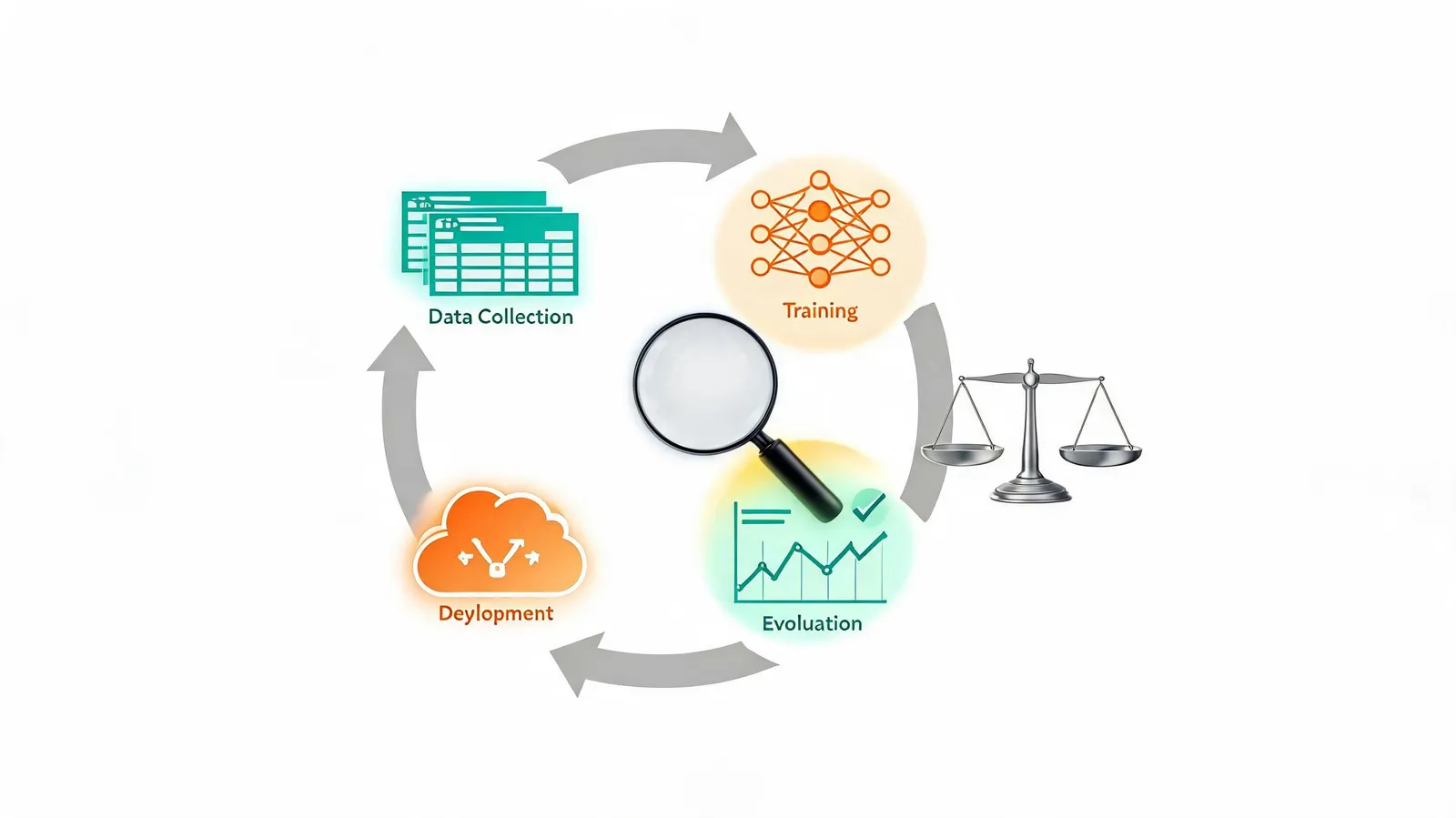
Bias detection and mitigation must be built into the entire workflow lifecycle. It starts with data collection, where teams should evaluate representativeness and apply methods like reweighting or synthetic data to correct imbalances. During model training, fairness metrics—such as disparate impact analysis, equal opportunity difference, and demographic parity—should be tracked. Tools including IBM AI Fairness 360, Microsoft Fairlearn, and Google What-If Tool can help automate bias detection. In one case, a healthcare provider used Fairlearn to uncover bias in a readmission risk model and then applied post-processing to adjust thresholds, improving fairness with only a minor performance drop (AUC fell by just 0.02). After deployment, continuous monitoring is needed to ensure bias does not emerge as data drifts.
3. Data Privacy and Security in Automated Workflows: Protecting Sensitive Information
AI workflows frequently process sensitive data, so privacy and security are critical. Privacy risks appear at every stage: during data collection (e.g., collecting more data than needed), processing (e.g., unintended secondary use), and model memorization (e.g., models exposing training data). Regulations such as GDPR and CCPA impose strict data-handling requirements, including purpose limitation, data minimization, and user rights. A privacy impact assessment (PIA) offers a systematic method to identify and reduce privacy risks. For instance, an AI workflow for customer churn prediction should go through a PIA to confirm that personal data is anonymized where feasible and that consent for data use is secured.
Security controls for AI pipelines must cover access management, encryption, and adversarial robustness. Recommended practices include role-based access control (RBAC) for model endpoints and data stores, encryption of data at rest and in transit, and routine vulnerability assessments. Adversarial robustness is equally important—models can be deceived by crafted inputs, resulting in incorrect or malicious outputs. In one example, a retailer thwarted a security incident when an attacker tried to reach a model endpoint without valid credentials. RBAC and API rate limiting stopped the attempt, and audit logs notified the security team. Regular penetration testing and model red-teaming can further strengthen AI workflows.
Conclusion: Bringing the Three Pillars Together for Trustworthy AI
Regulatory compliance, ethical AI, and data privacy are not separate efforts; they are interlocking pillars of a comprehensive governance framework. Compliance confirms that AI workflows satisfy legal requirements, ethical AI fosters fairness and trust, and privacy and security guard sensitive information. Governance is not a one-off task but a continuing process that demands ongoing monitoring, adjustment, and enhancement. As AI advances, governance must advance with it. The road ahead includes automated governance tools and AI-assisted compliance monitoring, which can reduce the burden on organizations and allow real-time risk detection. By adopting an integrated governance approach, organizations can shift from risk to trust and unlock AI’s full potential while protecting their stakeholders.