Workflow automation is shifting away from fixed, rule-based pipelines and toward systems that can govern themselves. Conventional workflows strain under complexity and fast-moving data, and AI-driven workflows are being reworked to handle both. Three developments are steering this change: goal-seeking AI agents, decision intelligence that works on live data, and generative models embedded directly into processes. The result is operations that can act with greater autonomy, adjust as conditions change, and make smarter choices.
1. Goal-Seeking Agents and Self-Governing Workflows
Agentic AI describes systems that pursue objectives, take initiative, and improve themselves over time. Traditional automation executes predefined rules; agentic systems can instead make judgments, respond to shifting conditions, and learn from results without a person stepping in. What sets them apart is their capacity to chase goals on their own, work alongside other agents, and keep refining how they behave.
Supply chain management already offers working examples, with autonomous agents handling inventory, route planning, and supplier negotiations. An agentic system could, for instance, watch live demand signals, revise orders automatically, and coordinate with logistics partners so deliveries stay on schedule. Research indicates systems of this kind can cut operational costs by as much as 20% and lift efficiency by 30%.
Standing up autonomous workflows calls for a reference architecture built around four pieces: perception, reasoning, action, and learning. A common framework pairs sensors or data feeds for perception with a decision engine for reasoning, actuators for action, and a feedback loop that drives learning. One case study of an autonomous customer service workflow shows AI agents fielding customer inquiries, passing complex issues up the line, and sharpening response accuracy over time through reinforcement learning.
2. Decision Intelligence in Real Time
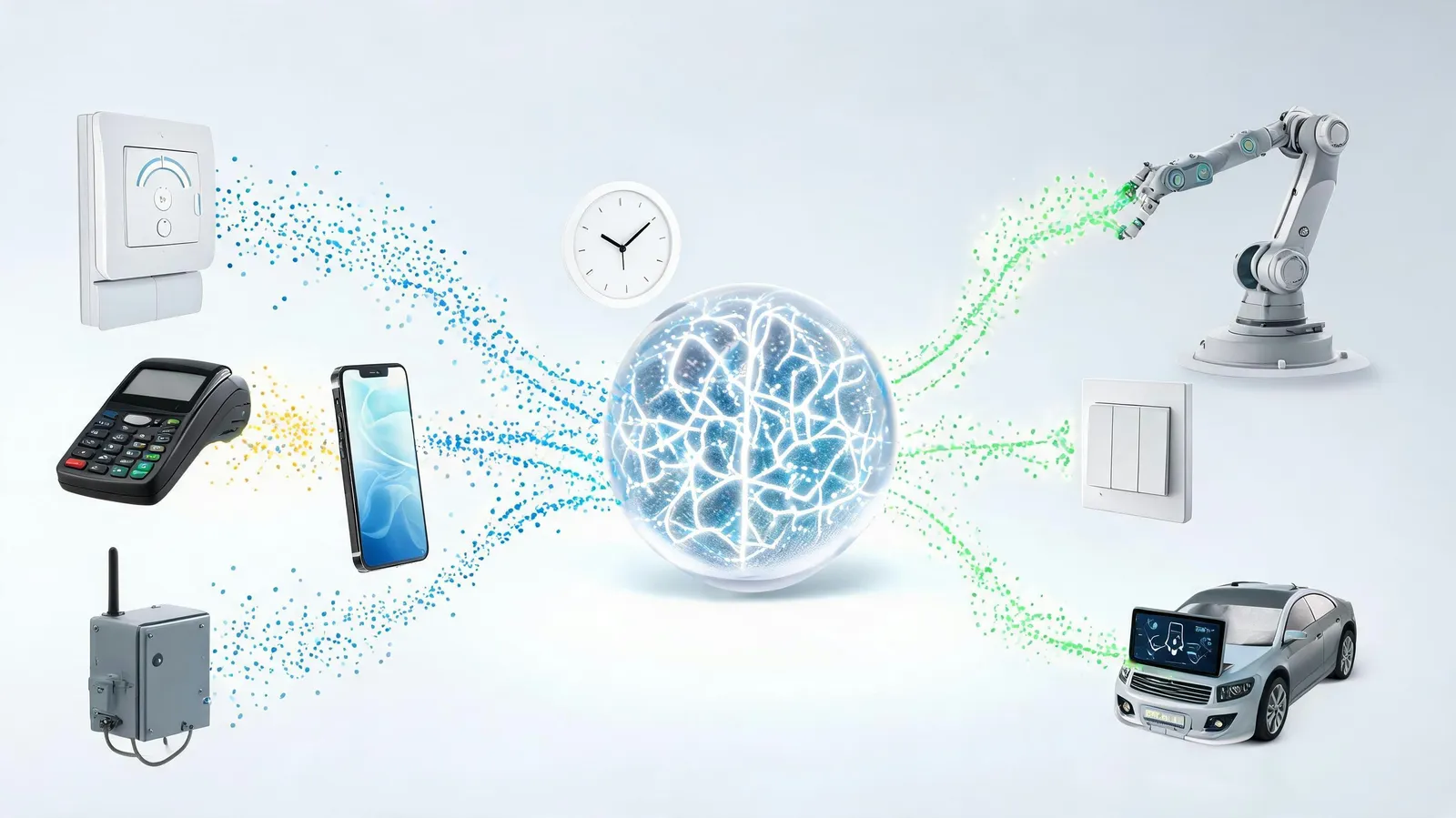
When environments change quickly, insight has to arrive immediately. Financial trading and fraud detection both depend on split-second judgments drawn from streaming data, and the tolerance for latency is minimal: a delay of even milliseconds can translate into major financial losses or security breaches. Real-time decision intelligence lets organizations analyze data the moment it lands, spot patterns, and respond right away.
The technologies behind this include stream processing platforms, edge AI, and in-memory computing. Platforms such as Apache Kafka and Apache Flink support continuous ingestion and analysis of data streams. Edge AI moves computation nearer to the data source, which cuts latency, while in-memory computing speeds up data access and processing. Comparing stream processing platforms brings out the trade-offs among throughput, latency, and fault tolerance. A case study in real-time inventory optimization shows a retailer using stream processing to adjust stock levels on the fly, which brought out-of-stock incidents down by 25%.
3. Generative AI Inside Workflows: More Than Content Creation
Generative AI is finding its way into workflows to boost creativity, automation, and personalization. Applications span content generation, code synthesis, and data augmentation. In marketing, generative AI can turn out personalized email campaigns, social media posts, and ad copy at scale. In software development, AI-assisted coding tools write code snippets, propose fixes, and take over repetitive tasks, producing productivity gains of as much as 50%.
Integration is not without difficulties, though. Ethical questions such as bias mitigation and data privacy have to be dealt with. Recommended practices include fine-tuning models on domain-specific data, building in human-in-the-loop review, and relying on APIs for smooth integration. Technical integration patterns run from straightforward API calls to custom model fine-tuning, depending on the use case.
4. Where the Three Converge
Agentic AI draws on real-time decision intelligence and generative AI to operate autonomously. An autonomous e-commerce workflow, for instance, might use live data to catch a spike in customer inquiries, produce personalized replies with generative AI, and then act, whether by adjusting inventory or launching promotions. Adaptability, efficiency, and innovation are among the benefits this combination delivers.
The outlook points toward enterprises that run with full autonomy. Industry analysts project that by 2030, 40% of large enterprises will have autonomous workflows. New standards and platforms are in development to support interoperability and governance. To keep pace, organizations need to invest in skills, infrastructure, and ethical frameworks.
Conclusion
Goal-seeking agents, real-time decision intelligence, and generative AI integration are reshaping workflows and opening the door to more autonomy, efficiency, and innovation. Getting to fully autonomous, intelligent workflows means organizations must take up these trends and adjust their strategies accordingly. Businesses that combine these technologies can reach levels of operational excellence that were previously out of reach.