
AI is now used in high-stakes areas such as medical diagnosis, autonomous driving, and financial decision-making, so the consequences of AI failures are greater than ever. Traditional software testing methods are poorly suited to AI because of non-determinism, data dependency, and emergent behaviors that cannot be fully anticipated. This guide describes a multi-layered approach—combining AI-generated unit, integration, and regression tests, property-based and metamorphic testing, formal verification, and continuous testing within MLOps pipelines—to build reliable, safe, and trustworthy AI systems from code to deployment.
1. AI-Generated Unit, Integration, and Regression Tests
The first line of defense in AI testing involves using AI itself to generate comprehensive test suites. Large language models (LLMs) and generative models can now produce test cases that cover edge cases and data variations far beyond what human engineers might manually conceive. For example, GPT-4 has been successfully used to generate unit tests for individual neural network layers, reducing manual test writing effort by up to 60% in documented case studies. These AI-generated tests are particularly valuable for catching subtle bugs in activation functions, gradient computations, and weight initialization routines.
Integration testing for AI pipelines focuses on verifying that data preprocessing, model inference, and post-processing components work together seamlessly. Common integration failures in ML pipelines include data drift, schema mismatches between training and serving environments, and version incompatibilities between feature stores and model registries. Tools like TensorFlow Extended (TFX) and MLflow provide pipeline testing capabilities that automate these checks. For instance, TFX's data validation component can automatically detect anomalies in incoming data distributions before they reach the model, while MLflow's model registry enforces test gates that prevent untested models from reaching production.
Regression testing ensures that model updates do not degrade performance on previously seen data. This is particularly critical in continuous deployment environments where models are retrained frequently. Automated regression test suites should track multiple metrics including accuracy, fairness, latency, and resource consumption. When any metric falls below predefined thresholds, the pipeline should automatically flag the regression and prevent deployment. Techniques such as snapshot testing for model outputs and statistical comparison of prediction distributions help detect subtle performance regressions that might otherwise go unnoticed.
2. Property-Based and Metamorphic Testing for ML
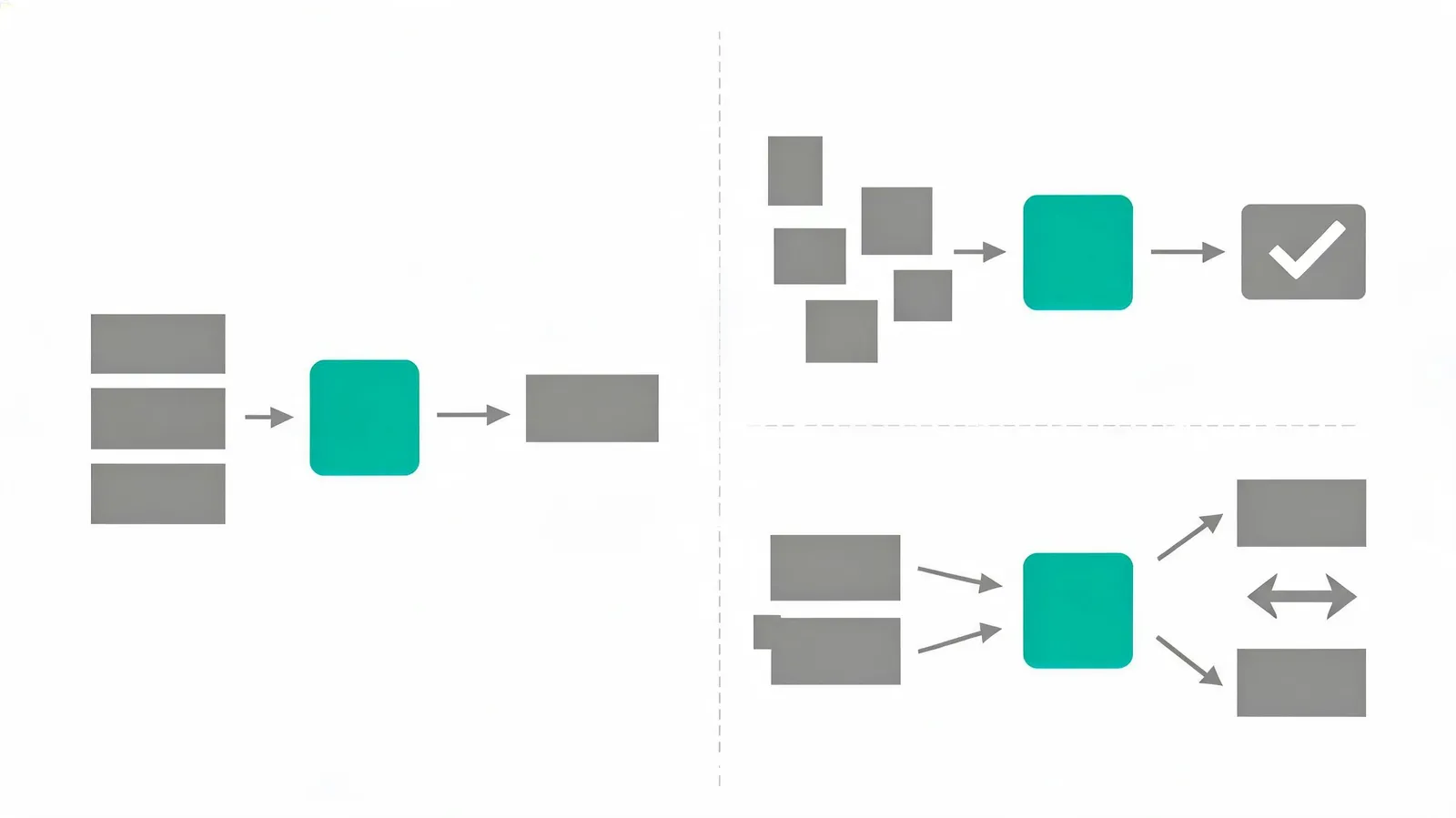
Property-based testing addresses the oracle problem in machine learning—the challenge of knowing what the correct output should be for every possible input. Instead of testing specific input-output pairs, property-based testing defines invariants that should hold for all inputs and then automatically generates random inputs to try to falsify them. For example, a model's output should be invariant to input scaling, rotation, or small amounts of noise within specified bounds. Tools like Hypothesis (for Python) and QuickCheck (for Haskell) have been adapted for ML testing, allowing engineers to specify properties such as "the model's prediction should not change when the input image is rotated by less than 5 degrees" and then automatically generate thousands of test cases to verify this property.
Metamorphic testing takes a complementary approach by using relations between inputs and outputs to detect bugs without requiring expected outputs. Metamorphic relations for image classification include properties like "adding slight noise to an image should not change its predicted label" or "changing the brightness of an image should not change its classification." These relations are particularly powerful for detecting adversarial vulnerabilities—cases where tiny, imperceptible perturbations cause dramatic changes in model output. A documented case study demonstrated that metamorphic testing successfully identified adversarial vulnerabilities in a production image classifier that had passed all traditional unit tests.
The key advantage of both property-based and metamorphic testing is their ability to explore the input space far more thoroughly than example-based testing. While traditional testing might check 100 carefully chosen examples, property-based testing can automatically generate and verify 10,000 or more test cases, dramatically increasing confidence in model robustness.
3. Formal Verification and Runtime Enforcement for AI
Formal verification provides mathematical guarantees about AI system behavior—the highest level of assurance available. For neural networks, formal verification techniques use SMT (Satisfiability Modulo Theories) solvers and abstract interpretation to prove properties such as robustness against adversarial perturbations. Tools like Marabou, ERAN, and Reluplex can verify that a neural network's output remains stable within specified input regions. For instance, Reluplex has been used to verify safety properties of the ACAS Xu collision avoidance system for aircraft, proving that the network never issues unsafe commands under any valid input conditions.
While formal verification provides strong guarantees, it is computationally expensive and currently limited to relatively small networks. For larger systems, runtime enforcement provides a practical complement. Runtime enforcement monitors AI systems during operation and enforces safety constraints in real time. Shielded reinforcement learning, for example, uses a safety shield that intercepts actions proposed by a reinforcement learning agent and overrides them if they would violate safety constraints. Runtime monitors can also detect anomalies in input data distributions and trigger fallback mechanisms—such as reverting to a rule-based system or requesting human intervention—when the AI system operates outside its validated domain.
The combination of formal verification for critical components and runtime enforcement for the full system provides a practical path to deploying AI in safety-critical applications. Formal verification proves that the core decision logic is correct, while runtime enforcement handles the unpredictable edge cases that formal methods cannot cover.
4. Continuous Testing in MLOps and CI/CD Pipelines
Continuous testing integrates all the aforementioned testing methodologies throughout the ML lifecycle and automates them within CI/CD pipelines. In a mature MLOps setup, tests run automatically at every stage: data validation upon ingestion, unit and integration tests during model training, property-based and metamorphic tests during evaluation, formal verification for critical models, and regression tests before deployment. Tools like Jenkins, GitLab CI, and Kubeflow Pipelines support the orchestration of these testing steps. Best practices include test data versioning (so that tests are reproducible), model registry with test gates (so that only models passing all tests can be promoted to production), and automated rollback mechanisms (so that any production issues trigger immediate reversion to a known-good model).
Monitoring and feedback loops complete the continuous testing picture. Production data is continuously analyzed for drift, anomalies, and performance degradation. Shadow deployment allows a new model to run alongside the existing production model without affecting users, comparing predictions in real time. Canary releases gradually route a small percentage of traffic to the new model, allowing early detection of issues before full rollout. A/B testing provides statistical evidence of whether a new model actually improves business metrics. When monitoring detects performance degradation, automated rollback can revert to the previous model version within seconds, minimizing user impact.
The integration of continuous testing into MLOps pipelines transforms AI quality assurance from a one-time gate into an ongoing process. As models are retrained with new data and updated with new architectures, the testing infrastructure ensures that every change is validated against the full battery of tests—from unit-level correctness to system-level safety properties.
Conclusion
Building reliable AI systems requires a multi-layered testing and verification strategy that addresses the unique challenges of machine learning: non-determinism, data dependency, and complex emergent behavior. AI-generated unit, integration, and regression tests provide comprehensive coverage of code-level correctness. Property-based and metamorphic testing tackle the oracle problem and uncover adversarial vulnerabilities. Formal verification offers mathematical guarantees for critical components, while runtime enforcement provides practical safety nets for deployed systems. Continuous testing within MLOps pipelines ties everything together, ensuring that quality is maintained throughout the AI lifecycle.
Looking ahead, the field is moving toward AI for testing—using AI to automatically generate, prioritize, and maintain test suites—and the emergence of certification standards for AI systems. Regulatory frameworks such as the EU AI Act and NIST AI Risk Management Framework are beginning to mandate rigorous testing and verification for high-risk AI applications. Organizations that invest in comprehensive AI testing infrastructure today will be best positioned to meet these requirements and to build the trustworthy AI systems that society demands.