Overview
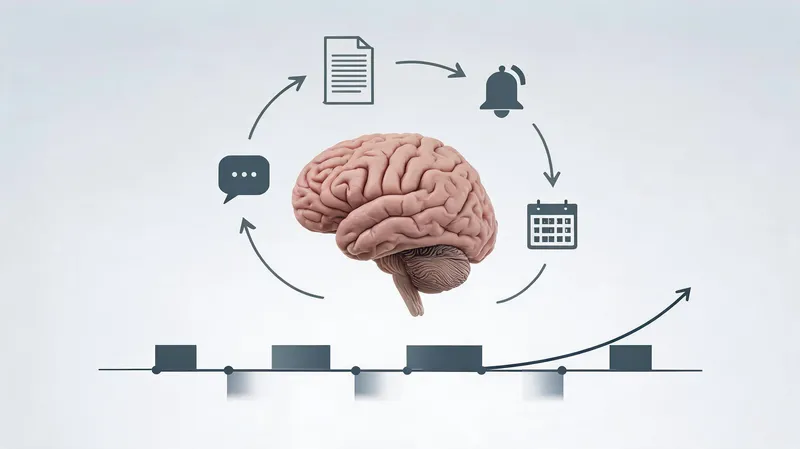
Professionals in knowledge-intensive roles are steadily adopting AI copilots to handle repetitive parts of their work, though the efficiency they gain is not without costs. These assistants—ranging from coding helpers to writing aids—are reshaping professional practice, but their actual effect in real settings is still being examined. Task-level improvements in drafting, programming, summarizing, and data work are notable; at the same time, organizations need deliberate management to limit fabricated output, erosion of hands-on skills, and shocks to the labor market.
1. Where Copilots Pay Off: Task-Level Evidence
AI copilots are changing how common knowledge-work tasks are carried out, speeding up drafting, editing, and information condensing. Research has recorded writing tasks completed up to 40% faster with AI support, and there are many accounts of lengthy reports being distilled into key insights. In programming and data work, copilots assist with code generation, debugging, and dataset analysis. Users of GitHub Copilot report coding that is 55% faster, and case studies describe data analysts automating repetitive analysis with AI.
1.1 Drafting and Condensing Information
Copilots shorten the time needed to draft, revise, and compress material. With AI assistance, studies have found writing tasks finishing up to 40% faster. One recurring example is AI turning long reports into concise takeaways, which frees professionals to concentrate on higher-value work.
1.2 Programming and Data Work
Copilots support writing code, fixing defects, and examining datasets. GitHub Copilot users report a 55% speed improvement in coding. Case studies of analysts who use AI to handle repetitive analysis point to substantial time savings alongside better accuracy.
2. Automation's Boundaries: Fabrication, Checking Load, and Skill Erosion

AI copilots may produce output that reads as credible but is factually wrong, so it must be checked. Documented cases include invented citations and code defects, and available statistics indicate that considerable time goes into verifying AI-generated material. Leaning too heavily on these tools can weaken critical thinking and practical skills. Research points to reduced problem-solving ability where dependence on AI is high, and specialists stress that human oversight remains necessary.
2.1 Fabricated Output
AI can present incorrect information in a convincing form, which makes verification unavoidable. Invented citations and buggy code are among the observed examples. Figures indicate that knowledge workers devote a meaningful share of time to fact-checking AI output, and that effort can cancel out part of the productivity benefit.
2.2 Checking Work and Losing Skills
Excessive reliance on AI can dull critical thinking and hands-on capability. Studies have linked AI dependence to weaker problem-solving performance. Practitioners and researchers argue for keeping humans in the loop so that skill levels hold and quality is protected.
3. How Organizations Adopt Copilots: Training, Rules, and Process Change
With proper training and governance, companies can bring AI copilots into their operations while containing the risks. Clear guidelines and employee upskilling are central. Lessons from early adopters, together with ethics and compliance frameworks, offer a practical path. Redesigning workflows lets organizations pair AI strengths with human review. Case studies of integration that worked, along with measures for tracking productivity gains and error rates, are important inputs.
3.1 Upskilling and Clear Rules
Setting guidelines and building employee skills are essential. Early adopters point to explicit policies on AI use, recurring training, and ethical compliance frameworks as ways to keep deployment responsible.
3.2 Reworking Processes
Processes need adjusting so that AI capabilities and human oversight complement each other. Case studies indicate that effective integration involves assigning routine work to AI while people take on complex decisions. Tracking productivity gains and error rates helps organizations gauge progress.
4. Labor-Market Consequences: Augmentation and Displacement by Job Type
Copilots can extend what people are able to do and open new opportunities. Evidence of job growth in AI-related fields, and of roles shifting toward higher-value work, supports the augmentation view. Even so, some tasks and positions may be automated, which would move the workforce around. Projections of displacement by sector, together with parallels drawn from earlier technological revolutions, inform this picture.
4.1 Augmentation
AI copilots amplify human capability and create fresh opportunities. Data points to job creation in AI-related areas, and some roles are moving toward higher-value activities such as strategic planning and creative problem-solving.
4.2 Displacement
Automation may absorb certain tasks and jobs, producing shifts in the workforce. Sector-level projections of displacement suggest that routine cognitive work carries the greatest exposure. Parallels with earlier technological revolutions indicate that although some jobs disappear, new ones also appear.
Conclusion
AI copilots are capable instruments whose benefits depend on how deliberately they are deployed; thoughtful integration is what allows gains to be maximized and risks kept in check. Understanding task-level improvements, the boundaries of automation, management approaches, and labor-market consequences gives organizations a basis for navigating the shift. Coming advances are expected to bring greater accuracy and tighter integration, which will shape the future of knowledge work. Strategic adoption, ongoing learning, and human oversight are likely to remain central to doing well in this changing environment.