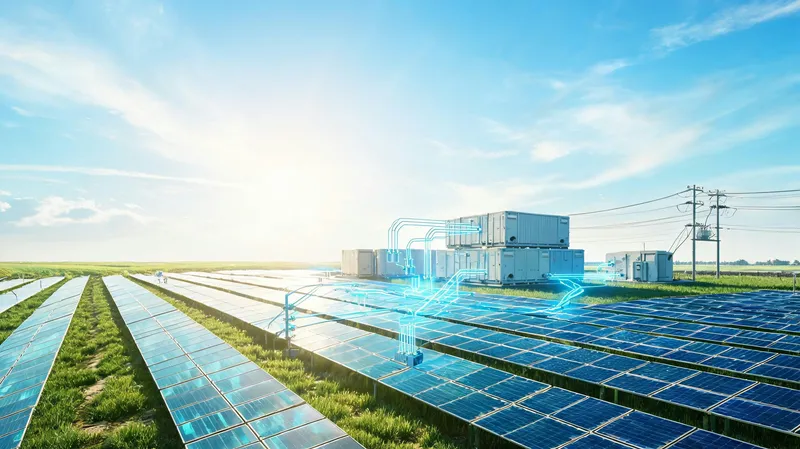
Climate Modeling and Prediction: The Science of Foresight
Climate modeling and prediction serve as the backbone of climate tech resilience. These computational systems convert massive volumes of environmental data into practical intelligence, allowing governments, businesses, and communities to plan for climate impacts instead of only responding after they occur. The shift from early atmospheric models to today's high-resolution, AI-powered forecasting represents a major advance in proactive decision-making.
High-Resolution Climate Models and AI-Driven Forecasting
Current climate models resolve spatial and temporal details at scales that earlier generations could only approximate, capturing local phenomena with far greater precision. Machine learning now complements physics-based models by detecting patterns in historical data that sharpen predictions for extreme weather such as hurricanes, heatwaves, and floods. According to the National Oceanic and Atmospheric Administration (NOAA), AI-enhanced forecasting has increased reliable hurricane track prediction lead times by nearly 20 percent over the past five years, giving communities extra time for evacuations and resource staging.
Early warning systems built on these models deliver measurable life-saving benefits. In 2023, the National Weather Service's upgraded flood prediction system gave communities along the Mississippi River basin an additional 12 hours of warning, allowing more than 15,000 residents to evacuate and preventing an estimated $200 million in property damage. These systems pull real-time data from multiple sources to create a comprehensive picture of emerging threats.
Data Integration from Satellites, IoT Sensors, and Ground Stations
The accuracy of climate prediction depends fundamentally on data quality and coverage. A global network of Earth observation satellites, terrestrial IoT sensors, and ground-based monitoring stations continuously feeds information into climate models. NASA's Earth Observing System alone transmits over 4 terabytes of climate data daily, tracking variables from atmospheric carbon concentrations to sea surface temperatures and polar ice extent.
Open-source platforms have widened access to this data, encouraging collaborative research and innovation. The Copernicus Climate Change Service offers free, open access to climate data and tools, enabling researchers, startups, and policymakers worldwide to develop localized resilience strategies. This approach to data integration keeps climate modeling transparent, verifiable, and continuously improving through shared intelligence.
Adaptation Infrastructure: Building for a Changing Climate
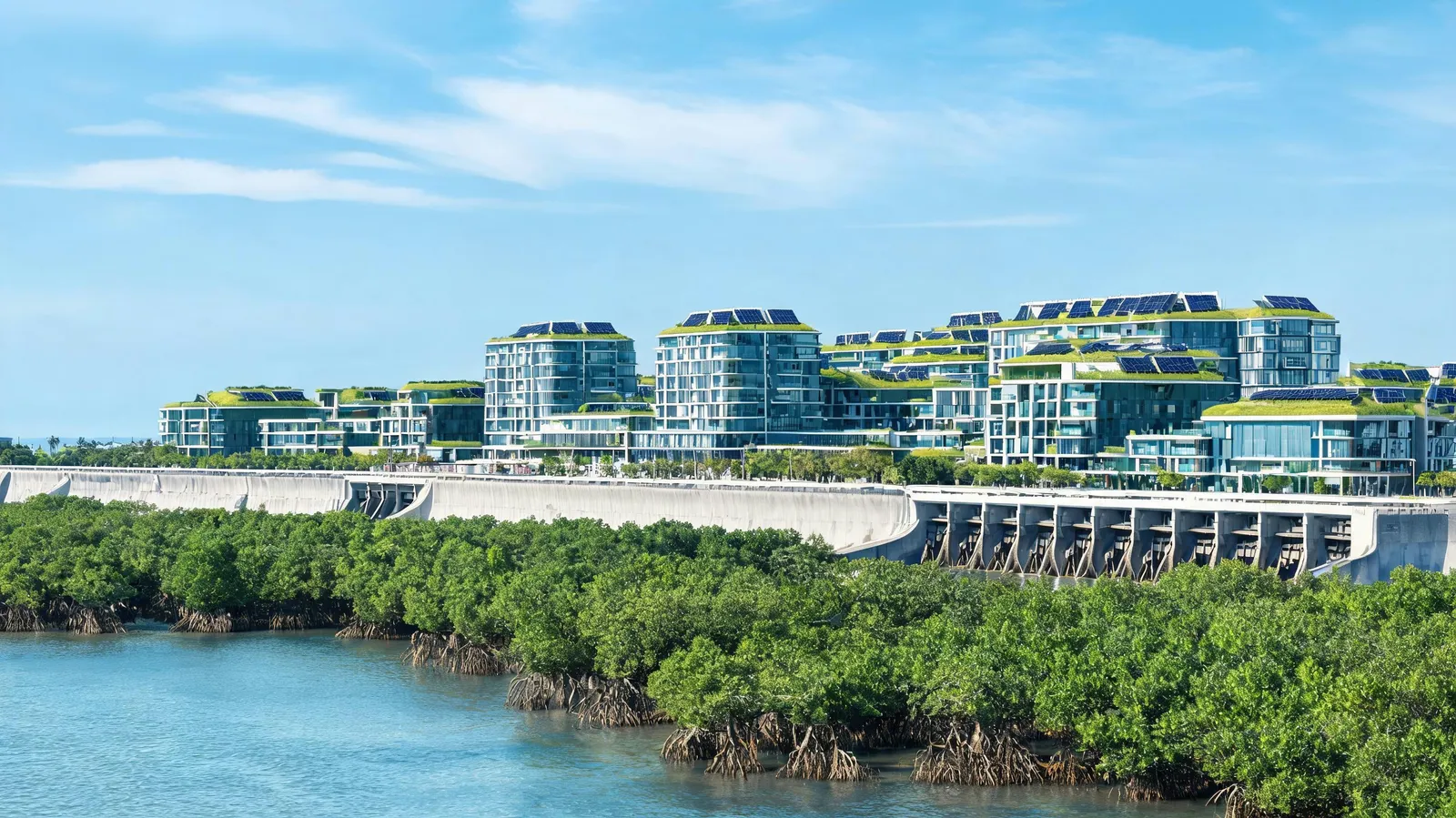
Adaptation infrastructure includes the physical systems, structures, and nature-based solutions designed to shield communities from climate impacts while keeping essential services running. As climate-related disasters grow more intense, the need to retrofit existing infrastructure and build new resilient systems has become central to climate tech resilience strategies. The American Society of Civil Engineers estimates that the United States requires $2.6 trillion in infrastructure investment over the next decade, with climate resilience representing a critical component of that need.
Climate-Resilient Buildings, Flood Defenses, and Smart Grids
Cities across the United States are pioneering adaptive infrastructure approaches that demonstrate both feasibility and return on investment. New York City's $20 billion climate resilience plan includes the construction of the Big U, a 10-mile protective system of berms, walls, and deployable barriers around Lower Manhattan. This project integrates flood protection with public amenities including parks, bike paths, and community spaces, turning defensive infrastructure into community assets.
Smart grid technologies represent another critical adaptation pathway. The Department of Energy's Grid Resilience and Innovation Partnerships program has allocated $10.5 billion to modernize electrical infrastructure, incorporating distributed energy resources, microgrids, and advanced control systems that maintain power during extreme weather events. During Hurricane Ian in 2022, communities with smart grid implementations experienced 40 percent shorter power outages compared to those with conventional infrastructure.
Cost-benefit analyses consistently demonstrate the economic wisdom of resilience investments. The National Institute of Building Sciences found that every $1 invested in hazard mitigation saves $6 in future disaster costs. This multiplier effect makes adaptation infrastructure not merely a defensive necessity but a sound economic strategy.
Nature-Based Solutions and Green Infrastructure
Nature-based solutions draw on ecosystem services to deliver climate adaptation benefits along with co-benefits such as biodiversity conservation, carbon sequestration, and community well-being. Green roofs and urban parks mitigate urban heat island effects, with studies showing temperature reductions of 2-5 degrees Celsius in well-vegetated neighborhoods. The City of Chicago's Green Roof Program has installed over 5.5 million square feet of green roofs, reducing stormwater runoff by millions of gallons annually while lowering building energy costs.
Coastal communities are increasingly turning to mangrove restoration and living shorelines as alternatives to traditional seawalls. Mangroves provide superior wave attenuation compared to concrete barriers while supporting fisheries, sequestering carbon, and adapting naturally to sea level rise. Florida's mangrove restoration projects have demonstrated protection benefits during hurricane events, with restored areas experiencing significantly less erosion than unprotected shorelines.
Circular Economy Innovations: Closing the Loop for Sustainability
Circular economy principles offer a transformative framework for reducing resource consumption, minimizing waste, and enhancing climate resilience through systemic redesign. Unlike traditional linear economic models that extract, use, and discard resources, circular approaches keep materials in productive use through reuse, repair, remanufacturing, and recycling. The Ellen MacArthur Foundation estimates that circular economy strategies could reduce global greenhouse gas emissions by 39 percent, making it an indispensable component of comprehensive climate action.
Circular Design in Products and Supply Chains
Leading companies are showing that circular design creates both environmental and economic value. Interface, a global flooring manufacturer, has pioneered the Mission Zero initiative, designing products for disassembly and material recovery. The company's ReEntry program has diverted over 100 million pounds of carpet from landfills, transforming waste into new flooring products while reducing virgin material requirements by 50 percent.
Supply chain circularity extends these principles across entire value chains. The circular economy approach to electronics manufacturing, exemplified by companies like Dell and HP, incorporates recycled content, modular design for easy repair, and take-back programs for end-of-life products. These strategies reduce dependence on virgin materials, many of which are sourced from climate-vulnerable regions, while creating new revenue streams from recovered materials.
Waste-to-Resource Technologies and Recycling Innovations
Advanced recycling technologies are turning waste streams into valuable resources, closing material loops that have historically leaked into landfills and oceans. Chemical recycling processes can break down mixed plastics into their molecular components, enabling the production of virgin-quality polymers from post-consumer waste. Companies like Eastman Chemical are investing billions in molecular recycling facilities that can process previously unrecyclable plastic waste.
Industrial symbiosis represents another powerful circular economy model, where waste from one industrial process becomes input for another. The Kalundborg Symbiosis in Denmark, operating since 1972, demonstrates how industrial ecosystems can achieve remarkable resource efficiency. This network of public and private enterprises exchanges waste streams, water, and energy, reducing annual CO2 emissions by 635,000 tons while generating economic savings of $28 million.
Conclusion: Integrating Climate Tech Resilience for a Sustainable Future
The three pillars of climate tech resilience—advanced modeling and prediction, adaptation infrastructure, and circular economy innovations—do not function in isolation; they form interconnected systems that strengthen one another. Climate modeling helps identify where adaptation infrastructure is most needed and how circular economy strategies can be tuned to local conditions. Adaptation infrastructure supplies the physical base on which circular systems can operate, while circular economy principles lower the resource demands that drive climate change.
Cross-sector collaboration and supportive policy frameworks are essential to scaling these solutions. The Inflation Reduction Act's $369 billion in climate investments represents a significant commitment, but private sector innovation and community-level action remain equally critical. Policymakers must continue to develop regulatory frameworks that internalize climate risks, incentivize resilience investments, and accelerate the transition to circular economic models.
The future outlook for climate tech resilience is promising, with emerging technologies including artificial intelligence, Internet of Things sensor networks, and blockchain-enabled supply chain transparency offering new capabilities for prediction, adaptation, and circularity. As these technologies mature and converge, they will enable increasingly sophisticated responses to climate challenges, transforming our relationship with the environment from one of extraction and degradation to one of stewardship and regeneration.
Building a resilient future requires sustained commitment, continued innovation, and collective action across governments, businesses, and communities. The tools and knowledge exist; the imperative now is to deploy them at scale, ensuring that our response to a changing planet protects both human well-being and the natural systems upon which all life depends.