
Worldwide power consumption keeps climbing, and the pressure to cut emissions quickly is intensifying. Renewables are expanding, yet they still struggle with variable output and the need to store power. A set of complementary approaches — advanced solar combined with new storage, hydrogen made from renewable electricity, and the capture and reuse of carbon dioxide — can together address these gaps and support a low-carbon energy system.
Advanced Solar and Storage: Moving Past Conventional Panels
Solar power now ranks among the cheapest ways to generate electricity, but mainstream silicon modules are nearing their practical efficiency ceiling. Newer designs, especially perovskite and tandem cells, are pushing past that limit. By stacking perovskite layers on silicon, a cell can absorb a wider range of the solar spectrum, and laboratory results have topped 30% efficiency. These cells are also light and bendable, which makes them suitable for curved surfaces, building-integrated photovoltaics, and even portable devices. The Solar Energy Technologies Office at the U.S. Department of Energy has funded work to speed up commercialization, and several startups are targeting gigawatt-scale production by 2025.
Storage is what makes round-the-clock renewable electricity possible. Lithium-ion battery costs have dropped by nearly 90% since 2010, which has made grid-scale storage economically practical. Solid-state batteries in development offer greater energy density, quicker charging, and better safety. Long-duration options such as iron-air and flow batteries are being installed to hold surplus solar power for days at a time. In California, the Moss Landing Energy Storage Facility now has more than 3,000 MWh of capacity, which helps keep the grid stable when demand peaks. With these advances, solar becomes more than a daytime source — it can serve as a dependable foundation of the clean energy transition.
Renewable Hydrogen: A Versatile Carrier for Hard-to-Electrify Sectors
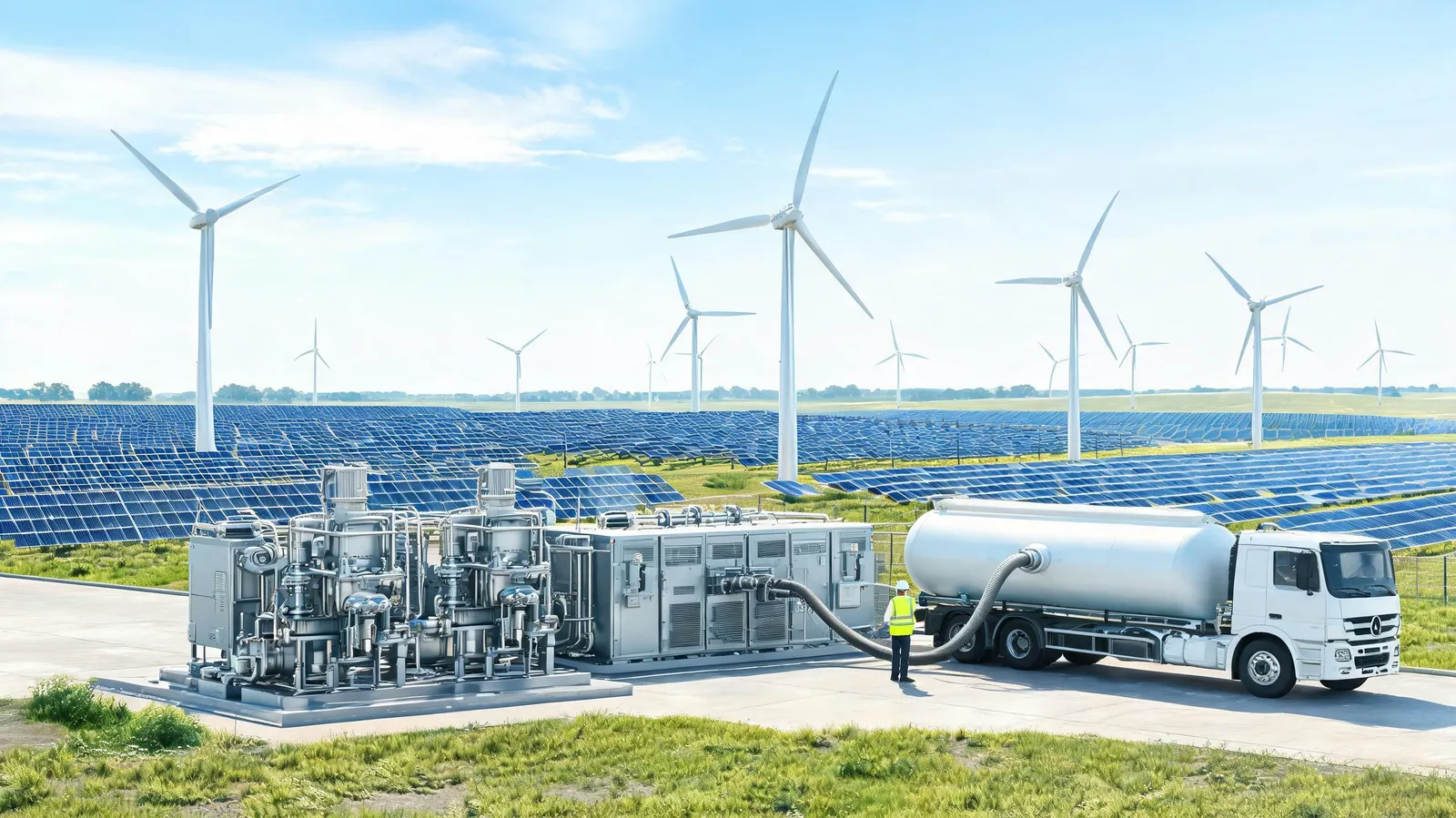
Hydrogen produced through electrolysis powered by renewable electricity is gaining attention as a flexible energy carrier for sectors where electrification is difficult. Electrolyzer prices are falling quickly, and gigawatt-scale projects have been announced in the U.S., Europe, and Australia. The U.S. Department of Energy's Hydrogen Shot initiative seeks to bring the cost of clean hydrogen down to $1 per kilogram within a decade. Renewably produced hydrogen can help decarbonize steelmaking, ammonia production, and long-distance transport. Fuel cell buses and trucks are already on the road, and trials are blending hydrogen into natural gas networks to lower heating emissions.
In the power system, hydrogen can supply seasonal storage over long periods and work alongside batteries. When renewable generation outpaces demand, the surplus electricity can be turned into hydrogen and kept in tanks or underground formations. When renewable output is low, that hydrogen can be burned in turbines or fed into fuel cells to generate electricity. Linking sectors this way produces a more flexible and resilient energy system. Obstacles persist, however: production costs, transport and storage infrastructure, and the absence of international standards. Supportive policy, including the hydrogen production tax credit in the U.S. Inflation Reduction Act, is important for scaling the renewable hydrogen economy.
Carbon Capture and Utilization: Making Emissions Useful
Carbon capture and utilization (CCU) covers technologies that take carbon dioxide from industrial exhaust or directly from the air and turn it into products with market value. Capture after combustion at power plants and cement kilns is already commercially available, while direct air capture (DAC) is progressing through facilities such as Climeworks' Orca in Iceland. The captured CO2 can be converted into synthetic fuels, chemicals, and construction materials. CarbonCure, for example, injects CO2 into concrete, where it is stored permanently while also improving strength. Synthetic fuels made from CO2 and renewable hydrogen, known as e-fuels, can run existing engines without modification.
The business case for CCU is improving as carbon prices rise and conversion pathways mature. The U.S. Department of Energy's Carbon Negative Shot aims to remove CO2 at under $100 per net metric ton of CO2-equivalent. Utilization cuts emissions and simultaneously generates revenue, turning a carbon burden into an asset. Even so, life-cycle emissions and scalability need careful management to make sure the climate benefits are real. Pairing CCU with renewables and renewable hydrogen can support a circular carbon economy in which one process's emissions become another's feedstock.
Bringing the Three Together: Benefits and Hurdles
The greatest value of advanced solar, renewable hydrogen, and CCU appears when they are combined. Solar plus storage supplies inexpensive, dependable electricity for electrolyzers, which produce renewable hydrogen. That hydrogen can then be paired with captured CO2 to make e-fuels, chemicals, and materials, closing the carbon loop. The Haru Oni project in Chile, for instance, uses wind power to make renewable hydrogen and then combines it with captured CO2 to produce synthetic gasoline. Integrated efforts like this show that a carbon-neutral energy system is achievable.
Challenges remain despite this potential. Policy frameworks need to encourage investment through carbon pricing, subsidies, and standards. Hydrogen transport and CO2 pipeline infrastructure require coordinated planning. Upgrading the grid is necessary to accommodate distributed renewable generation and the electrification of transport and heating. International cooperation matters for technology transfer and for trade in renewable hydrogen and carbon-based products. Public acceptance and workforce development are also important. The transition calls for a comprehensive approach that balances innovation, regulation, and market forces.
Conclusion
Advanced solar, renewable hydrogen, and carbon capture and utilization are more than separate technologies; they are foundations of a sustainable energy future. Solar and storage deliver abundant clean electricity, renewable hydrogen decarbonizes industry and transport, and CCU converts emissions into useful resources. Taken together, they can reach net-zero emissions while supporting economic growth and energy security. Continued innovation, investment, and supportive policy are needed to scale these solutions around the world. Going forward, integrating these technologies will be central to building a sustainable energy future for all.