Quantum mechanics is no longer just a subject for physicists. It is increasingly underpinning practical tools that could transform sectors as varied as finance and healthcare. Four interrelated areas stand out: algorithms that tackle optimization tasks more efficiently than classical machines, cryptographic methods designed to withstand quantum attacks, networks that distribute quantum states over distance, and sensors that achieve remarkable measurement precision. These elements are often described as the building blocks of a future quantum internet—a network where quantum principles govern how information is sent and processed.
In the United States, public institutions and private firms are putting substantial resources into these technologies. The National Institute of Standards and Technology (NIST) has already chosen its first set of post-quantum cryptographic algorithms, while major technology companies such as Google, IBM, and Microsoft are competing to develop scalable quantum computers. At the same time, startups are setting up quantum key distribution (QKD) networks in urban areas, and scientists are employing quantum sensors for tasks like detecting gravitational waves and navigating without GPS. The following sections examine each of these four directions, describing their mechanisms, remaining obstacles, and significance for the future of communication.
1. Quantum Algorithms for Optimization: Solving Complex Problems Faster
Optimization challenges appear in many domains: planning delivery routes, scheduling flights, managing investment portfolios, and discovering new drugs. Classical computers frequently face difficulties because the number of possible solutions increases exponentially with the number of variables. Quantum algorithms, by contrast, can evaluate many solutions at once through superposition and entanglement, which may allow them to identify the best answer much more quickly.
1.1 Quantum Annealing and Gate-Based Approaches
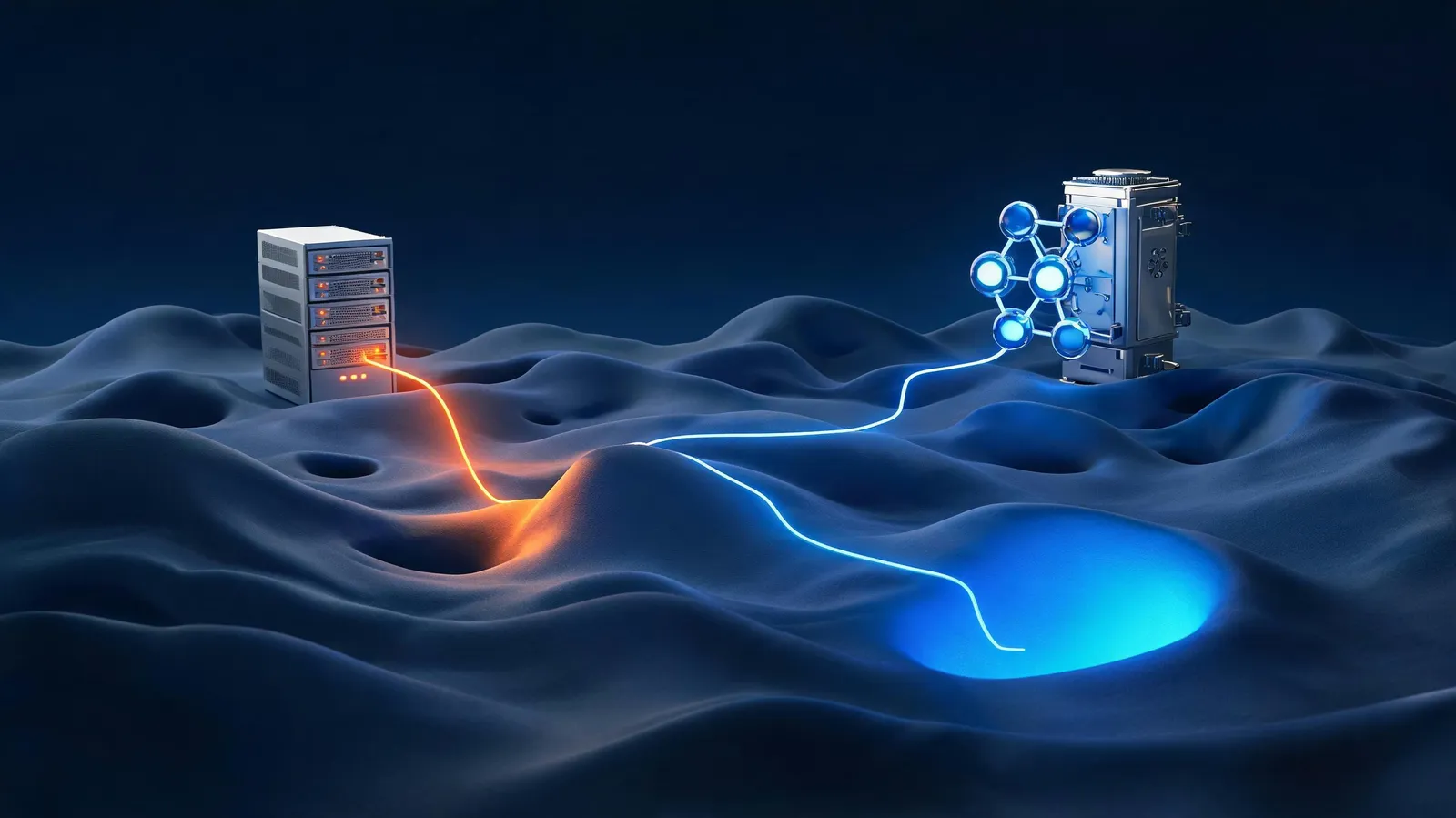
D-Wave systems employ quantum annealing, a specialized method for combinatorial optimization. The problem is mapped onto a landscape of energy states, and the quantum system is allowed to settle into the lowest energy state, which represents the optimal solution. Although annealing is not always faster than classical methods, it has shown potential in logistics and portfolio optimization. Volkswagen, for instance, used a D-Wave quantum annealer to optimize bus routes in Lisbon, cutting travel time and fuel use.
Gate-based quantum computers take a different approach, using quantum gates to manipulate qubits in a manner analogous to classical logic gates but with quantum parallelism. The Quantum Approximate Optimization Algorithm (QAOA) is tailored for near-term devices and has been applied to financial problems such as portfolio risk analysis. A 2023 study in Nature Quantum Information reported that QAOA can surpass classical heuristics on certain instances of the Max-Cut problem, a well-known optimization challenge.
1.2 Variational Quantum Algorithms for Near-Term Devices
Variational quantum algorithms (VQAs) are hybrid quantum-classical techniques: a quantum computer prepares a parameterized quantum state, and a classical optimizer tunes the parameters. This makes them suitable for noisy intermediate-scale quantum (NISQ) devices, which lack error correction. VQAs have been used in machine learning to classify data in high-dimensional spaces and in quantum chemistry to simulate molecular energies for drug discovery. Open-source frameworks such as IBM's Qiskit and Google's Cirq provide tools for developing VQAs, lowering barriers for researchers and developers.
Nevertheless, VQAs encounter obstacles like barren plateaus—regions in parameter space where gradients vanish, complicating optimization. Researchers at MIT and Caltech are exploring new initialization strategies and error mitigation techniques to address these issues. As quantum hardware advances, VQAs are expected to handle larger and more complex problems, from supply chain optimization to battery design.
2. Post-Quantum Cryptography: Securing Data in the Quantum Age
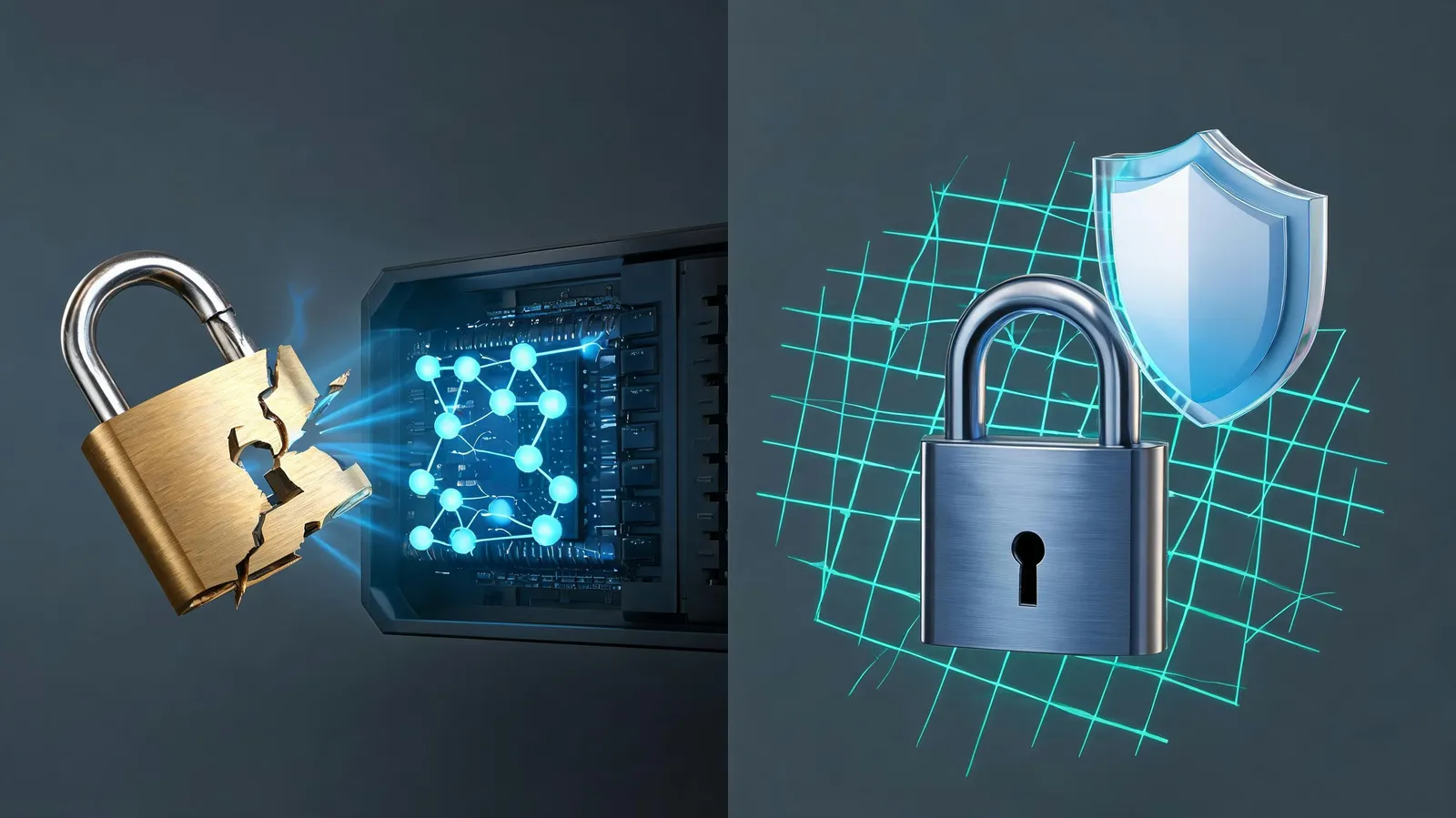
The quantum computers that could solve optimization problems also threaten current cryptographic systems. Most secure communication today depends on the difficulty of factoring large integers (RSA) or computing discrete logarithms (ECC). In 1994, Peter Shor demonstrated that a sufficiently powerful quantum computer could break these schemes in polynomial time, making RSA and ECC obsolete. Although such a quantum computer does not yet exist, its arrival timeline is uncertain—estimates range from 10 to 30 years. Because encrypted data can be harvested now and decrypted later, the shift to post-quantum cryptography (PQC) is pressing.
2.1 Threat of Quantum Computers to RSA and ECC
Shor's algorithm requires a quantum computer with thousands of logical qubits, each error-corrected. Current devices have only a few hundred physical qubits and lack full error correction, so they cannot run Shor's algorithm at scale. Nonetheless, progress is rapid. In 2023, IBM introduced its 433-qubit Osprey processor, and Google announced plans for a 1 million-qubit machine by 2030. The U.S. National Security Agency (NSA) has cautioned that RSA-2048 could be broken by a quantum computer within the next 15 years, urging organizations to start planning for PQC.
2.2 NIST Standardization of Post-Quantum Cryptographic Algorithms
To address this threat, NIST initiated a public competition in 2016 to select quantum-resistant algorithms. After several rounds of evaluation, NIST announced the first four selected algorithms in July 2022: CRYSTALS-Kyber for key encapsulation, and CRYSTALS-Dilithium, FALCON, and SPHINCS+ for digital signatures. These algorithms rely on hard mathematical problems such as lattice-based cryptography, which are believed to resist quantum attacks. NIST released draft standards in August 2023 and expects final standards by 2024.
Migrating to PQC is complex. It involves updating protocols, libraries, and hardware, and ensuring interoperability between old and new systems. Many organizations are adopting hybrid approaches that combine classical and post-quantum algorithms to maintain security even if one is broken. Google, for example, has implemented a hybrid key exchange in its Chrome browser, and Cloudflare offers post-quantum cryptography to its customers. The U.S. government, through the Office of Management and Budget, has set a deadline of 2035 for federal agencies to migrate to PQC.
3. Quantum Networking and Sensing: Building the Quantum Internet and Ultra-Precise Sensors
While quantum computing attracts most attention, quantum networking and sensing are equally transformative. Quantum networking allows quantum states to be distributed over long distances, which is essential for secure communication and distributed quantum computing. Quantum sensing, meanwhile, uses quantum effects to measure physical quantities with extraordinary precision, from magnetic fields to time.
3.1 Quantum Key Distribution (QKD) and Entanglement-Based Networks
Quantum key distribution (QKD) is the most mature quantum networking technology. It enables two parties to generate a shared secret key whose security is guaranteed by quantum mechanics—any eavesdropping attempt disturbs the quantum state and is detected. QKD has been deployed in several real-world networks, including in the United States. For instance, the Chicago Quantum Exchange operates a 124-mile quantum network linking Argonne National Laboratory, Fermi National Accelerator Laboratory, and the University of Chicago. In 2020, the U.S. Department of Energy announced a blueprint for a national quantum internet, aiming to connect major research institutions and industry partners.
Satellite-based QKD extends quantum networks beyond terrestrial fiber. China's Micius satellite demonstrated entanglement-based QKD over 1,200 kilometers in 2017, and other countries are pursuing similar efforts. The U.S. is investing in satellite QKD through programs such as the Defense Advanced Research Projects Agency's (DARPA) Quantum Augmented Network (QuANET). Entanglement-based networks, which distribute entangled photons, are the foundation of a future quantum internet that could connect quantum computers and sensors globally.
3.2 Quantum Sensing for Precision Measurement
Quantum sensors exploit phenomena like superposition and entanglement to measure physical quantities with unprecedented sensitivity. Atomic clocks, for example, use the vibrations of atoms to keep time with an accuracy of one second in billions of years. They are critical for GPS, financial trading, and fundamental physics. Quantum gravimeters measure tiny variations in gravity, which can be used to detect underground oil reserves, monitor volcanic activity, and even navigate without GPS. Quantum magnetometers, such as those based on nitrogen-vacancy centers in diamond, can detect magnetic fields at the nanoscale, enabling advances in materials science and medicine.
In the United States, quantum sensing is a focus of the National Quantum Initiative. The Army Research Laboratory is developing quantum sensors for navigation in GPS-denied environments, while the National Institute of Standards and Technology (NIST) operates some of the world's most accurate atomic clocks. Startups like AOSense and Vector Atomic are commercializing quantum sensors for defense and aerospace applications. As these sensors become smaller and cheaper, they will find their way into smartphones, cars, and medical devices, enabling new capabilities like indoor navigation and early disease detection.
4. Conclusion: The Convergence of Quantum Technologies
Quantum algorithms, post-quantum cryptography, quantum networking, and quantum sensing are not isolated fields—they are converging to create a new technological ecosystem. Quantum algorithms will run on quantum computers connected by quantum networks, while post-quantum cryptography will protect classical data during the transition. Quantum sensors will feed data into quantum computers for analysis, and quantum networks will enable secure collaboration between distributed quantum processors. This convergence will lead to a quantum internet that is secure, ultra-fast, and highly sensitive.
The urgency of post-quantum migration cannot be overstated. Organizations that fail to upgrade their cryptographic systems risk having their data compromised once quantum computers become powerful enough. At the same time, early adopters of quantum networking and sensing will gain a competitive edge in fields like finance, logistics, healthcare, and defense. Governments and industry must work together to develop standards, fund research, and train a quantum-ready workforce.
The quantum revolution is not a distant future—it is happening now. From NIST's post-quantum standards to Chicago's quantum network and DARPA's quantum programs, the United States is positioning itself as a leader in this transformative field. By understanding the four pillars of quantum computing and communication, businesses and individuals can prepare for a world where quantum technologies are as ubiquitous as classical computers are today.