Reflight and Orbital Production: Building Blocks of the Commercial Space Sector
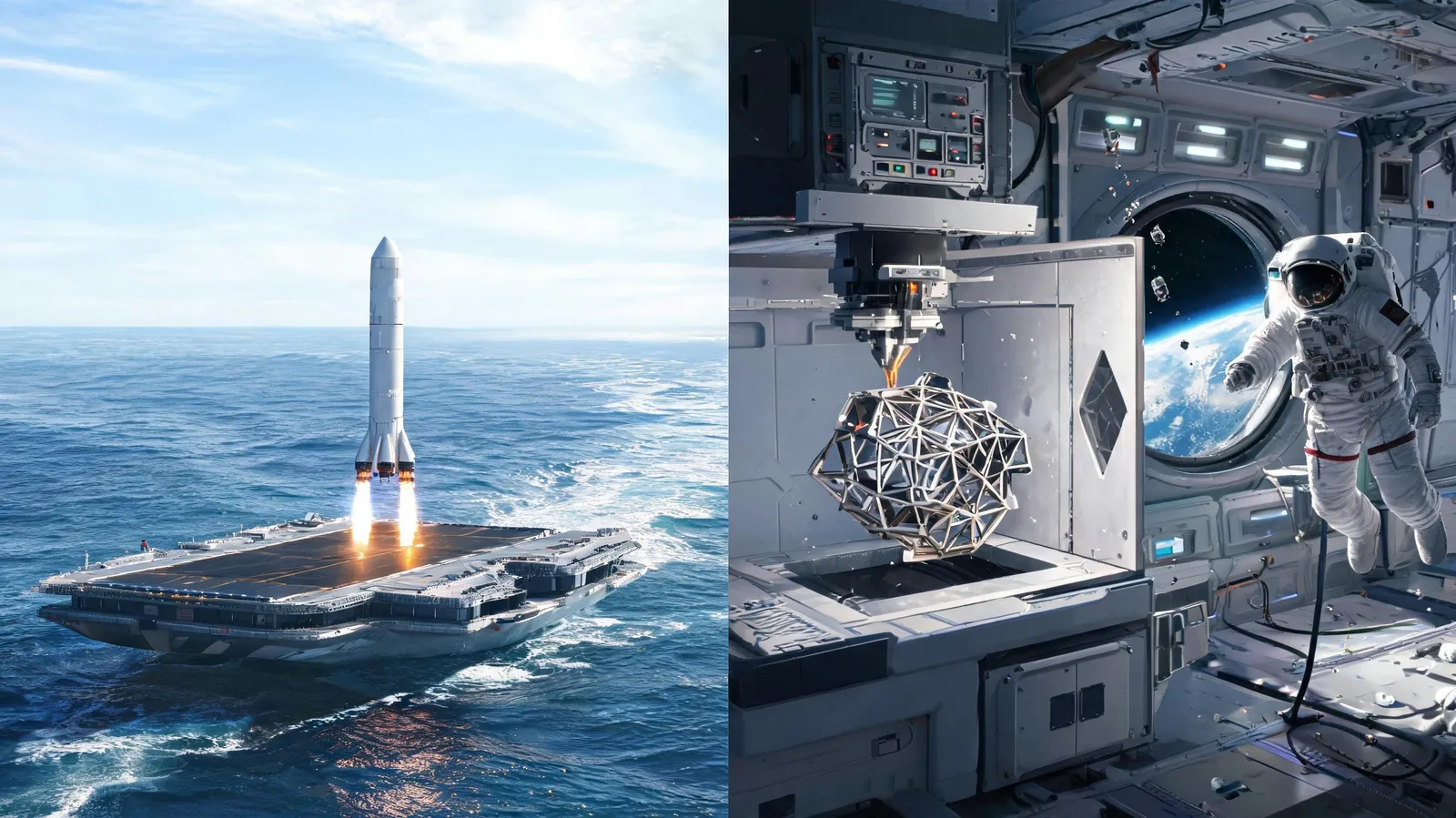
The economics of reaching space have been reshaped by launch vehicles that can be flown more than once. SpaceX's Falcon 9 offers a widely cited example: individual boosters in its fleet have completed over 20 flights. Thanks to such reflight capability, the price of sending a kilogram to low Earth orbit (LEO) has fallen from tens of thousands of dollars to a figure in the low thousands. Blue Origin is pursuing comparable capabilities through New Shepard and New Glenn, and other players are following suit, widening access for commercial payloads.
Manufacturing in orbit takes advantage of microgravity to make materials and products that outperform—or simply cannot be made—on Earth. ZBLAN fiber optics, for instance, exhibit lower signal loss than fibers produced on the ground, and human tissues can be 3D bioprinted in space. The International Space Station (ISS) has been the setting for many such experiments, while commercial platforms such as Made In Space now run 3D printers in orbit, a step toward orbital factories.
Satellite Fleets and Their Services: Linking Users on Earth and Beyond
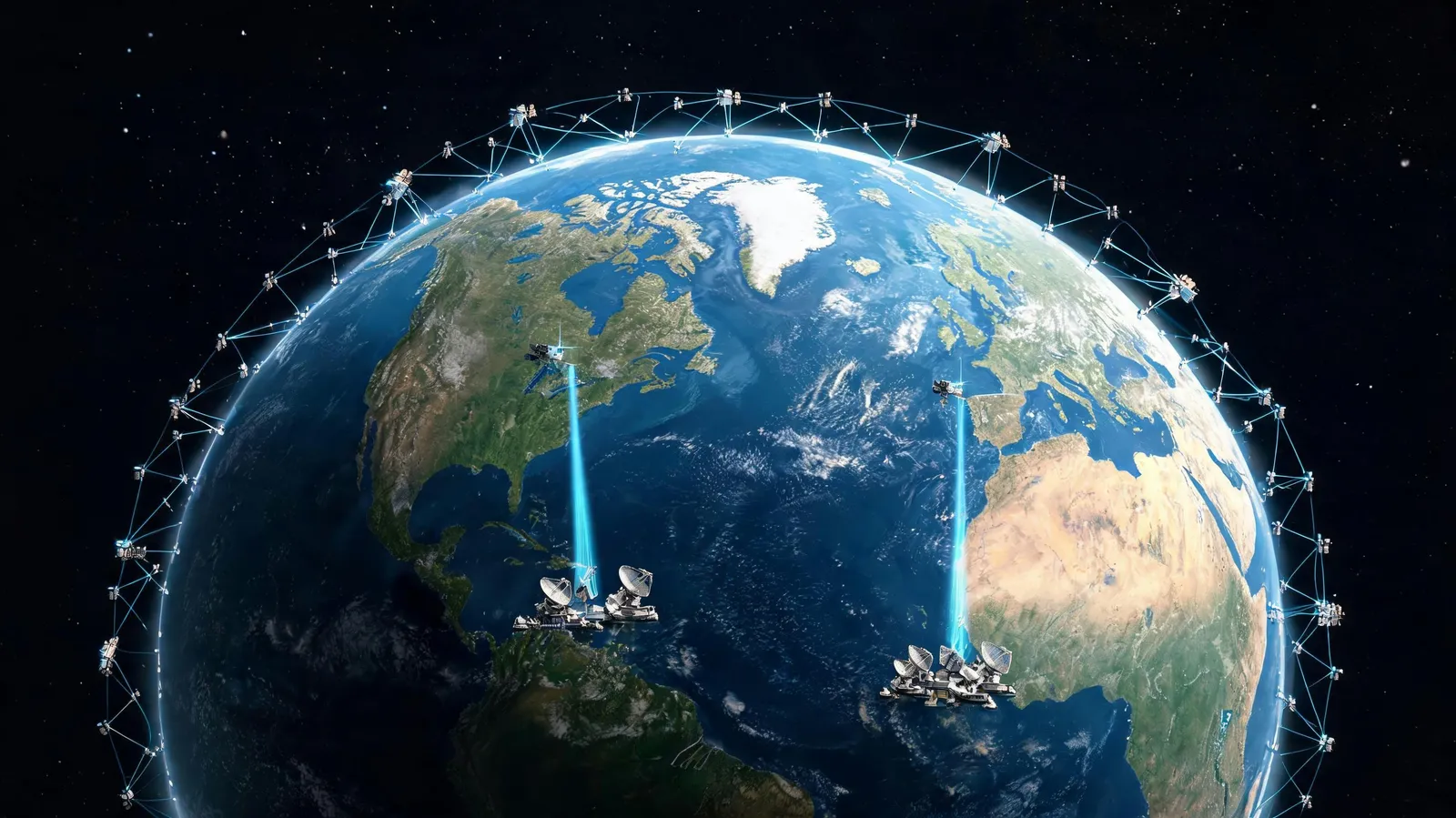
Constellations in low Earth orbit (LEO) are changing how the world connects. SpaceX's Starlink has placed more than 5,000 satellites in orbit, delivering high-speed internet to remote regions, ships at sea, and aircraft. OneWeb, now part of Eutelsat, has fielded several hundred satellites with a focus on enterprise and government customers. Such networks help close the digital divide and open new uses in telemedicine, education, and disaster response.
Fleets dedicated to Earth observation and the Internet of Things (IoT) are multiplying as well. Planet Labs runs the largest group of Earth-imaging satellites, providing daily coverage of the globe for agriculture, forestry, and climate monitoring. Spire Global supplies weather and maritime data, and Kepler Communications concentrates on IoT connectivity. The resulting data streams feed decision-making across a range of industries.
Resources on the Moon and Mars: Powering the Coming Economy
Water ice in permanently shadowed lunar craters could be extracted and processed into rocket propellant—liquid hydrogen and oxygen—as well as water and oxygen for life support. NASA's Artemis program seeks to send humans back to the Moon and keep them there sustainably, with commercial partners including Intuitive Machines and Astrobotic delivering payloads. Research indicates that lunar propellant could cut the cost of deep space missions by allowing refueling in orbit.
For long-term habitation of Mars, in-situ resource utilization (ISRU) is essential. The MOXIE instrument aboard NASA's Perseverance rover has produced oxygen from Martian carbon dioxide, showing that ISRU is feasible. Plans for 3D printing on Mars with regolith (soil) and for agriculture in controlled environments are under development to support future settlements. Such technologies could make settlements more self-sufficient and lessen dependence on resupply from Earth.
Outlook
Reflightable launch, satellite fleets, and the use of resources beyond Earth are converging into a commercial space ecosystem that can sustain itself. Reusable rockets have lowered the barrier to entry, satellite networks are spawning new services and data, and lunar and Martian resources hold out the promise of fueling further exploration. This commercial era is fostering innovation, economic growth, and international collaboration, with AI and robotics speeding the pace. As these foundations mature, humanity stands to become a multi-planet species, opening opportunities without precedent in the final frontier.