Brain Activity Behind Idea Generation and Sudden Insight
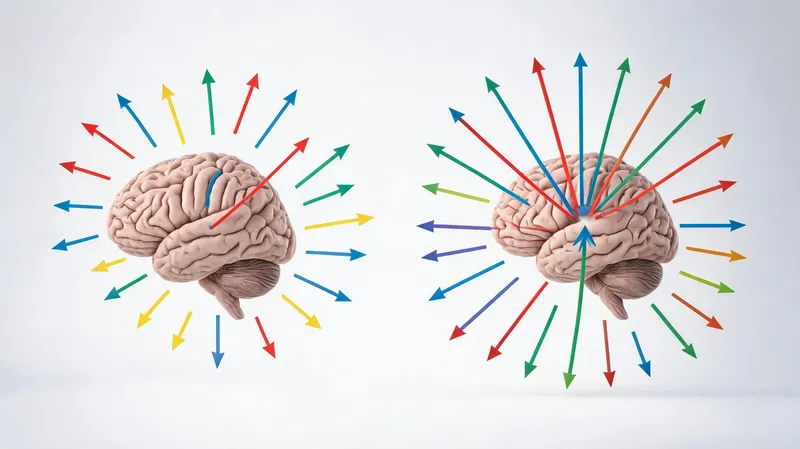
Generating many possible answers to an open-ended prompt—known as divergent thinking—sits near the center of creative cognition. Across neuroimaging work, tasks that ask people to devise alternative uses for everyday objects repeatedly recruit the prefrontal cortex and the default mode network (DMN). Activity rises in the inferior frontal gyrus and the posterior cingulate cortex while ideas are being produced. EEG recordings add another piece: synchronized alpha waves mark divergent thinking with some reliability, a pattern taken to reflect relaxed attention that eases associative connections.
Insight tends to arrive as a sudden “Aha!” and follows its own neural sequence. In studies using compound remote associates problems, a surge of gamma-band activity in the right hemisphere appears shortly before the solution surfaces. This gamma burst is interpreted as the binding of separate neural representations into one coherent answer. Lesion evidence is consistent with this account: injury to the prefrontal cortex can disrupt insight-based problem solving, underlining the region's importance when a problem is suddenly restructured.
How Default Mode and Executive Control Networks Cooperate
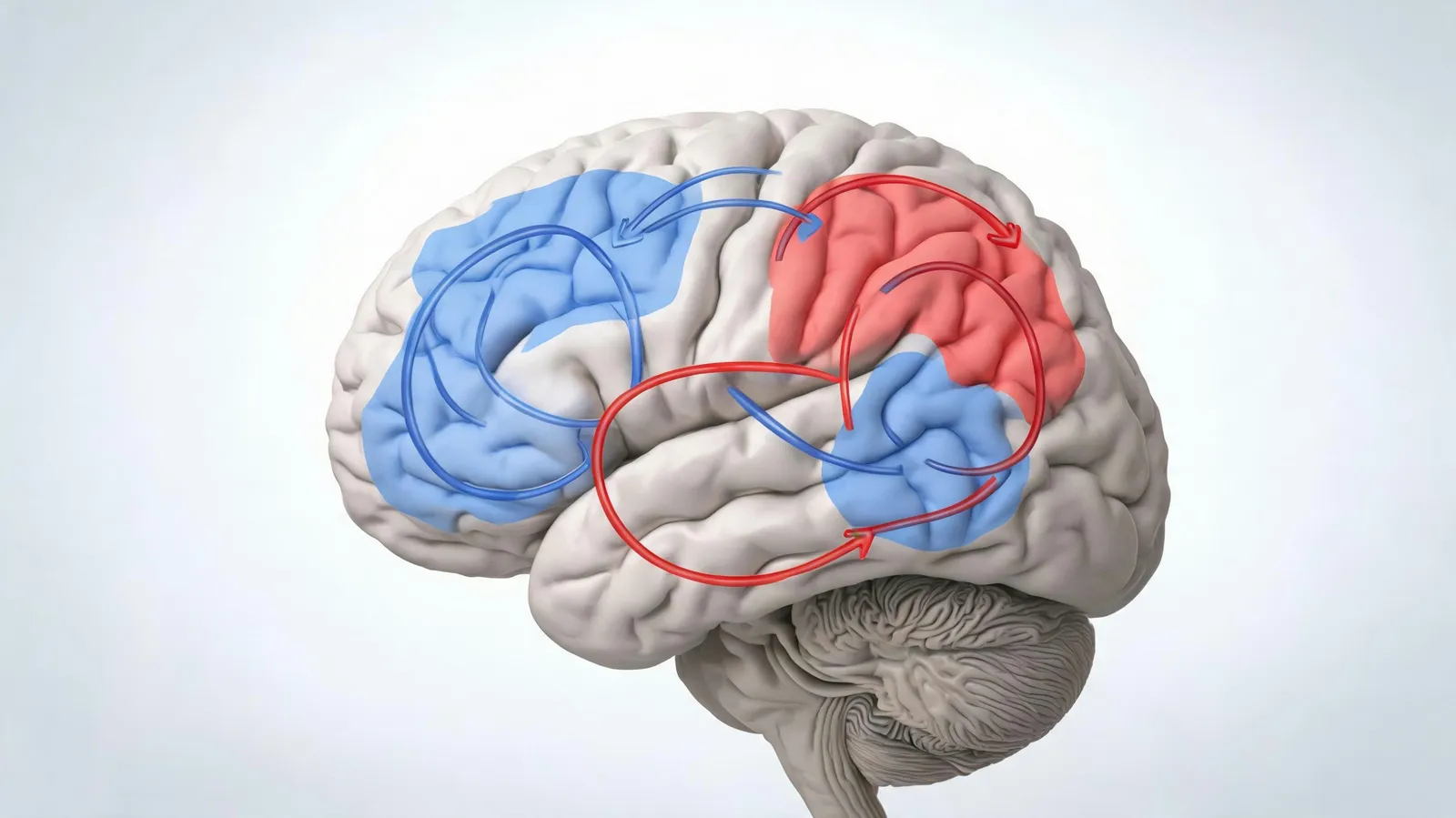
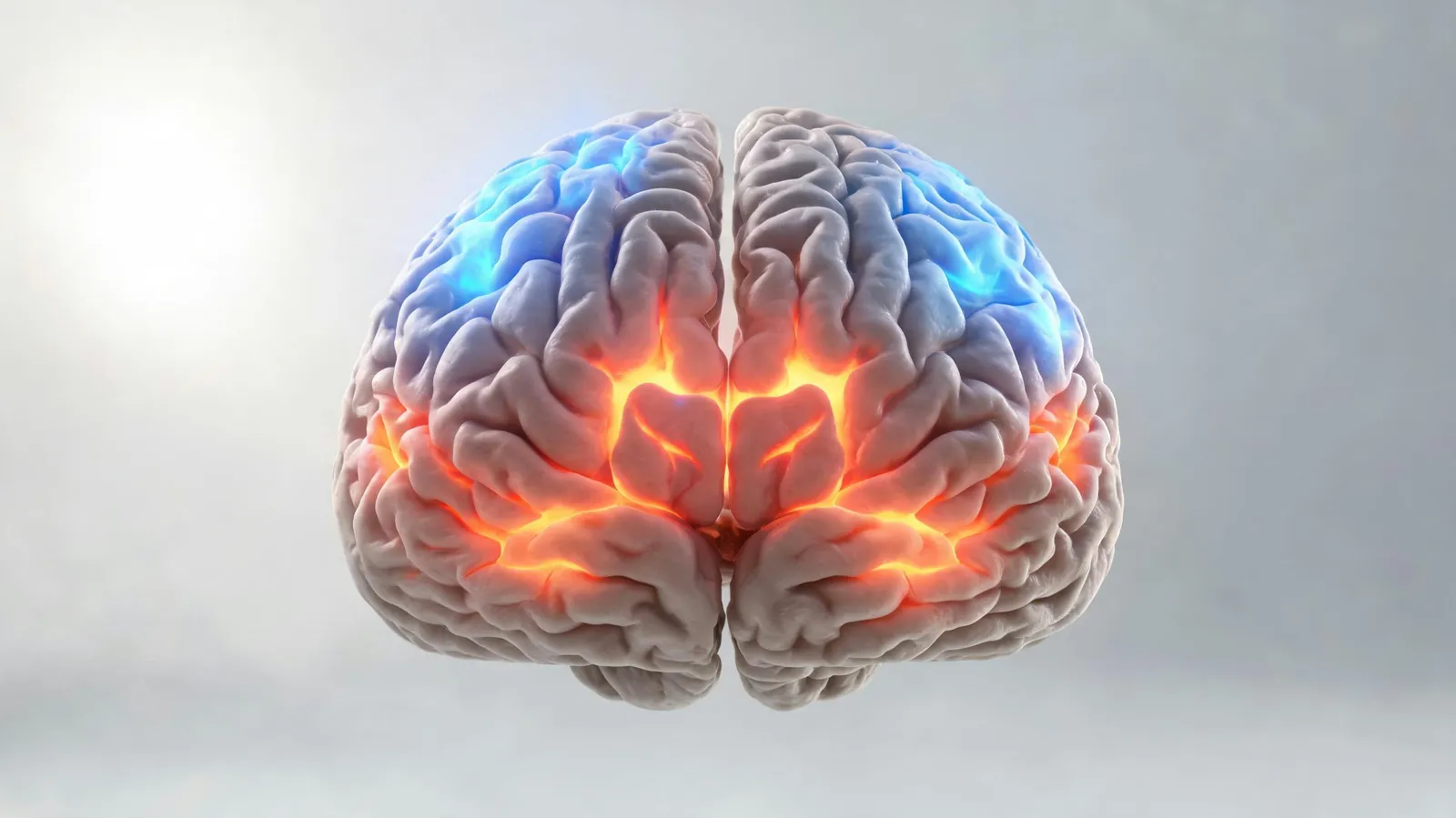
The DMN comprises a set of regions, among them the medial prefrontal cortex and the posterior cingulate cortex, that are active during mind-wandering, spontaneous thought, and autobiographical memory. It is not merely a resting-state phenomenon; the DMN occupies a central place in creative cognition. Stronger DMN connectivity tracks with higher creativity scores, and DMN regions are consistently engaged by creative tasks that call for novel ideas.
Yet generating ideas is only part of the process. The executive control network (ECN), anchored in the dorsolateral prefrontal cortex and parietal areas, supplies top-down control used to evaluate, refine, and choose among candidate ideas. Creativity works best when the DMN and ECN interact dynamically: the DMN proposes, and the ECN filters and sharpens. Neuroimaging indicates that creative individuals switch flexibly between these networks rather than favoring one at the expense of the other.
Flexibility, Working Memory, and Solving Problems Creatively
Cognitive flexibility—shifting between mental sets and adjusting to changing demands—is a core ingredient of creative problem solving. In task-switching experiments, more flexible participants outperform their peers on divergent thinking tests. Neuroimaging ties cognitive flexibility to the inferior frontal junction and parietal cortex, the same areas implicated in the DMN–ECN interplay described above.
Working memory capacity, the ability to hold and manipulate information over short intervals, also contributes. People with greater working memory capacity tend to produce more original ideas, plausibly because they can keep several concepts active at once and combine them in novel ways. The prefrontal cortex's involvement in working memory overlaps considerably with its involvement in creative cognition, pointing to shared neural resources.
Taken together, flexibility and working memory support the mental maneuverings that creative problem solving demands. Flexibility helps a person escape rigid thought patterns, while working memory furnishes the mental workspace in which new possibilities can be explored and refined.
Conclusion
Creativity does not issue from a single brain region or a mysterious spark. It emerges from the dynamic interplay of divergent thinking, large-scale brain networks (the DMN and ECN), and cognitive control processes such as flexibility and working memory. Understanding these mechanisms carries practical weight: it can inform educational practices that foster creativity, guide interventions for individuals with brain injuries, and inspire new technologies such as neurofeedback and brain stimulation to enhance creative potential. As research advances, we move closer to unlocking the full creative capacity of the human brain.