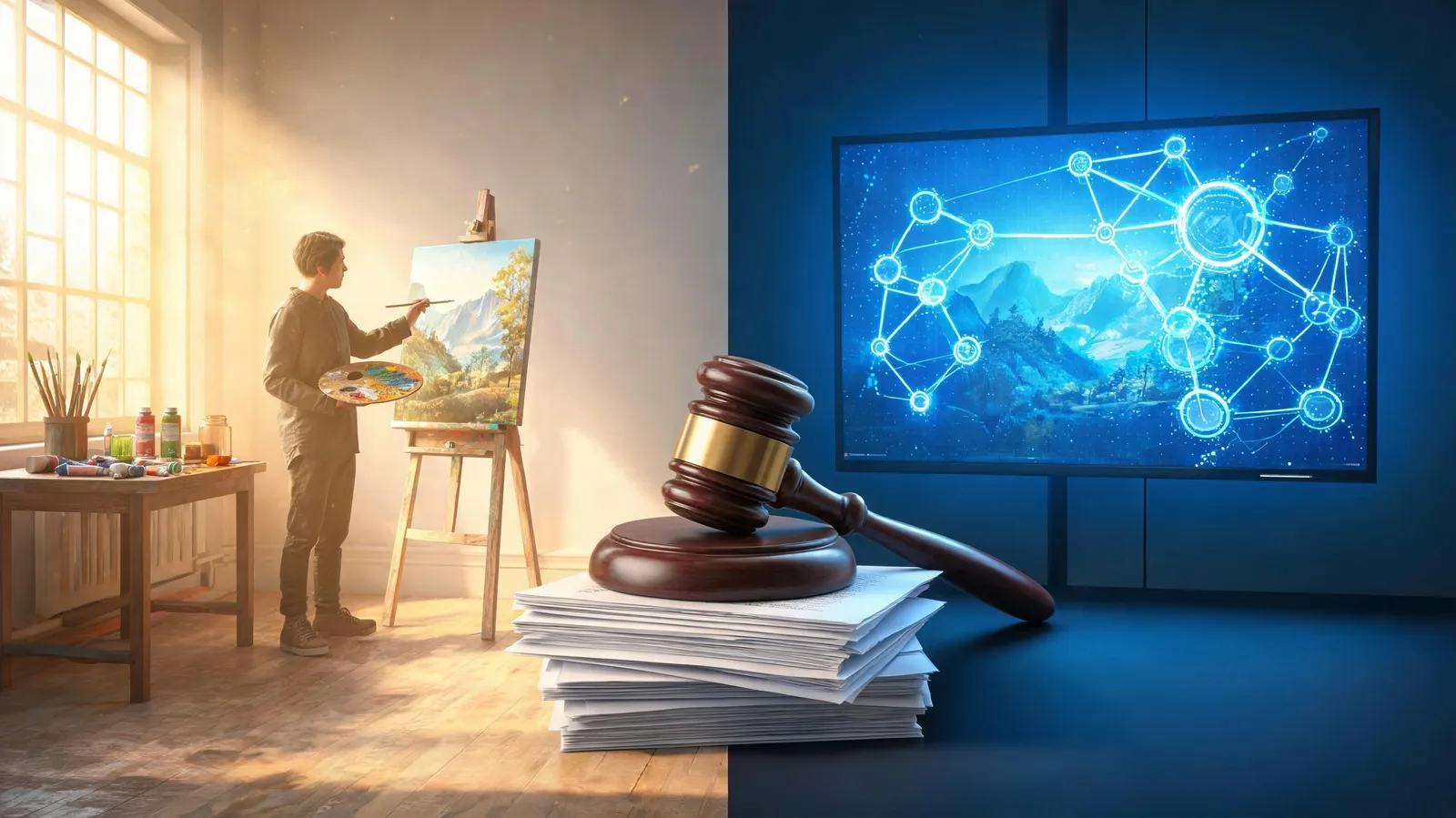
In creative industries, the swift adoption of generative AI and collaborative platforms has moved ahead of the regulations that oversee them, bringing pressing questions about ownership, fairness, and public interest to the forefront. As AI tools become a standard part of creative practice, the demand for strong ethics, policy, and governance of creativity has grown more urgent. This article examines three connected governance pillars: regulating AI-generated content, ensuring fair attribution and compensation, and designing public funding and innovation policies that support the creative commons.
Regulating AI-Generated Content and Creative Markets
The emergence of AI-generated content has ignited heated discussions about authorship, originality, and market fairness. As tools such as DALL-E, Midjourney, and ChatGPT produce art, music, and text, legal systems are struggling to keep up. The central difficulty is how to define authorship and originality in works that involve AI assistance. For example, the U.S. Copyright Office has determined that works generated solely by AI without human intervention cannot be copyrighted, whereas the EU and China have taken different routes, frequently requiring disclosure of AI involvement. Such differences leave creators and businesses facing uncertainty.

The market effects are just as significant. AI-generated content has disrupted stock media and design industries, displacing human creators while also creating new service categories like AI prompt engineering and curation. Data from stock media platforms indicates a notable shift in market share toward AI-generated assets, prompting worries about dilution of quality and originality. To tackle these challenges, policymakers need to consider instruments such as transparency requirements, labeling of AI-generated content, and liability rules. Proposed AI content disclosure requirements, such as those in the EU's AI Act, seek to ensure consumers know when content is AI-generated. Industry self-regulation, though quicker, often lacks enforceability, which makes government mandates necessary for consistent standards.
Fair Attribution and Compensation in Collaborative Creation
In collaborative and AI-augmented creative processes, ensuring fair credit and remuneration is complicated. Attribution challenges in multi-contributor works are intensified when AI tools are involved, since tracing the origin of ideas and contributions becomes difficult. Blockchain-based attribution systems present a promising solution by creating immutable records of contributions. Case studies from collaborative platforms such as GitHub for code and Behance for design show that clear attribution can reduce disputes and enhance trust. However, widespread adoption requires standardization and interoperability.
Compensation models are also changing. Traditional royalties and licensing are being supplemented by collective rights management and proposals for AI training data compensation. Data on revenue distribution in music streaming reveals that artists often receive a tiny fraction of total revenue, prompting calls for reform. Proposals for AI training data compensation suggest that AI developers should pay creators whose works are used to train models. This could be implemented through collective licensing schemes or direct payments, ensuring creators are fairly compensated for their contributions to AI development.
Policy and ethical frameworks for fair attribution are emerging. International guidelines on creative credit, such as those from UNESCO, emphasize the moral rights of creators. Creative unions and guilds play a crucial role in advocating for fair treatment and providing resources for dispute resolution. For effective governance, these frameworks must be adaptable to new technologies and inclusive of all stakeholders.
Public Funding and Innovation Policy for the Creative Industries
Public funding and innovation policies are essential for fostering diverse and ethical creative ecosystems. The role of public grants and subsidies in supporting the arts is well-documented. Examples include the National Endowment for the Arts in the U.S. and Creative Europe in the EU, which fund a wide range of creative projects. Data on innovation outcomes from public investment shows that such funding often leads to groundbreaking work that might not be commercially viable otherwise. However, balancing innovation incentives with ethical safeguards is critical. Case studies of AI research grants with ethical conditions, such as requiring transparency and fairness, demonstrate how public funds can steer innovation toward responsible outcomes.
International cooperation and harmonization of creative policy are also vital. Comparative analysis of EU, U.S., and Asian approaches reveals different priorities: the EU focuses on human-centric AI and cultural diversity, the U.S. emphasizes market-driven innovation, and Asian countries often prioritize technological advancement. The role of international bodies like UNESCO in setting global standards is crucial for harmonizing these approaches and ensuring that creative governance is coherent across borders.
Conclusion
Governing creativity in the AI era demands an integrated approach that tackles AI regulation, fair attribution, and public funding. These three pillars are interconnected: without fair attribution, creators lack incentives to innovate; without regulation, markets may become unfair; and without public funding, diverse voices may be silenced. The stakes are high for cultural diversity, economic fairness, and democratic access to creative tools. Adaptive governance models that evolve with technology and involve multi-stakeholder collaboration are essential. By embracing forward-looking policies, we can ensure that creativity thrives ethically and sustainably for generations to come.