Human-Robot Collaboration: Shared Workspaces
Cobots—collaborative robots—are built to operate safely in the same spaces as people, merging machine precision and stamina with human flexibility and judgment. On factory floors, they take on repetitive jobs such as assembly, pick-and-place, and quality checks, freeing workers to handle complex problem-solving and supervision. In healthcare settings, cobots support surgery and rehabilitation by providing steady, precise movements that can improve patient outcomes.
Over the past five years, collaborative robot installations have grown by 30% annually, according to the International Federation of Robotics, driven by their capacity to lower injury rates and raise productivity. A study by the National Institute for Occupational Safety and Health (NIOSH) found that cobots on automotive assembly lines cut ergonomic injuries by 30% in the first year of deployment.
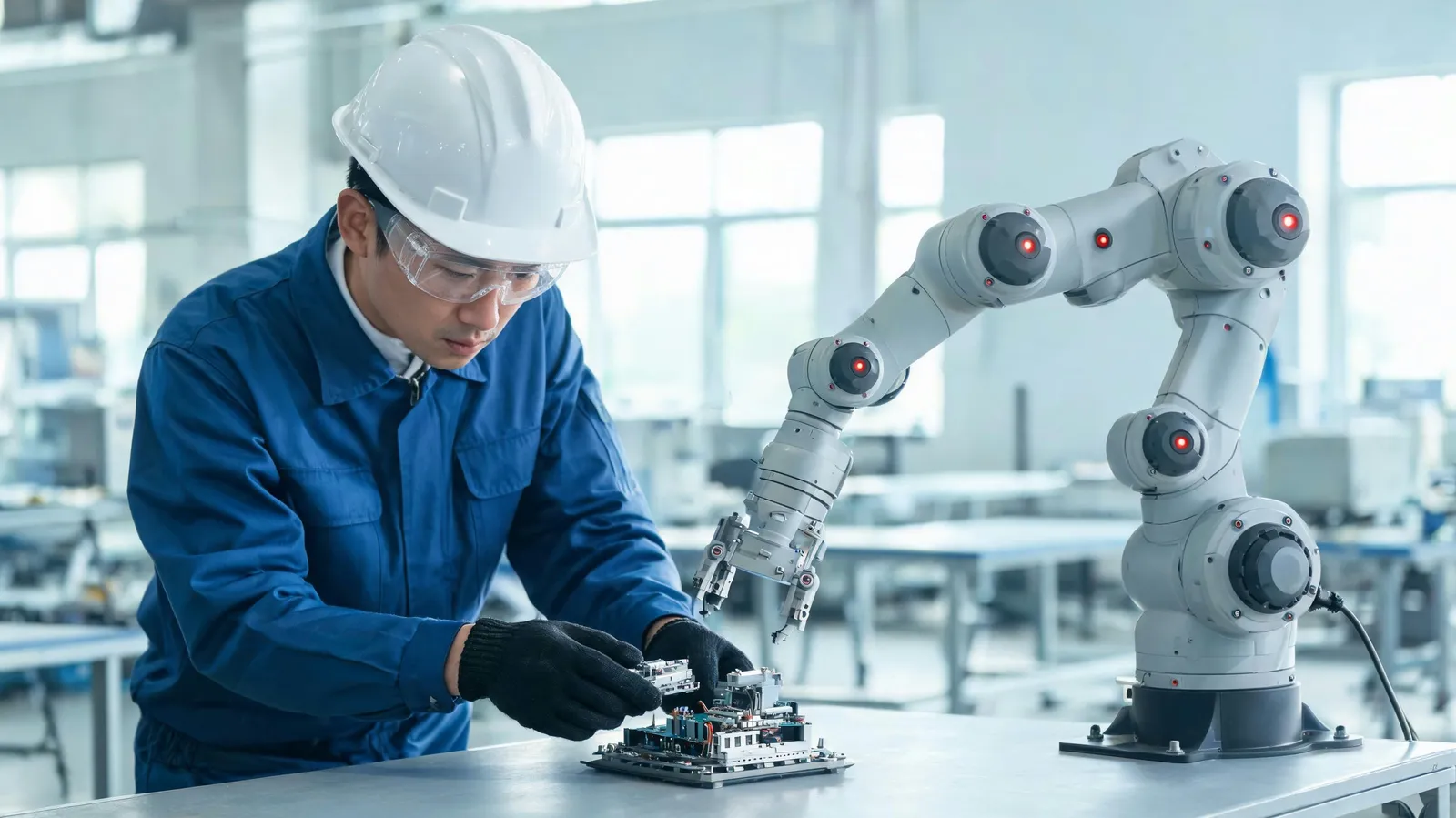
Safety is central to human-robot collaboration. The ISO/TS 15066 standard sets requirements for collaborative robot systems, including force and pressure limits to prevent injury during unintended contact. Adaptive AI algorithms add another layer of safety by recognizing human gestures, predicting intent, and adjusting robot behavior in real time. Cobots with vision systems, for instance, can detect a person entering their workspace and automatically slow down or stop, resuming only when the area is clear.
Deployments in the field illustrate these principles. Amazon Robotics uses cobots in fulfillment centers to bring shelves to human packers, cutting walking time and improving order accuracy. In Germany, BMW employs cobots for door assembly, with robots and humans working simultaneously on the same vehicle. Such examples show that human-robot collaboration is not about replacing jobs but augmenting human capabilities, leading to higher job satisfaction and safer workplaces.
Autonomous Vehicles and Infrastructure: Toward Self-Driving
Autonomous vehicles (AVs) are among the most visible applications of autonomous systems. The Society of Automotive Engineers (SAE) defines six levels of driving automation, from Level 0 (no automation) to Level 5 (full automation). Most commercial vehicles today operate at Level 2 (partial automation), while Level 4 (high automation) vehicles are being tested in geofenced areas such as Phoenix, Arizona, and San Francisco, California.
LiDAR, radar, cameras, and ultrasonic sensors are key enabling technologies, together providing 360-degree perception of the environment. Sensor fusion algorithms combine data from these sources to detect objects, predict trajectories, and make driving decisions. Waymo's autonomous taxis, for example, use LiDAR to create high-definition maps and navigate complex urban streets.
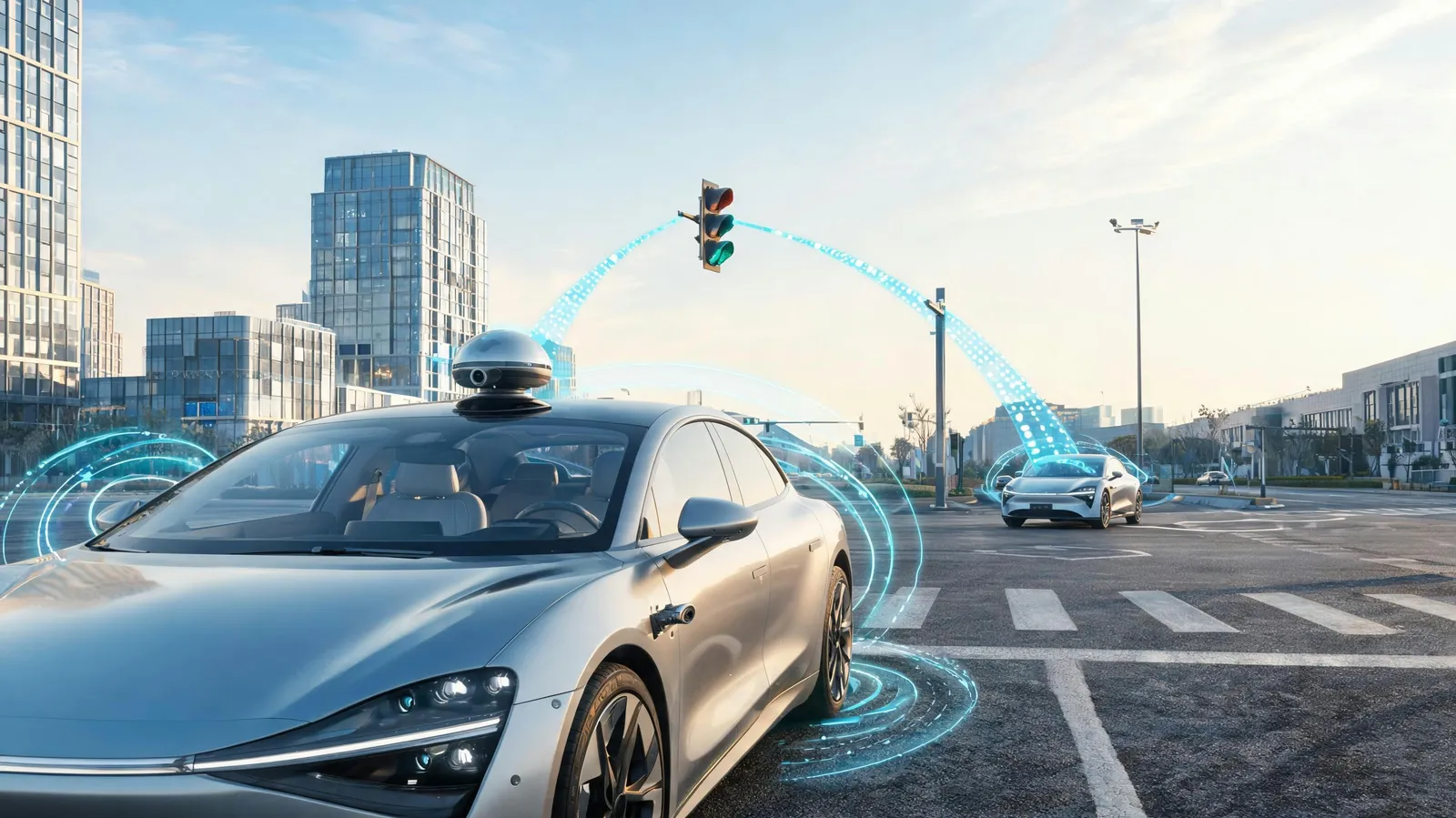
Smart infrastructure and V2X (vehicle-to-everything) communication are critical for scaling AVs. V2X allows vehicles to exchange data with traffic lights, road signs, and other vehicles, improving safety and traffic flow. Pilot projects in smart cities such as Columbus, Ohio, and Austin, Texas, have deployed smart traffic lights that communicate with AVs to optimize signal timing, reducing congestion and emissions. Dedicated short-range communications (DSRC) and cellular V2X (C-V2X) are the primary technologies enabling these interactions.
Challenges remain despite progress. Regulatory frameworks vary by state, and liability issues in accidents involving AVs are still being resolved. Nevertheless, the potential benefits—fewer accidents (over 90% of which are caused by human error), lower emissions, and increased mobility for the elderly and disabled—are driving continued investment. The U.S. Department of Transportation has issued voluntary guidance to accelerate safe deployment.
Drones for Logistics and Inspection: Eyes and Wings in the Sky
Unmanned aerial vehicles (UAVs), commonly called drones, are transforming logistics and inspection. In logistics, major retailers and logistics companies are testing and deploying drone delivery systems. Amazon Prime Air and Wing (a subsidiary of Alphabet) have conducted trials in rural and suburban areas, delivering packages within 30 minutes. According to a study by McKinsey, drone delivery can reduce last-mile delivery costs by up to 80% compared with traditional vans.
In healthcare, drones are delivering blood, vaccines, and medicines to remote or disaster-stricken areas. Zipline, a California-based company, has completed over 300,000 deliveries in Africa and the U.S., significantly reducing delivery times for critical supplies. The FAA has granted waivers for beyond-visual-line-of-sight (BVLOS) operations, enabling longer-range missions.
Autonomous inspection is another high-growth area. Drones equipped with high-resolution cameras and AI-powered defect detection algorithms inspect critical infrastructure such as power lines, bridges, and wind turbines. Skydio drones, for example, are used by utility companies to inspect power lines, identifying faults that are invisible to the naked eye. This reduces the need for dangerous manual inspections and cuts inspection time by up to 90%. In wind energy, drones inspect turbine blades for cracks and erosion, preventing costly downtime.
AI-powered analytics further enhance drone inspections by automatically detecting anomalies and generating reports. Companies like DroneDeploy and PrecisionHawk offer software that processes aerial imagery to create 3D models and identify defects. As regulations evolve and technology improves, drone logistics and inspection are set to become mainstream, boosting efficiency and safety across industries.
Conclusion
Autonomous systems and robotics are reshaping collaboration, transportation, and logistics. Human-robot collaboration is making workplaces safer and more productive, with cobots augmenting human skills in manufacturing and healthcare. Autonomous vehicles and smart infrastructure promise to reduce accidents and congestion, though regulatory and technical hurdles remain. Drones are revolutionizing delivery and inspection, offering faster, cheaper, and safer operations.
The convergence of AI, 5G, and edge computing will accelerate the adoption of autonomous systems, unlocking new applications and business models. As these technologies mature, they will create new jobs, improve quality of life, and drive economic growth. Stakeholders must collaborate on standards, regulations, and ethical guidelines to ensure that the rise of autonomous systems benefits society as a whole.