
Rethinking the Household Food Budget
Food ranks second only to housing among monthly expenses for many U.S. families. According to the Bureau of Labor Statistics, the average American household spent $1,080 a month on groceries in 2025. Careful planning, however, can shave 20–30% off that figure while keeping meals nutritious and enjoyable.
Technology is changing the way budget-minded shoppers approach the store. Meal-planning apps such as Mealime and Yummly pull in local grocery prices, promotional cycles, and what is already in the pantry, then build meal plans around cost-effective options. Research from the University of Illinois, published as a 2024 case study, tracked families using AI-assisted meal planning and found their grocery bills fell by 25% over three months.
Some savings strategies never go out of style: buying staples in bulk, comparing unit prices, and timing purchases around sales. The USDA notes that bulk purchases of rice, oats, and beans can cost up to 40% less than single-serve packaging. AI tools add a new twist by scanning weekly circulars and proposing menus around discounted items, which can make saving money feel more like play than drudgery.
Measuring the Carbon Cost of What We Eat
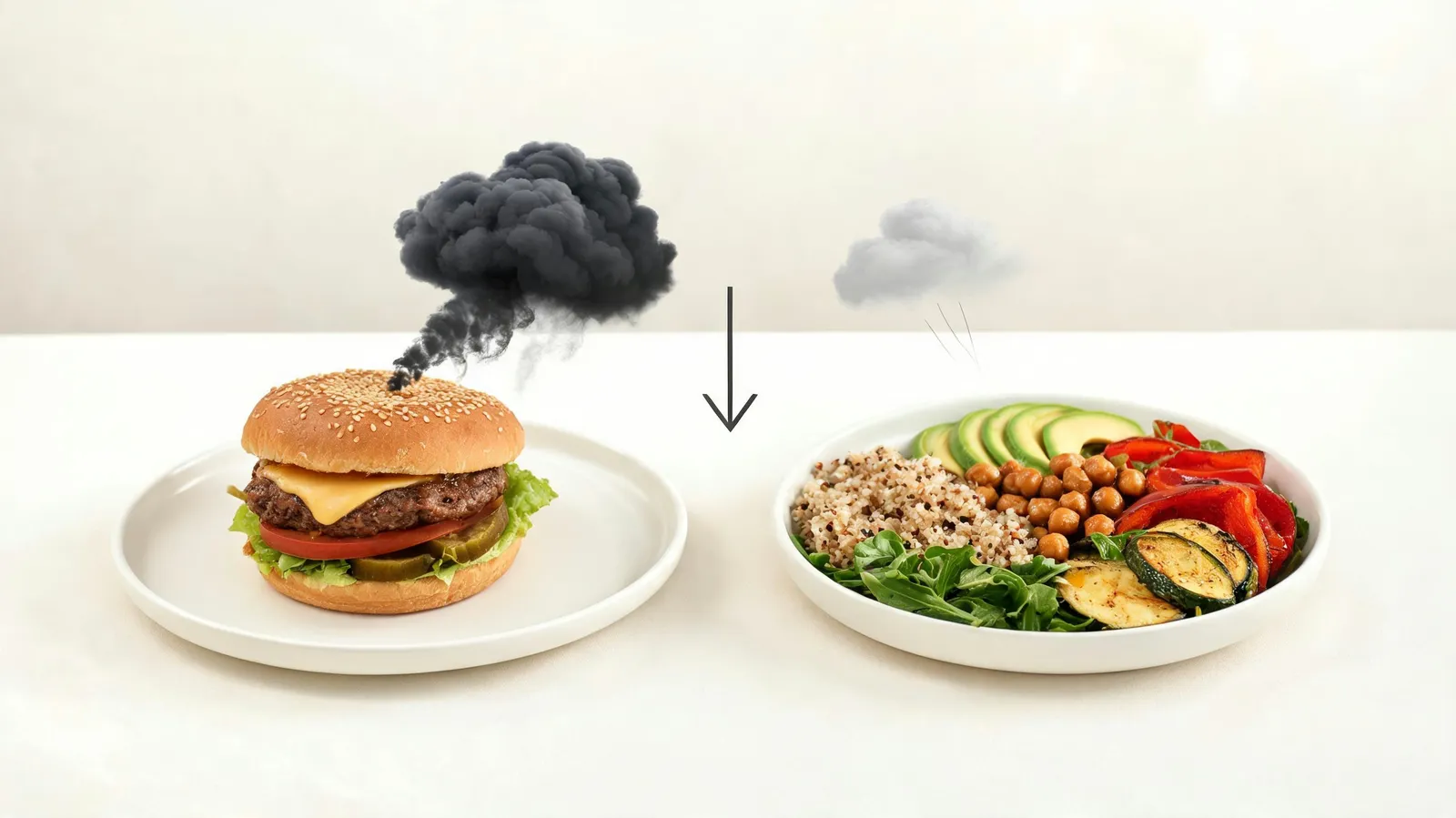
Roughly 26% of global greenhouse gas emissions come from food production, and animal-based foods generally carry a heavier footprint than plant-based ones. One kilogram of beef, for instance, is associated with about 60 kg CO2e, compared with roughly 0.9 kg CO2e for a kilogram of lentils. Recognizing these gaps is the starting point for eating in a lower-impact way.
Platforms such as CarbonCloud and Foodsteps simplify the task of estimating a meal's carbon footprint. They rely on lifecycle assessments to approximate emissions and propose alternatives; substituting chicken for beef in a stir-fry, for example, can nearly halve that dish's carbon footprint. A 2023 study published in Nature Food concluded that a shift toward more plant-rich diets could cut food-related emissions by as much as 50% in high-income countries.
Putting Seasonality and Local Sources Into Meal Plans
Choosing food that is in season and grown nearby benefits both the wallet and the environment. Produce sold out of season frequently travels thousands of miles and carries a higher price tag: strawberries in the U.S. can cost $6–8 per pound in winter but drop to $2–3 per pound in June. Seasonal produce also tends to be fresher and more nutritious, since it is picked at peak ripeness.
Meal planners such as Plant Jammer and Samsung Food now build regional harvest calendars into their recommendations, producing weekly menus from what is currently in season locally. That approach shortens food miles and gives local growers a boost. The Natural Resources Defense Council (NRDC) reported in 2024 that local food systems can trim transportation emissions by up to 7% while strengthening local economies.
Using Forecasts to Keep Food Out of the Bin
Close to one-third of the food U.S. households buy is thrown away—about 32%, or roughly $1,500 a year for a family of four, according to ReFED. Inventory tracking and spoilage forecasts powered by AI can make a sizable dent in that figure. Smart refrigerators such as Samsung Family Hub and LG InstaView rely on interior cameras and AI to monitor expiration dates and recommend recipes that use up ingredients before they go bad.
A 2024 case study from the University of Michigan reported that households using smart-fridge inventory systems cut food waste by 30%. Planning meals that absorb leftovers—repurposing roast chicken into tacos or soup, for instance—stretches ingredients further. Apps such as NoWaste and Kitche let users log leftovers and receive reminders ahead of spoilage.
Looking Ahead
For households, saving money and reducing environmental impact need not pull in opposite directions; the two goals tend to support each other. Families that plan around cost, shrink the carbon footprint of their meals, buy locally and in season, and waste less can eat well on a smaller budget while easing pressure on the planet. AI-assisted tools make the process more accessible than before, delivering personalized and largely automated guidance that fits real budgets and values. As the technology develops, the prospects for smarter and more sustainable food management are likely to expand, opening the benefits to households across income levels and locations.