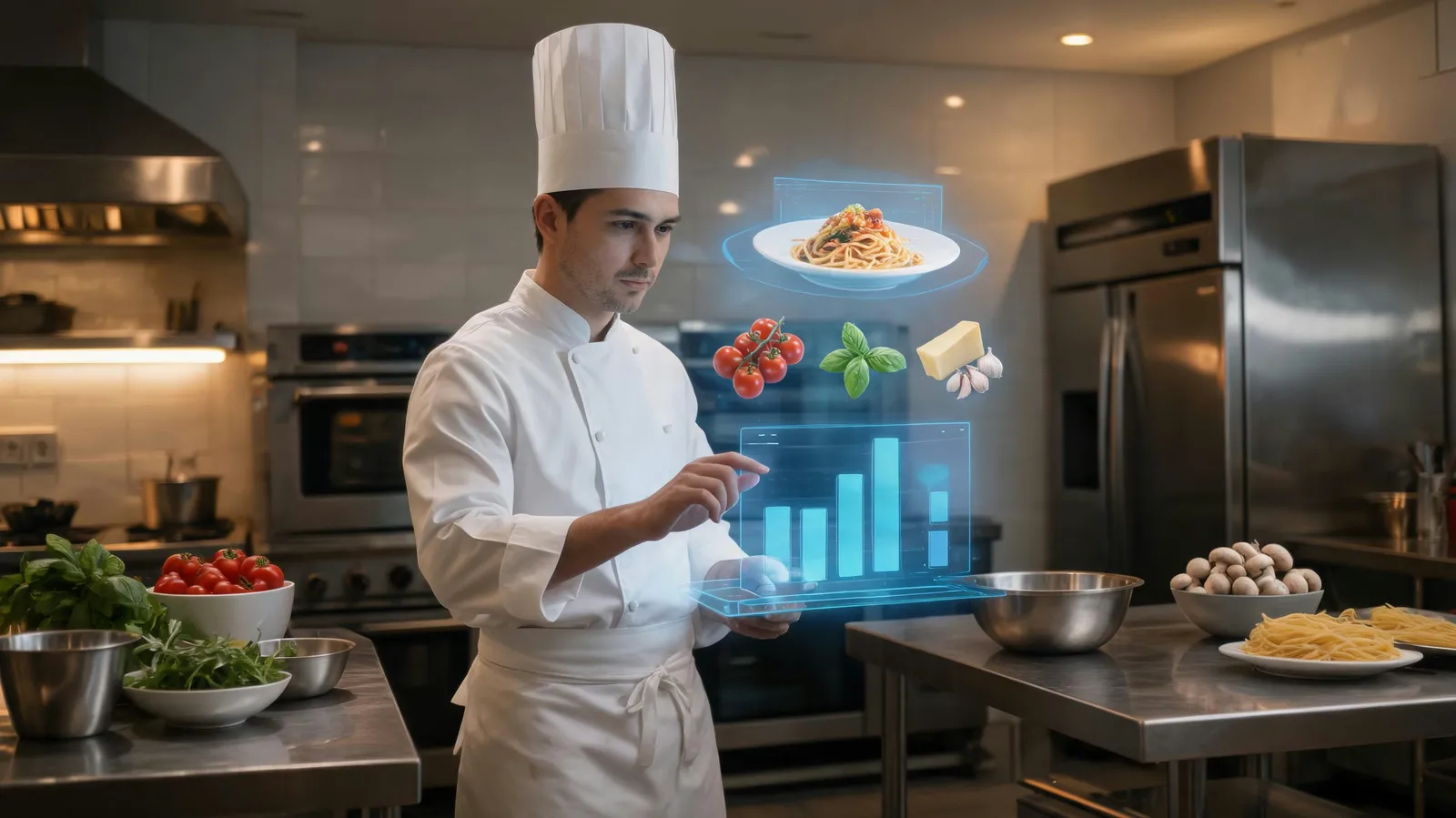
Recipe Engines and the Reworking of Restaurant Menus
Few corners of the food economy have felt AI's influence as visibly as recipe development. The worldwide food sector carries a valuation above $8 trillion, and machine intelligence is steadily making inroads across the chain—from the kitchen to the back office. Operators of conventional food businesses are under growing strain to refresh their menus, speed up content production, and open additional income channels. What follows is a look at how AI functions less as a curiosity and more as an economic force that is spawning fresh business models while unsettling entrenched ones.
Recipe generation and personalization powered by AI stand among the most conspicuous applications. Systems like IBM Chef Watson and Plant Jammer show that machine learning can sift through large volumes of flavor compounds, nutritional data, and diner preferences to produce recipes that did not exist before. Such tools go beyond retrieving what is already on file—they assemble combinations a human cook might never think of. For restaurants, that means shorter development cycles for menu items and the capacity to shape dishes around the tastes of individual diners. Early adopters report stronger customer engagement and less food waste, since AI can fine-tune ingredient use against live inventory figures and demand projections.

Menu optimization in real time is another field where the financial upside is coming into focus. Eateries are deploying AI to rework menus in response to demand patterns, seasonal shifts, and stock on hand. A restaurant might, for instance, have AI comb through sales records to forecast which dishes will sell well on a particular day, then tweak prices or portion sizes to match. Documented cases point to revenue gains of 5-10% and cost savings of 3-7% once AI-driven menu optimization is in place. Such systems can also draw on supply chain data to cut waste and make sure ingredients are used before they spoil.
Cookbook Publishing and Food Media Under Pressure
Cookbook publishing, for years a pillar of food media, is now absorbing notable disruption from machine-generated content. Titles assembled by AI have started reaching the market, with recipes produced by algorithms trained on extensive culinary databases. Producing such books costs a fraction of what traditional cookbooks require and takes far less time—traditional titles often take years to develop. Reader response has been uneven, and some consumers remain doubtful about recipes written by AI, yet the economic edge is hard to dispute. Publishers can probe niche subjects without heavy investment, and authors can turn to AI for quick drafts that are then sharpened with human expertise.
In food blogging and social media, AI is fueling a fresh surge of content production. Food blogs and Instagram posts can be generated automatically, complete with attractive food photography and captions designed to engage. Studies of AI-run food sites indicate engagement levels on par with human-written material, and in some cases steadier output and higher frequency translate into better monetization. Figures suggest that AI-produced food content can lift ad revenue by 15-20%, helped by larger publishing volumes and stronger SEO results. That said, questions about authenticity and the worth of human creativity persist, and the industry is still debating them.
Turning AI Food Content into Revenue
Subscription and freemium arrangements have become common routes for monetizing AI recipe platforms. Many successful services give away basic recipe generation and then charge a monthly fee for extras such as tailored meal plans, nutritional breakdowns, and connections to grocery delivery. Data on sign-ups and retention suggests freemium models can reach conversion rates of 5-10%, with monthly churn staying under 5% among engaged users. This approach tends to work best when the AI keeps learning from user preferences, delivering a personalized experience that is difficult to match elsewhere.
Advertising and affiliate marketing form another income channel for AI food media. AI-run food sites can serve ads matched to user behavior and recipe interests, which tends to produce higher click-through rates than generic advertising. Affiliate marketing—earning a commission for sending users to grocery stores or kitchen appliance sellers—can bring in substantial sums. Documented cases show AI-driven food sites reaching conversion rates of 3-5% on affiliate links, with ROI frequently above 200% when content is tuned for SEO and user intent.
Licensing AI-generated recipes to food companies is an expanding B2B opening. Food manufacturers, meal kit providers, and restaurant chains are keen to obtain distinctive recipes they can brand and sell. B2B transactions already include AI-generated recipes for plant-based meat substitutes and functional foods. Over the next five years, the market for AI-generated food content is projected to expand at a compound annual growth rate of 20-25%, propelled by appetite for innovation and cost efficiency.
Conclusion
By speeding up recipe creation, enabling dynamic menu optimization, and opening new forms of food media, AI is changing the food industry. The economic effects show up in lower costs, higher revenue, and the rise of unfamiliar business models. Challenges persist, especially concerning authenticity and whether consumers will accept such products, but AI's capacity to drive efficiency and innovation remains considerable. Going forward, pairing AI with technologies such as blockchain for supply chain transparency and personalized nutrition is likely to unlock further opportunities. For food entrepreneurs and business strategists, grasping and applying AI has moved past being a choice—it is now necessary to remain competitive in a market that keeps shifting.