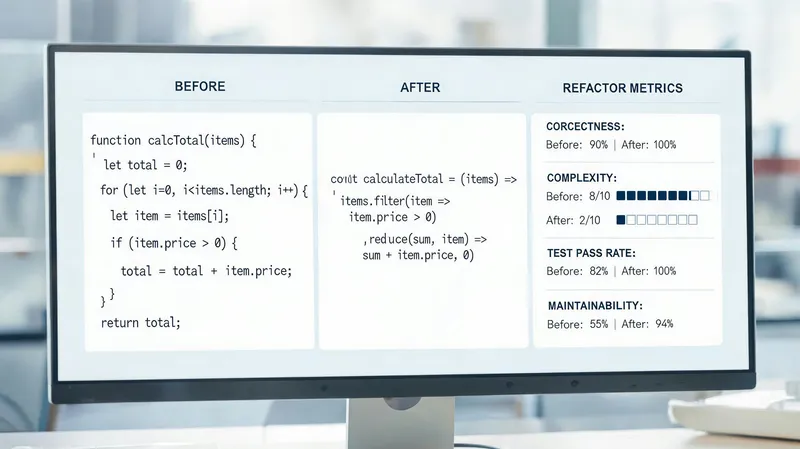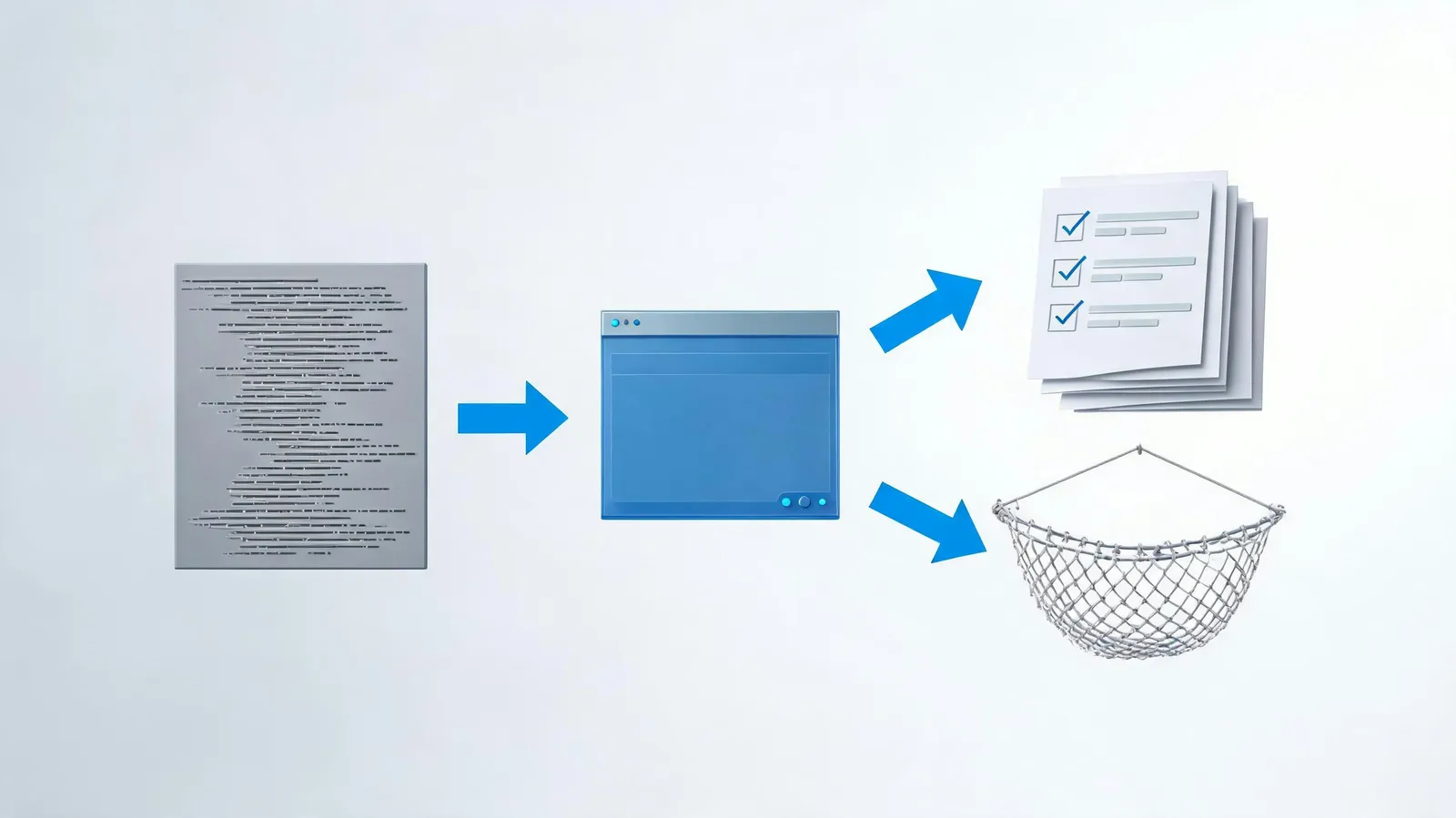
Legacy code frequently ships without tests, which makes refactoring both risky and slow. Creating tests manually takes significant effort and is prone to errors, and AI-generated tests can be unreliable unless they are validated. Automated test generation methods—including characterization tests, mutation testing, and coverage-guided pipelines—offer a solid framework for preserving observable behavior throughout refactoring.
1. Creating Characterization Tests for Legacy Modules Before Refactoring
Characterization tests, sometimes called golden master tests, record how a system currently behaves—even when that behavior is wrong. During refactoring, they act as a safety net that catches unintended changes. For legacy code, where documentation is often thin and the original developers may no longer be available, these tests are essential.
Definition and examples: A characterization test checks that a given input produces a specific output. A legacy billing module, for example, might apply discounts in an unusual way; a characterization test captures that exact calculation so that refactoring cannot alter it.
Case study: A financial services company refactored a COBOL module that was 20 years old. Using automated characterization test generation from execution traces, the team reached 85% branch coverage. Refactoring finished in three weeks with no production defects, whereas a manual approach had been estimated at six months.
Automated generation: Tools such as GetAFix and characterization-test-generator examine code and runtime traces to create test cases. Dynamic analysis records real inputs and outputs, while symbolic execution explores paths. Metrics indicate that automated characterization tests can detect 70–90% of regression defects introduced during refactoring.
2. Using Mutation Testing to Validate AI-Generated Test Suites
Mutation testing measures test suite quality by making small syntactic changes (mutations) to the code and checking whether the tests fail. A high mutation score means the tests are sensitive to faults. When AI generates tests, mutation testing helps confirm that they do more than chase coverage—that they actually catch real bugs.
Mutation operators and score: Typical operators include swapping arithmetic operators, negating conditionals, or deleting method calls. The mutation score is the percentage of mutants killed (i.e., tests failed). Unlike line coverage, mutation score reflects the ability to detect faults.
Comparison with coverage: A test suite may reach 100% line coverage and still miss many mutants. Research shows that mutation testing finds 30–50% more faults than coverage alone.
Applying to AI-generated tests: AI models such as GitHub Copilot or Facebook's Aroma produce tests based on patterns. Such tests can be redundant or assert trivial things. Mutation testing filters out weak tests. At a DevOps startup, mutation testing was added to the CI/CD pipeline; AI-generated tests started with a mutation score of 45%, and after iterative feedback it climbed to 82%.
Best practices: Apply mutation testing to critical modules, use incremental mutation, and set a threshold (e.g., 70%) for accepting a test suite. Integrate it with CI/CD using tools such as PITest for Java or mutmut for Python.
3. Coverage-Guided Refactoring Pipelines That Preserve Observable Behavior
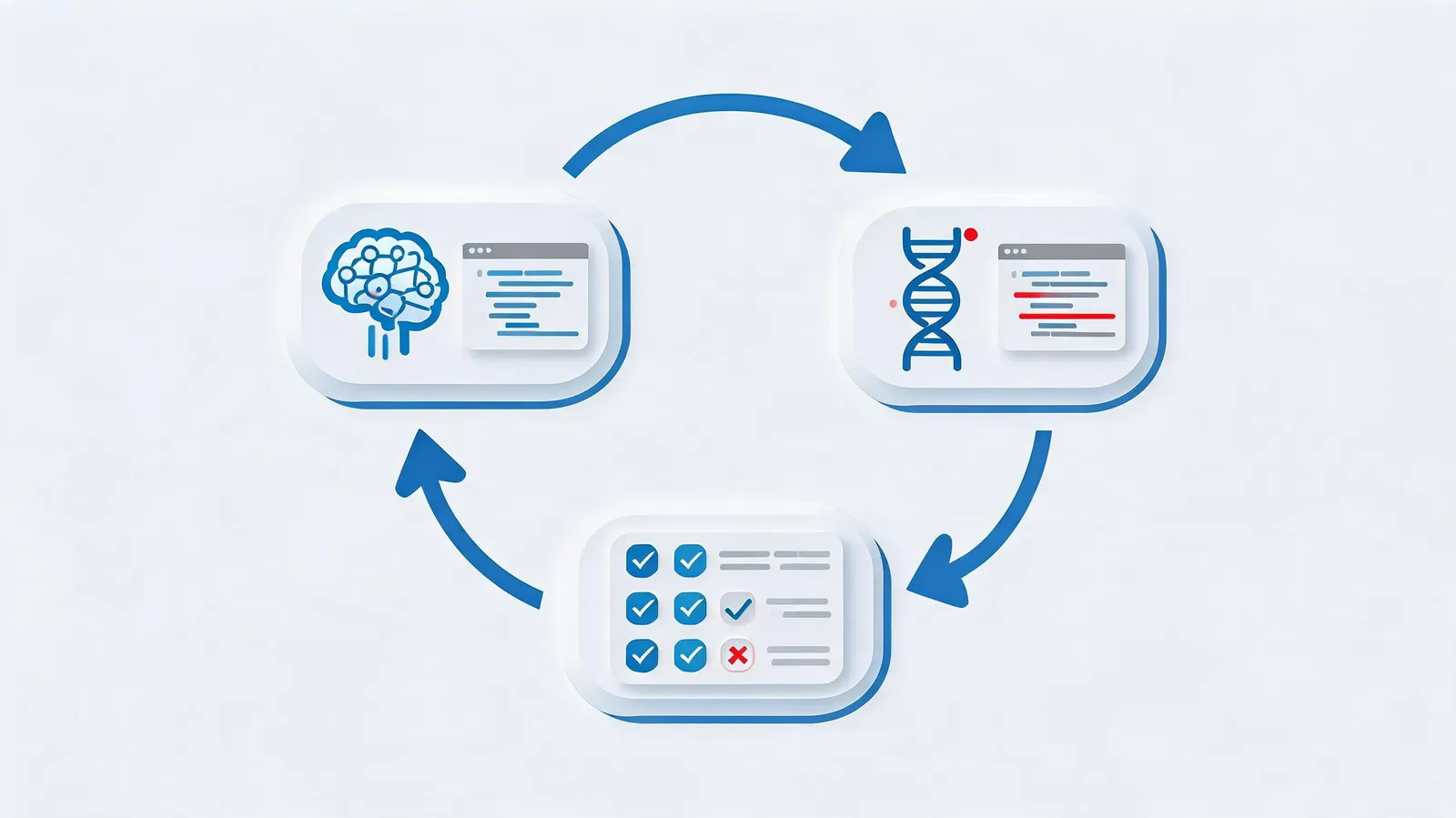
Coverage-guided refactoring relies on test coverage to drive safe code transformations. The pipeline repeatedly generates tests, analyzes coverage, applies refactorings, and verifies behavior. This automates the tedious parts of refactoring while ensuring that no observable change occurs.
Principles: Coverage metrics—line, branch, and path—direct the refactoring engine to focus on areas with good test coverage. Refactoring patterns such as extract method, rename variable, or replace conditional with polymorphism are applied only when coverage remains stable.
Examples: A legacy Java monolith was refactored with a pipeline that automatically generated tests using Randoop, measured coverage with JaCoCo, and applied refactorings through Refactoring Bot. The pipeline cut refactoring time by 60% and introduced no regressions.
Building the pipeline: Components include a test generator (e.g., EvoSuite, Randoop), a coverage analyzer (e.g., JaCoCo, Istanbul), a refactoring engine (e.g., IntelliJ IDEA's refactoring API, OpenRewrite), and a behavior verifier that runs the original and refactored code on the same inputs. A feedback loop from coverage analysis to test generation ensures that newly uncovered branches are tested.
Case study: An e-commerce platform automated refactoring of its checkout service. The pipeline generated tests, reached 90% branch coverage, and applied 150 refactorings. Refactoring time fell from 4 weeks to 10 days, and post-release defects dropped by 75%.
Conclusion
Automated test generation, characterization tests, mutation testing, and coverage-guided pipelines together form a complementary toolkit for behavior preservation. Characterization tests capture current behavior, mutation testing validates AI-generated tests, and coverage-guided pipelines automate safe refactoring. Combined, they lower risk and speed up legacy modernization. Going forward, AI will enable smarter test generation and autonomous refactoring, but human oversight remains essential for defining behavior and validating results.