AI-Assisted Refactoring in High-Stakes Domains: Embedded, Scientific, and Regulated Systems
Refactoring a typical e-commerce monolith pales in comparison to reworking a pacemaker's firmware or a bank's transaction engine. The stakes, constraints, and techniques differ dramatically. In safety-critical, data-intensive, and heavily regulated environments, conventional refactoring approaches often fall short due to the non-negotiable demands of correctness, traceability, and compliance. This article examines real-world case studies across embedded systems, scientific computing, and regulated industries to reveal how AI-assisted refactoring is unlocking new levels of safety, performance, and maintainability in domains where failure is not an option.
1. Refactoring Safety-Critical and Embedded Systems with AI Assistance
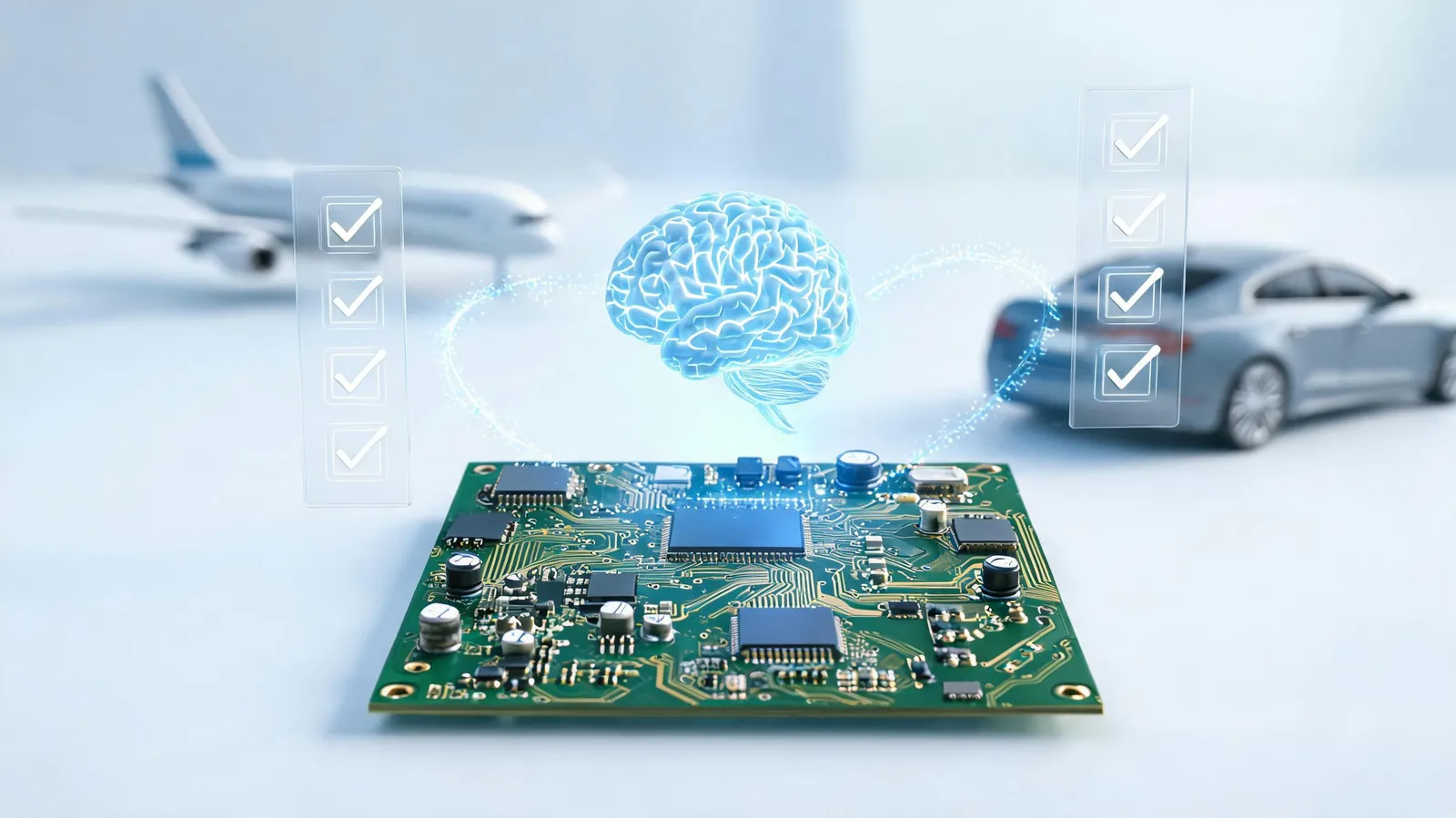
Embedded systems power everything from medical devices to avionics, and their software must operate under severe resource constraints while meeting hard real-time deadlines. Certification standards such as DO-178C for airborne systems and ISO 26262 for automotive functional safety impose rigorous requirements on code structure, traceability, and verification. Refactoring such code without breaking certification is a high-wire act. AI-assisted tools are changing the game by automating pattern recognition, generating safety-preserving transformations, and even assisting with formal verification.
Challenges of refactoring embedded systems: Resource constraints, real-time deadlines, and certification standards (e.g., DO-178C, ISO 26262).
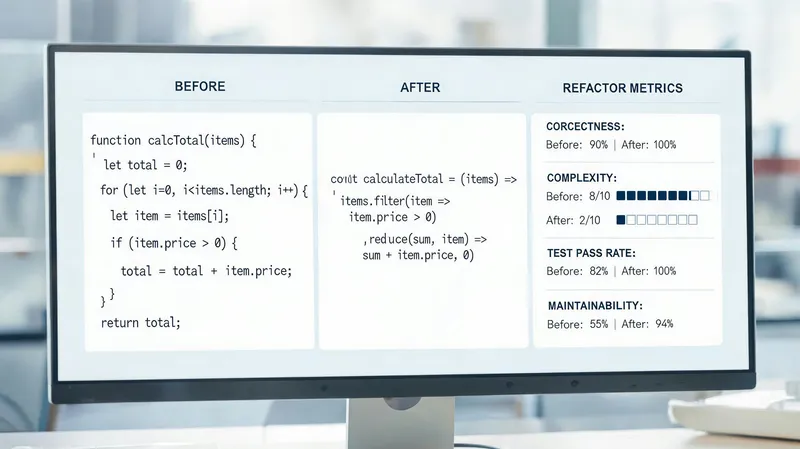
Consider a recent case study: AI-assisted refactoring of a flight control system reduced code complexity by 30% without violating timing constraints. The AI analyzed execution paths, suggested modularization, and automatically generated test cases to validate the refactored code against the original timing behavior. In another example, AI static analysis found 45% more potential race conditions than manual review in a medical device firmware, enabling engineers to address concurrency issues before they became field failures.
AI techniques for safe refactoring: Pattern recognition, automated test generation, and formal verification assistance.
AI can suggest lock-free data structures in a medical device firmware, improving responsiveness while reducing the risk of priority inversion. Statistics show a 20% decrease in verification effort after AI-guided refactoring, as the AI generates traceability matrices and evidence artifacts required for certification. These techniques not only save time but also enhance safety by catching subtle defects that humans might miss.
2. Modernizing Data Pipelines and Scientific Computing Codebases

Data pipelines and scientific computing code often evolve over decades, accumulating heterogeneous data sources, legacy Fortran or C++ code, and a pressing need for reproducible research. Refactoring these systems demands performance, scalability, and reproducibility—goals that can conflict with the inertia of legacy code. AI-driven refactoring strategies are proving instrumental in translating old code, identifying bottlenecks, and parallelizing workloads.
Unique challenges: Heterogeneous data sources, legacy Fortran/C++ code, and the need for reproducible research.
A case study involving a climate simulation model refactored from Fortran to Python with AI assistance improved runtime by 25% and enabled cloud deployment. The AI translated numerical kernels, suggested vectorization, and generated unit tests to ensure numerical accuracy. In a genomics data pipeline, AI-based code translation reduced manual effort by 60%, allowing scientists to focus on analysis rather than plumbing. AI approaches include automated code translation, parallelization suggestions, and dependency analysis.
For example, using AI to identify and refactor bottlenecks in a financial risk simulation achieved a 3x speedup. The AI profiled the code, recommended algorithmic improvements, and even rewrote critical sections in a more efficient style. Statistics on error reduction show that AI-assisted refactoring cut data pipeline failures by 40%, as the AI detects data schema mismatches and suggests robust error handling. These improvements are critical in scientific domains where reproducibility and correctness are paramount.
3. AI Refactoring in Regulated Industries: Finance and Healthcare
Finance and healthcare operate under intense regulatory scrutiny. HIPAA, GDPR, SOX, and other frameworks mandate strict controls on data privacy, auditability, and change management. Refactoring code in these environments requires not only technical excellence but also demonstrable compliance. AI-assisted refactoring addresses these hurdles by automating policy checks, detecting sensitive data, and providing complete audit trails.
Regulatory hurdles: HIPAA, GDPR, SOX, and the need for traceable, auditable code changes.
A case study of a healthcare claims processing system refactored with AI ensured HIPAA compliance while reducing processing time by 35%. The AI scanned for protected health information (PHI), enforced access controls, and generated logs that satisfied auditors. Data on audit trails shows that AI-generated refactoring logs provided complete traceability for regulatory review, turning what is often a manual nightmare into an automated, reliable process.
AI for compliance-aware refactoring: Automated policy checks, sensitive data detection, and change impact analysis.
In another example, an AI tool flagged 90% of potential GDPR violations during a refactoring of a customer data platform, allowing the team to remediate before deployment. Statistics on cost savings indicate a 30% reduction in compliance-related rework after AI-assisted refactoring. By embedding compliance checks into the refactoring workflow, AI helps organizations avoid fines, reputational damage, and costly delays.
Conclusion
The case studies across embedded systems, data-intensive scientific computing, and regulated industries demonstrate that AI-assisted refactoring is not just a productivity booster—it is a transformative enabler. In safety-critical domains, AI reduces complexity while preserving certification. In data pipelines, it accelerates modernization and improves reproducibility. In regulated industries, it automates compliance and auditability. As AI continues to evolve, its potential to automate complex refactoring tasks, integrate with DevOps pipelines, and continuously ensure compliance in real-time will only grow. For technology leaders in these domains, embracing AI-assisted refactoring is no longer optional—it is a strategic imperative for staying competitive and compliant in an increasingly complex world.