Repositories today commonly hold millions of lines of code. Refactoring that volume by hand is neither practical nor safe, and classic refactoring tooling also runs into scale limits. Layering AI onto refactoring brings additional compute and cost pressures. The discussion below covers how incremental and streaming refactoring, optimized model inference, and distributed execution together make AI refactoring viable for very large codebases.
Incremental and Streaming Approaches for Huge Repositories
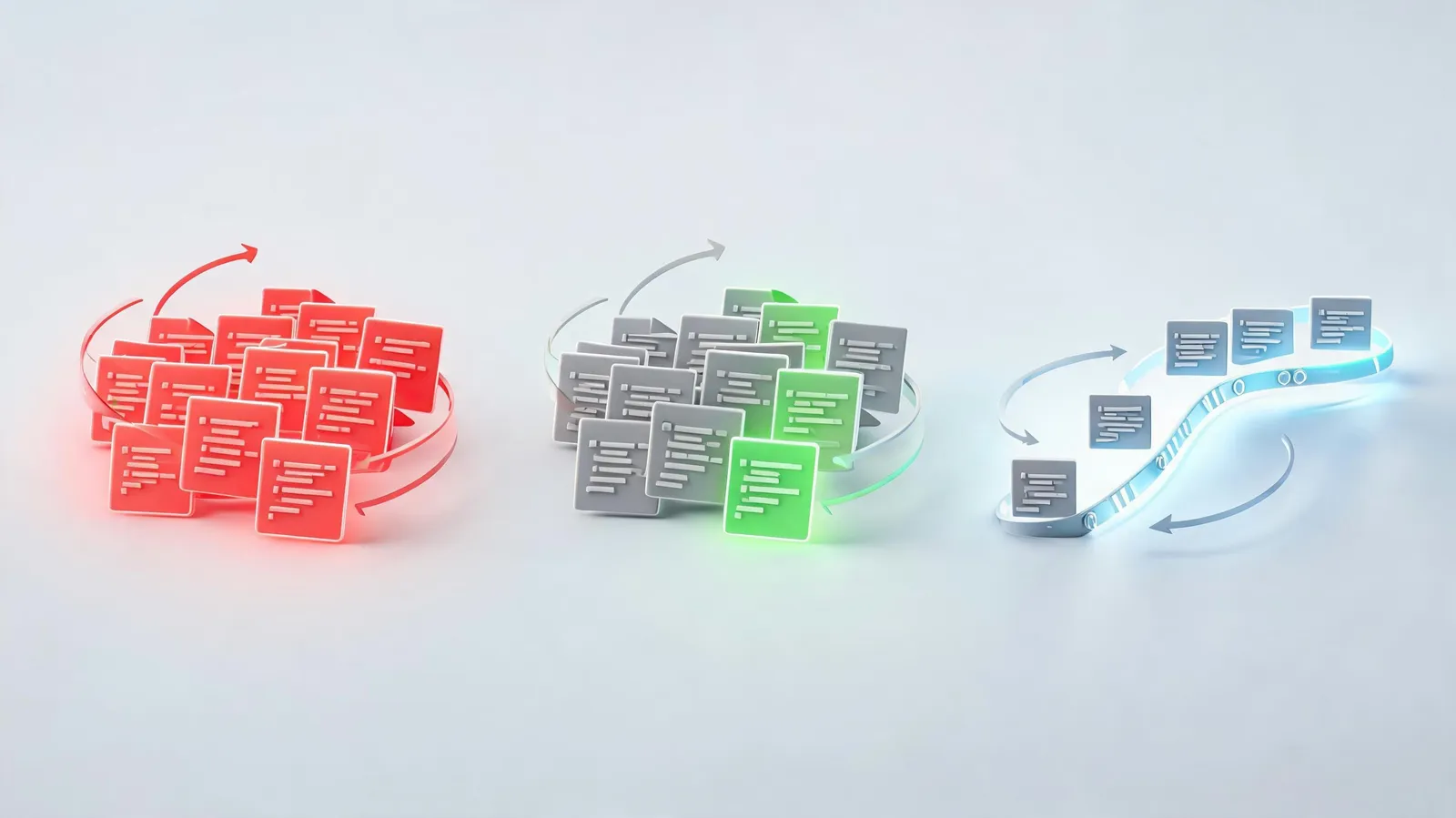
An incremental refactoring strategy touches only the portions of a codebase that changed. Rather than re-analyzing a whole repository, it works on modified files plus the dependencies those files pull in. Relative to full refactoring, this can cut computation time by as much as 90%. Google's in-house refactoring tool applies incremental analysis to process billions of lines of code efficiently. Tracking changes at file or function granularity lets incremental refactoring skip redundant work and deliver feedback close to real time.
Streaming refactoring goes a step further: code is analyzed and transformed continuously as it is committed. Wired into CI/CD pipelines, it gives developers feedback in real time. Reported data indicates fewer merge conflicts and faster iteration cycles. Rather than waiting for nightly builds, teams get improvement suggestions immediately, which makes refactoring quicker and safer.
Reducing Inference Cost and Energy in CI/CD Pipelines
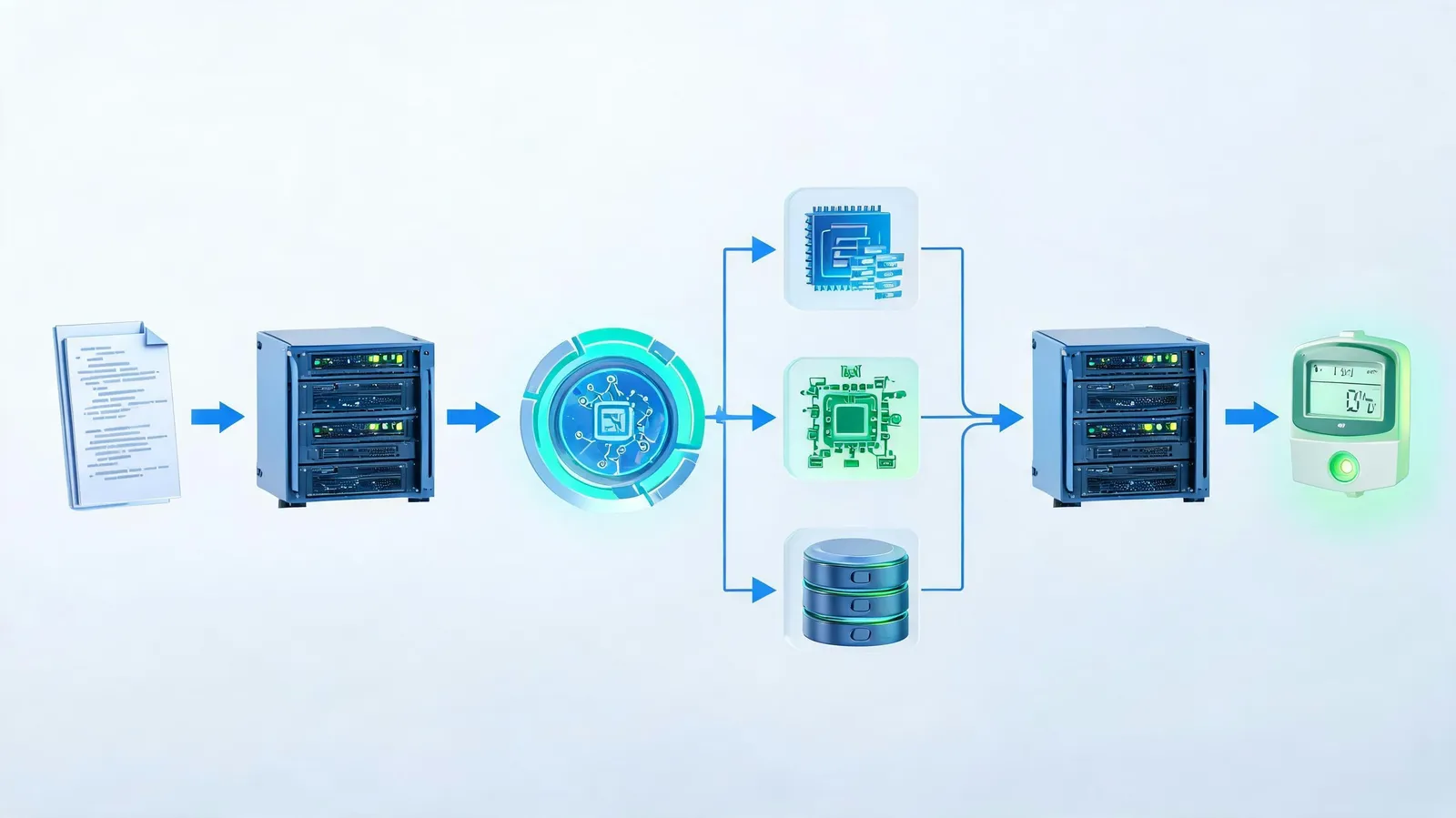
AI refactoring depends on model inference, which can be computationally heavy, so making inference cheaper is central to scaling. Model quantization and pruning substantially lower inference cost. Benchmarks report a 4x speedup with only minimal accuracy loss, and cloud deployments have shown energy savings of up to 60%. Quantization stores model weights at lower precision, while pruning strips out redundant parameters; together they make AI refactoring more affordable and less energy-intensive.
Caching and reusing inference results for similar code patterns also drives cost down. Real-world repositories have reached hit rates of 70%. When a code pattern recurs, the system pulls the cached result instead of invoking a large language model again, which cuts API calls and latency and makes AI refactoring workable inside continuous integration pipelines.
Running Refactoring Workloads in Parallel and Across Machines
Scaling AI refactoring to enormous codebases requires splitting tasks across multiple machines or cores. Partitioning work and analyzing dependencies makes parallel refactoring possible: independent modules can be refactored at the same time, yielding a 10x speedup on a 16-core machine. Cross-module dependencies remain a difficulty, addressed by constructing a dependency graph and scheduling tasks in topological order so that changes in one module propagate correctly to the modules that depend on it.
Large-scale refactoring also draws on distributed frameworks such as Ray and Dask. A case study that refactored a 50 million lines of code (LOC) monolith with Ray showed notable cost savings, and scaling horizontally with commodity machines proved more cost-effective than scaling vertically on one powerful server. A coordinator divides the codebase into chunks, dispatches them to worker nodes, and aggregates the results, which lets AI refactoring extend to repositories of any size.
Conclusion
The techniques that together deliver AI refactoring scalability are incremental and streaming refactoring, cost and energy optimization of model inference, and parallel and distributed execution. With them, AI refactoring can be applied to the largest codebases, boosting developer productivity and code quality. Looking ahead, closer integration between AI planning and distributed execution, plus further gains in energy-efficient inference, are expected. As repositories keep growing, these techniques will become essential to modern software development.