Overview
Tools that use AI to refactor code are changing the way software gets built, and they bring hazards that deserve attention. When a model proposes or carries out a code transformation, there is a chance that proprietary source code leaves the organization's control, that new security weaknesses enter the codebase, or that licensing terms are breached. This article looks at three areas that matter for safe adoption—running inference without exposing source code, keeping refactoring from adding vulnerabilities, and checking licenses and compliance—and at ways to reduce the associated risks.
1. Inference That Keeps Proprietary Source Code Private
Many AI refactoring tools depend on models hosted in the cloud, which means proprietary code has to travel to outside servers before it can be processed. That arrangement creates real privacy exposure: information can leak, access can happen without authorization, and regulations such as GDPR and CCPA can be violated. Techniques for privacy-preserving inference are therefore important for reducing these exposures.
1.1 What Can Go Wrong When Code Reaches an AI Model
When source code is sent to a cloud AI service, leakage is a possibility. One illustration came in 2023, when a large technology firm accidentally exposed customer code through an AI service that had been misconfigured. Legal frameworks including GDPR and CCPA set strict expectations for protecting data, and breaches can bring substantial penalties. There is also risk to proprietary algorithms and trade secrets if code is intercepted in transit or stored without adequate protection.
1.2 Approaches to Privacy-Preserving Inference
A number of methods allow AI-assisted refactoring without handing over raw code. With federated learning, model training happens across decentralized devices and the data stays where it is. Differential privacy works by adding noise so that individual entries are protected. Homomorphic encryption allows computation to be performed directly on encrypted data, and secure enclaves such as Intel SGX offer isolated execution environments. Running AI models on-premise or locally removes data transfer altogether and gives the strongest privacy position. These methods can be layered together to form a more resilient privacy-preserving pipeline.
2. Catching and Blocking Vulnerabilities Added During Refactoring
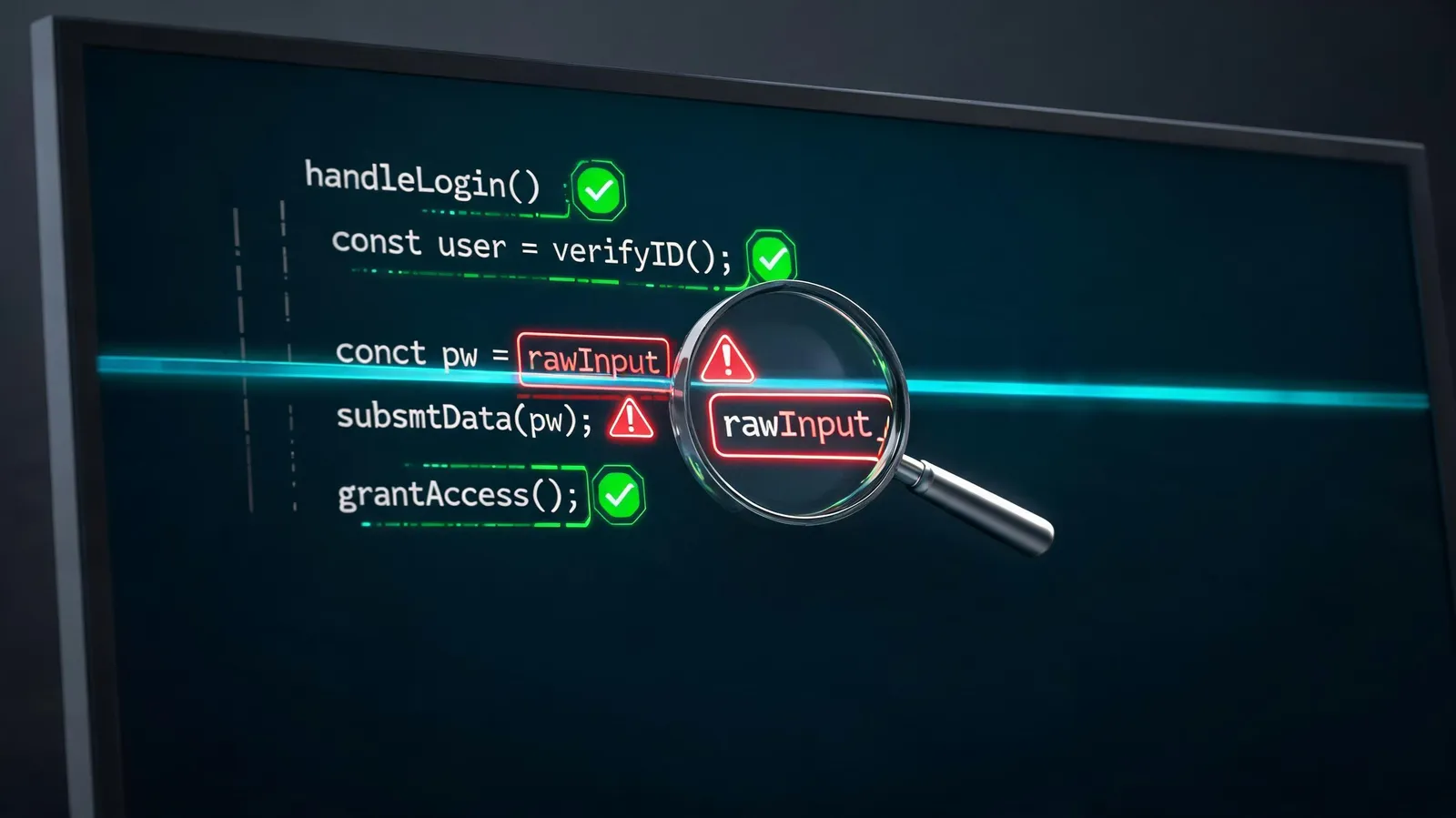
Refactoring carried out by AI can add security vulnerabilities without anyone intending it. Among the frequent problems are injection flaws, broken authentication, and insecure dependencies. A model might, for instance, rewrite code so that it calls a deprecated function with known exploits. Case studies indicate that AI-generated code frequently carries security flaws, which is traceable to training on insecure examples. Early detection is possible through static analysis and AI-assisted code review. Running security testing continuously within the refactoring pipeline means every transformation gets validated. The chance of introducing flaws drops when AI models are trained on secure coding practices. A defense built in layers is important.
2.1 Vulnerability Types That AI Refactoring Can Introduce
Security vulnerabilities can enter code unintentionally when AI performs refactoring. Injection flaws, broken authentication, and insecure dependencies are among the common categories. One scenario is a model rewriting code to call a deprecated function that has known exploits. Research cases show that code produced by AI often includes security flaws because its training drew on insecure examples.
2.2 Detection and Prevention Measures
Static analysis and AI-assisted code review can surface vulnerabilities at an early stage. Validating every transformation requires continuous security testing inside the refactoring pipeline. Training AI models on secure coding practices makes the introduction of flaws less likely. Layering defenses is essential.
3. Checking Licenses and Compliance for AI-Proposed Code Changes
Code snippets from a range of sources may end up in AI refactoring output, which creates license compatibility questions. If GPL code, for example, is folded into a proprietary project, the whole project may have to be open-sourced. Attribution requirements and obligations to include license notices must also be satisfied. Tools that automate compliance checks, such as software composition analysis (SCA), can determine which licenses apply. AI models trained to recognize license terms can flag conflicts that may arise. Enforcing policy within CI/CD pipelines makes it possible to confirm compliance before deployment.
3.1 License Compatibility Problems in AI-Generated Code
When AI refactoring pulls in snippets from different sources, license compatibility can become an issue. Adding GPL code to a proprietary project, for instance, can obligate the entire project to be open-sourced. Meeting attribution requirements and license notice obligations is also necessary.
3.2 Automated Compliance Tools and Practices
Licenses can be identified with automated compliance tools such as software composition analysis (SCA). AI models trained to recognize license terms can flag potential conflicts. Policy enforcement inside CI/CD pipelines confirms compliance before deployment.
Conclusion
Three pillars support secure AI refactoring: privacy-preserving inference, vulnerability prevention, and license compliance. Keeping trust, legal integrity, and software security intact in AI-driven development depends on these measures. As AI refactoring tools mature, security and compliance features are likely to be built in as standard, and regulation will have a significant role in shaping best practices. Organizations that put these strategies in place now can take advantage of AI refactoring while keeping its risks in check.