Many organizations have moved quickly to deploy AI time management tools, but demonstrating concrete productivity returns remains a common difficulty. Conventional indicators such as hours logged or tasks finished do not reflect subtler effects, including sharper attention and lighter cognitive burden. The framework described here draws on four elements—quantified time savings, attention-based focus indicators, cost-benefit analysis, and extended observation data—to validate and refine AI time management investments. When leaders and HR teams put these measures into practice, they can base spending decisions on evidence and steer ongoing improvement.
Quantifying Reclaimed Time and Improved Attention
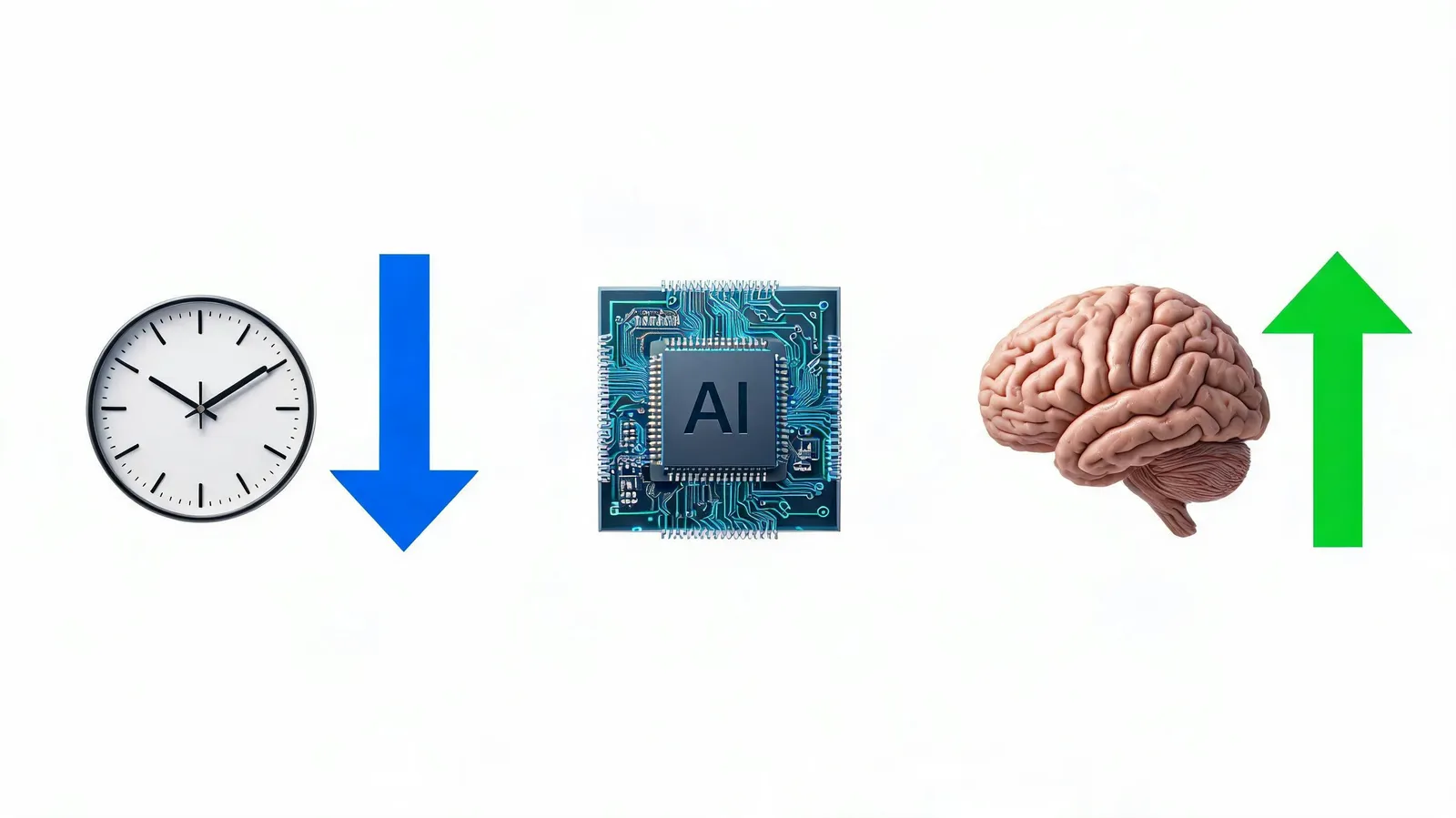
Accurate assessment of AI time management productivity calls for two complementary metric families, each precisely defined and made operational: time saved and focus improved. The first family counts the hours that automation returns to employees; the second captures qualitative shifts in attention and cognitive engagement. Viewed together, they offer a balanced picture of how AI affects knowledge work.
Indicators of Time Saved
Time saved is measured through automated task tracking, time-motion studies, and self-reported time diaries. Automated tracking employs AI tools to record how long employees spend on given activities both before and after implementation. Time-motion studies observe and time tasks to surface reductions. Self-reported diaries ask employees to estimate task time, though recall bias can affect them. Pilot studies offer an illustration: AI scheduling assistants cut meeting coordination time by 40%, and employees in such pilots recover an average of 5 to 7 hours per week. The calculation is: Time Saved = (Baseline Task Duration - Post-AI Task Duration) × Frequency. Because saved hours convert into labor cost savings, this measure directly feeds cost-benefit analysis.
Indicators of Improved Focus
Focus improvement is assessed through attention span, interruption frequency, and deep work hours. Attention span can be gauged with validated surveys or cognitive tests. Interruption frequency is obtained by counting notifications, messages, or drop-ins per hour. Deep work hours are blocks of uninterrupted time devoted to cognitively demanding tasks. Research connects AI-driven notification filtering with a 25% increase in uninterrupted work blocks. One case study of knowledge workers found that AI prioritization produced higher cognitive engagement, as reflected in self-reported focus and less task-switching. Focus improvement can be quantified as: Focus Score = (Deep Work Hours / Total Work Hours) × 100. Comparing this score before and after adoption exposes qualitative gains that conventional metrics overlook.
Cost-Benefit Analysis of AI Productivity Tools in Enterprises
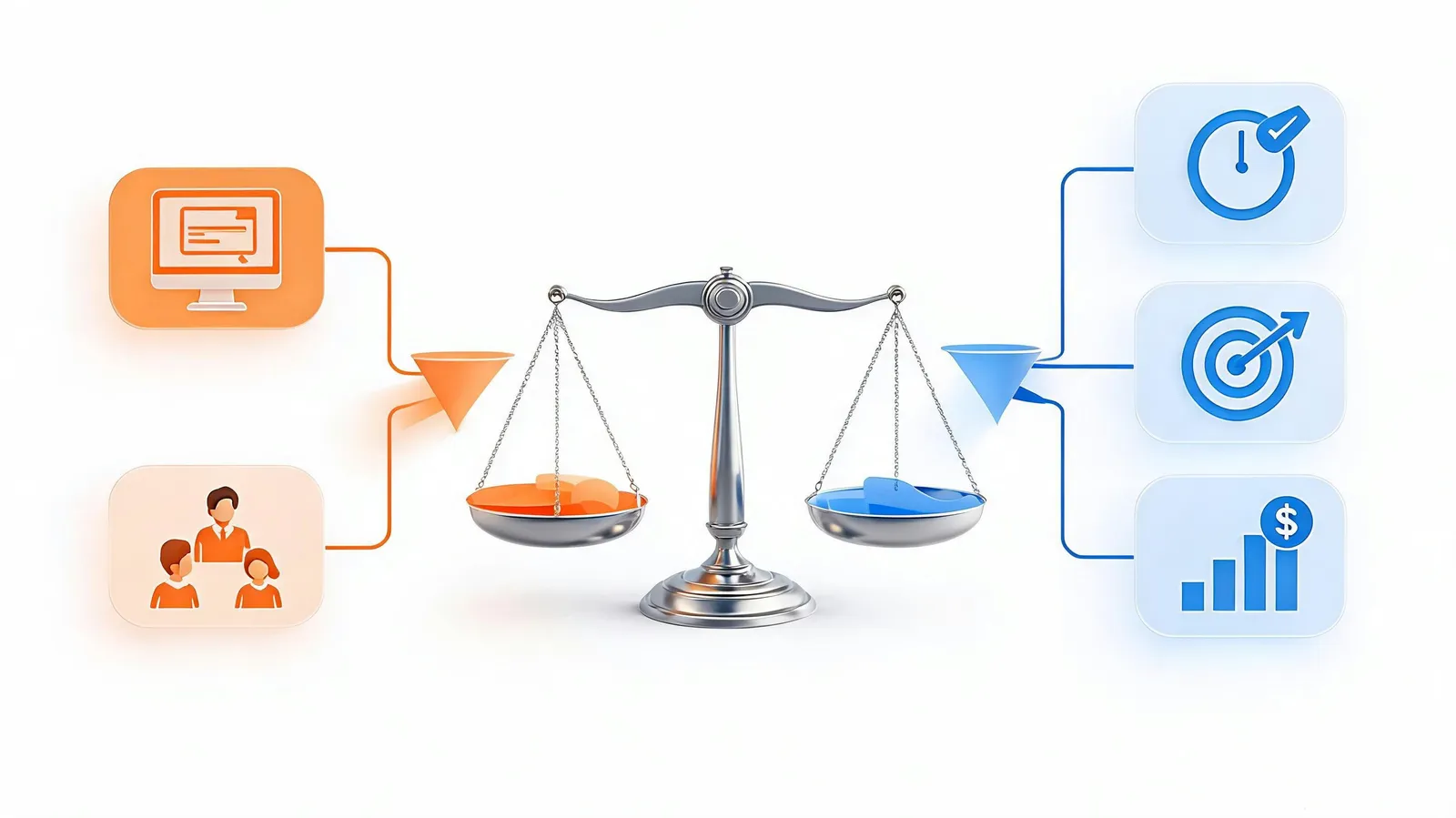
A structured cost-benefit analysis underpins any return-on-investment (ROI) calculation for AI productivity tools. Costs cover licensing fees, implementation expenses, and training. Benefits include time savings, output increases, and intangible gains such as reduced burnout. The basic formula is: ROI = (Net Benefits / Costs) × 100, where Net Benefits = Total Benefits - Total Costs. Consider a Fortune 500 company that rolled out an AI time management tool to 1,000 employees at an annual cost of $500,000 (licensing, training, support). The tool saved 6 hours per employee per week, valued at $50 per hour, for $1,560,000 in annual time savings. Additional output increase was valued at $200,000. Net Benefits = $1,760,000 - $500,000 = $1,260,000. ROI = ($1,260,000 / $500,000) × 100 = 252%. The payback period averaged 6 to 12 months. These figures indicate that AI time management productivity investments can yield substantial financial returns when measured rigorously.
Intangible Returns
Intangible returns encompass employee satisfaction, reduced burnout, and improved decision quality. Survey results associate AI time management with a 30% reduction in overtime hours, which lowers burnout risk and improves retention. Correlation studies show that focus improvement correlates with innovation metrics, such as number of ideas generated or patents filed. To bring intangibles into the analysis, assign monetary proxies: reduced turnover saves recruitment costs, for instance, and higher innovation can be tied to revenue from new products. Even without precise valuation, tracking these intangibles alongside hard ROI gives a more complete picture of AI's value.
Extended Observation of AI-Assisted Knowledge Work
Extended studies are essential for separating temporary novelty effects from sustained productivity gains. A well-designed study includes baseline measurement, periodic assessments, and control groups. One 12-month study, for example, tracked 200 knowledge workers using AI time management tools. Baseline data on time saved and focus scores were collected before implementation. Assessments occurred at 3, 6, 9, and 12 months. A control group of 100 workers did not use the tools. Methodological considerations include avoiding novelty effects by allowing a 1-month adjustment period, ensuring data consistency through standardized surveys and automated tracking, and controlling for external factors like seasonal workload changes.
Principal Results
The study found a 20% sustained increase in productive output after 6 months, measured by tasks completed and projects delivered. Focus improvements plateaued after 9 months but remained 15% above baseline. Adaptation curves showed that users needed 2 to 3 months to fully integrate AI into their workflows. Time saved continued to increase gradually as users discovered new automation opportunities. These findings confirm that AI time management productivity gains are durable when supported by training and process adjustments. Organizations should conduct their own extended studies to validate vendor claims and optimize tool usage.
Conclusion
Assessing AI time management productivity demands a strategy that uses multiple metrics over an extended horizon. Time saved and focus improvement offer complementary quantitative and qualitative insights. Cost-benefit analysis converts these gains into financial terms, justifying investment and guiding budget decisions. Extended studies confirm that gains persist rather than reflecting mere novelty. By adopting this framework, business leaders, productivity managers, and HR professionals can make evidence-based decisions, demonstrate the value of AI tools, and continuously improve implementation. Looking ahead, AI analytics may be integrated to automatically track and predict productivity gains, enabling real-time ROI dashboards that update as work happens. Accurate measurement is not just an academic exercise—it is the foundation for optimizing AI investments and unlocking lasting productivity improvements.